Southwala Shorts
- When you fall asleep, your body rests but the brain stays active.
- In the stage called REM sleep, the brain is busy sending signals that create pictures, sounds, and feelings.
- This is when most vivid dreams happen.
- Your brain keeps a large store of memories.

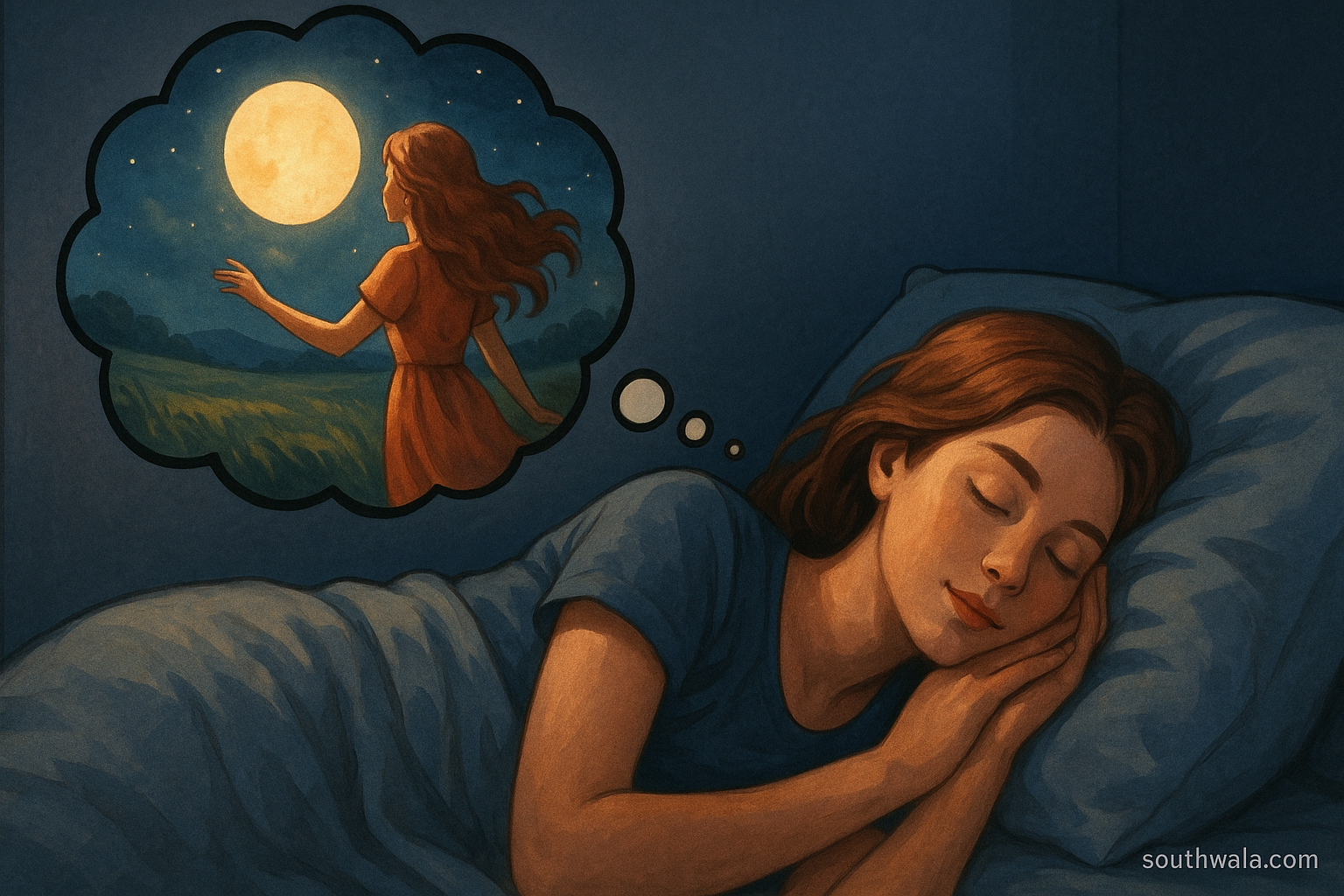
When you fall asleep, your body rests but the brain stays active. In the stage called REM sleep, the brain is busy sending signals that create pictures, sounds, and feelings. This is when most vivid dreams happen.
Mixing Memory With Imagination
Your brain keeps a large store of memories. While dreaming, it picks pieces of these memories and mixes them with imagination. That is why you may see known faces in unknown places, or events that never happened in real life.
Why Dreams Feel So Real
During dreaming, the part of the brain that checks facts becomes less active. At the same time, the emotional center works strongly. This is why you can feel fear, joy, or sadness in a dream as if it is really happening.
The Role of Senses
The brain can copy senses like sound, touch, and even smell while dreaming. You might hear voices, feel someone’s hand, or even taste food. These signals come from the brain itself, not from the outside world, making the dream seem real.
Chemicals That Control Sleep and Dreams
Certain chemicals like serotonin and dopamine play a big role. They affect mood and memory, which shape how your dreams appear. Because these chemicals are active during sleep, they can make dreams more emotional and life-like.
Why We Sometimes Remember and Sometimes Forget
The brain does not always save dream experiences in long-term memory. That is why many dreams fade quickly after waking up. But strong emotions can make some dreams unforgettable for years.
How Dreams Influence Real Life
Dreams can impact your daily mood, creativity, and even decision-making. Many inventions and stories have been inspired by dreams. They act as a bridge between imagination and reality, showing how powerful the brain truly is.
FAQs
1. Why do dreams feel like reality sometimes?
Because the brain creates detailed images, sounds, and emotions without fact-checking.
2. Do all dreams happen in REM sleep?
Most vivid ones do, but light dreams can occur in other stages too.
3. Why do scary dreams feel stronger than happy ones?
Fear activates the emotional part of the brain more deeply, making those dreams intense.
4. Can dreams predict the future?
There is no scientific proof, but dreams can reflect thoughts, fears, and hopes from real life.
5. Why do some people dream more often than others?
It depends on sleep quality, stress levels, and brain activity. People who wake up during REM sleep often recall their dreams more clearly.
Author


Discover more from Southwala
Subscribe to get the latest posts sent to your email.