Southwala Shorts
- We have all felt it at some point.
- You step into a cold room, hear a song that gives you chills, or watch an intense scene in a film and suddenly your skin...
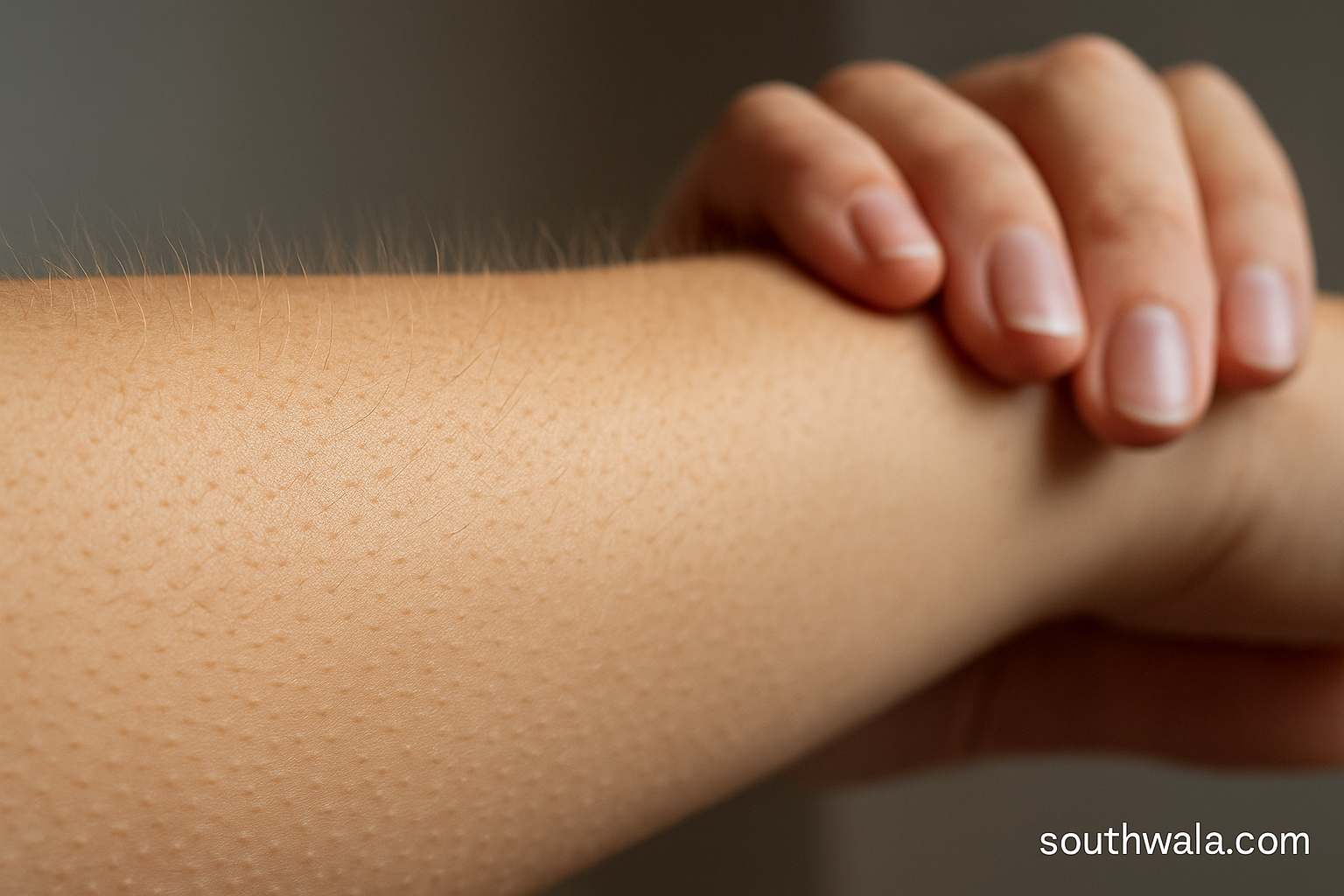
- Tiny bumps rise, and the hair stands straight.
- This is the goosebump effect, and while it looks small, it carries a story from thousands of years ago.

Highlights
- Goosebumps are a natural reaction that comes from our ancient survival instincts
- They happen when small muscles in the skin tighten and make hair stand up
- Can be caused by cold, emotions, or fear
- Helped our ancestors stay warm and scare predators
- Still show the deep link between our mind and body
We have all felt it at some point. You step into a cold room, hear a song that gives you chills, or watch an intense scene in a film and suddenly your skin changes. Tiny bumps rise, and the hair stands straight. This is the goosebump effect, and while it looks small, it carries a story from thousands of years ago.
What Exactly Are Goosebumps
Goosebumps appear when small muscles in your skin, called arrector pili, pull on each hair follicle. This makes the hair stand up and the skin look bumpy.
In animals, this reaction is more noticeable. A cat’s fur will puff up when it feels threatened. Birds will fluff their feathers to trap heat. Humans have far less body hair, so the effect is not as dramatic, but it is still a part of us.
Why Do They Happen
- Cold Temperatures
When you feel cold, your body tries to keep the heat in. Raising the hair can create a layer of insulation. This works well for animals with thick fur, but for us, it is mostly a leftover from our past. - Strong Emotions
Goosebumps can appear when you feel something deeply. It could be a moving song, a powerful speech, or a memory from your childhood. - Fear or Threat
Long ago, when humans had more body hair, this reaction helped them appear bigger to predators. It was part of the fight or flight response.
The Brain Connection
Goosebumps are controlled by a part of the brain called the hypothalamus. It sends signals through the nervous system to the skin’s tiny muscles. This is why a physical change on the skin can be linked to emotions, memories, and even danger.
Do We Still Need Them
Today, goosebumps do not give us much physical protection. But they still serve a purpose. They show how emotions and the body are connected. Scientists study them to understand how the brain reacts to music, fear, and other strong feelings.
Music and Goosebumps
A study from the University of Southern California found that goosebumps from music are linked to dopamine release. This chemical in the brain is connected to pleasure and reward, which is why a song you love can send chills down your spine.
FAQs
1. Can goosebumps happen without cold or fear?
Yes. They can appear when you feel strong emotions or recall powerful memories.
2. Do some people get goosebumps more easily than others?
Yes. People with more sensitive nervous systems or higher emotional response tend to get them more often.
3. Can animals get goosebumps?
In a way, yes. Animals fluff their fur or feathers for warmth or to look bigger.
4. Are goosebumps harmful?
No. They are a normal body reaction and are harmless.
5. Can goosebumps be a sign of illness?
Very rarely. In some cases, unusual goosebump patterns can be linked to nerve or skin conditions.
Author


Discover more from Southwala
Subscribe to get the latest posts sent to your email.