Southwala Shorts
- There is a common saying that lightning never strikes the same place twice.
- In reality, science proves the opposite.
- Lightning not only can strike the same spot multiple times, it often does.
- Tall structures, open fields, and high-energy environments frequently attract repeated lightning strikes because of their physical and electrical properties.

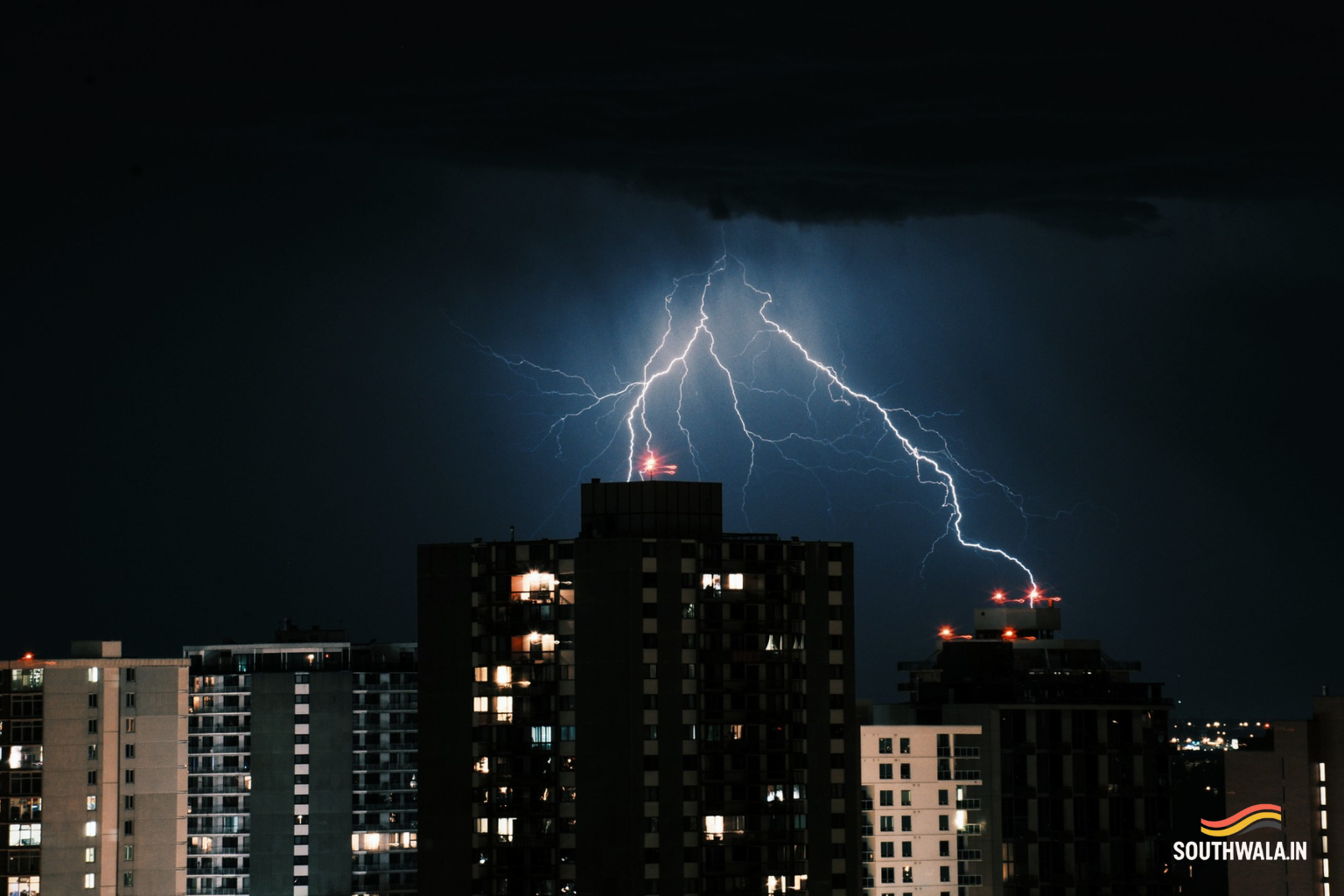
There is a common saying that lightning never strikes the same place twice. In reality, science proves the opposite. Lightning not only can strike the same spot multiple times, it often does. Tall structures, open fields, and high-energy environments frequently attract repeated lightning strikes because of their physical and electrical properties. Understanding how lightning behaves helps protect lives, plan safer buildings, and respond better to storms.
The Nature of Lightning
Lightning is a massive electrical discharge created when there is an imbalance between clouds and the ground. Storm clouds build up millions of volts of electrical charge. When this charge becomes too strong, it releases energy in the form of lightning. The strike follows the fastest and easiest path toward the ground, searching for objects that conduct electricity better than air.
Lightning is drawn toward tall, pointed, or metal structures because they help complete the electrical connection faster than flat ground. That is why lightning rods, skyscrapers, and trees are common targets.
Why Certain Places Get Hit Repeatedly
Some locations act like magnets for lightning because they continuously offer the best pathway for electrical discharge. Tall structures are natural attractors. For example, the Empire State Building in New York is struck more than 20 times every year. In India, communication towers and industrial chimneys receive repeated strikes during monsoons.
Even natural objects can attract strikes repeatedly. Isolated trees in open fields collect more strikes because they stand above ground level and conduct current well. Mountain peaks and high-altitude temples like Kedarnath or Vaishno Devi are also high-risk zones.
The Role of Conductivity
Lightning prefers objects that allow electricity to move easily. Metals, water, and moist soil conduct electric charge smoothly. A place with good conductivity becomes a repeated target.
Urban areas contain metal infrastructure, water pipelines, tall buildings, and power networks that encourage repeated lightning strikes. Rural regions with long open fields and electric poles face similar patterns.
Once lightning hits a place, it often ionises the surrounding air, making the path easier for the next strike. This creates a channel that guides future bolts to return along the same route.
The Myth Versus the Science
The belief that lightning avoids the same place twice may come from the natural human instinct to simplify danger. But scientific data proves lightning is unpredictable and repetitive.
If lightning hits a tree once, that tree becomes hotter, wetter, and more conductive, increasing its chances of being hit again. Structures struck once are not safer afterwards; they become more vulnerable.
How Humans Can Stay Safe
Knowing that lightning returns to the same points means planning better safety measures. Installing lightning rods on buildings redirects strike energy safely into the ground. Avoiding open areas, metal objects, and tall trees during storms reduces risk. Staying indoors and disconnected from electrical appliances is essential during thunderstorms.
Awareness changes survival. Lightning does not care about luck; it follows physics.
FAQs
1. Why does lightning strike tall objects repeatedly
Because tall objects provide the shortest path to release stored electrical energy from clouds.
2. Why do metal structures attract more lightning
Metal conducts electricity more efficiently, making it a preferred route for a lightning strike.
3. Why do some places record many lightning strikes every year
Their height, location, and conductivity make them ideal pathways for electrical discharge.
4. Why can lightning return to the same spot
The ionised air from a previous strike makes the pathway easier for another discharge.
5. Why should people avoid open areas during storms
Open ground offers no protection, and people become the highest conductors in the area.
Author


Discover more from Southwala
Subscribe to get the latest posts sent to your email.