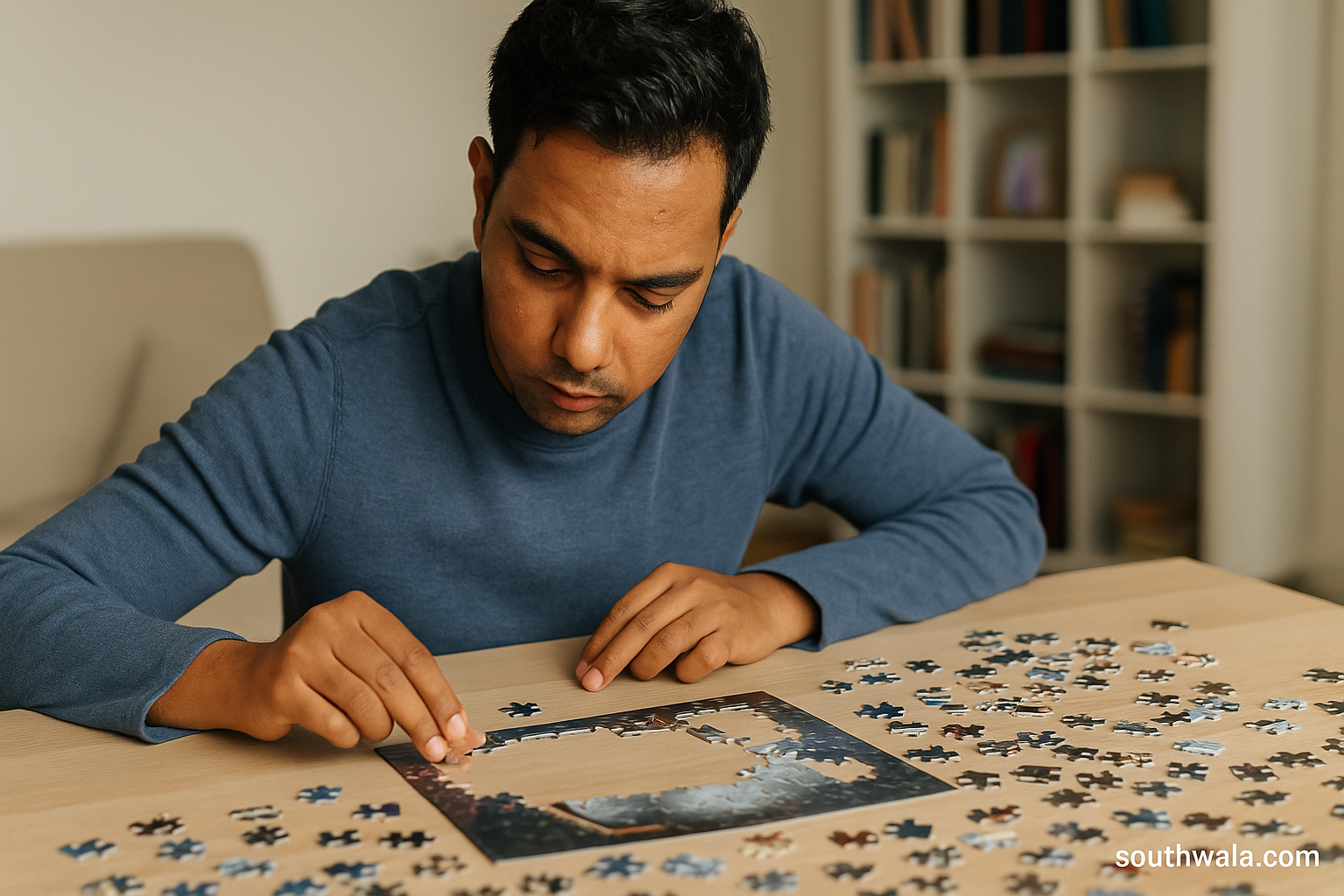
Southwala Shorts
- We all know the feeling.
- You sit down with a crossword, Sudoku, jigsaw, or even a tricky riddle.
- At first, it feels like you are struggling to find the answer.
- But then, the moment you solve it, there is a small rush of happiness.

Highlights
- Puzzles make different parts of the brain work together
- They improve memory, focus and problem-solving skills
- Solving puzzles releases dopamine, the brain’s feel-good chemical
- They act like a workout for the mind and can keep the brain sharp for years
- Puzzles may even slow down memory loss as we get older
We all know the feeling. You sit down with a crossword, Sudoku, jigsaw, or even a tricky riddle. At first, it feels like you are struggling to find the answer. But then, the moment you solve it, there is a small rush of happiness. That is not just in your imagination. Something real is happening inside your brain.
How the Brain Works During a Puzzle
When you work on a puzzle, several parts of your brain become active at the same time.
- The memory centre, called the hippocampus, helps you recall clues or remember patterns
- The logic and planning area, called the prefrontal cortex, helps you think through different possibilities
- The visual centre, called the occipital lobe, helps you see and recognise shapes and patterns
- If you are moving pieces around, your motor skills area is also working
It is like giving your brain a full workout in one activity.
Role of Dopamine
Every time you make progress in a puzzle, your brain rewards you with a small dose of dopamine. This is a chemical linked to pleasure, motivation and focus. This is why puzzles can be so addictive. You start wanting that little happy feeling again.
A study from Goldsmiths, University of London, found that even small puzzle challenges can boost dopamine levels and make people feel more positive.
Building New Brain Connections
Puzzles help your brain stay flexible by creating new connections between brain cells. This is called neuroplasticity. The more connections your brain has, the easier it becomes to learn new things and solve problems.
Think of it as upgrading your brain’s wiring so it works faster and better.
Workout for the Mind
Just like exercise keeps your body strong, puzzles keep your brain in shape. They help with:
- Problem-solving
- Focus and patience
- Creative thinking
Puzzles and Mental Health
Puzzles are not just for boosting intelligence. They can also help reduce stress. When you focus on a puzzle, you forget about other worries for a while. It works like a short form of meditation.
Some therapists even use puzzles to help people with anxiety, depression or memory problems.
Can Puzzles Make You Smarter
Puzzles may not turn you into a genius overnight, but they do make your thinking sharper. People who do puzzles regularly often process information faster, remember details better and make decisions more quickly.
A 2019 study in the International Journal of Geriatric Psychiatry found that older adults who solved puzzles had brain function similar to people 10 years younger.
FAQs
1. Can puzzles help with memory loss?
Yes, solving puzzles regularly can keep your memory sharp for longer.
2. Are all puzzles equally good for the brain?
Different puzzles train different skills, so a mix works best.
3. How much time should I spend on puzzles each day?
Even 15 to 20 minutes a day can be helpful.
4. Are digital puzzles as good as physical ones?
Yes, as long as they challenge your brain.
5. Should children do puzzles?
Yes, puzzles help kids develop memory, problem-solving and patience from an early age.
Author


Discover more from Southwala
Subscribe to get the latest posts sent to your email.