Southwala Shorts
- Feeding astronauts on Mars is one of NASA’s greatest challenges in space exploration.
- The planet has no farms, rain, or breathable atmosphere, yet the goal is to create a sustainable food system for future missions.
- NASA scientists are using a mix of biology, robotics, and agricultural innovation to make this possible.
- Mars is a planet of extremes.

Feeding astronauts on Mars is one of NASA’s greatest challenges in space exploration. The planet has no farms, rain, or breathable atmosphere, yet the goal is to create a sustainable food system for future missions. NASA scientists are using a mix of biology, robotics, and agricultural innovation to make this possible.
The Challenge of Growing Food on Mars
Mars is a planet of extremes. Temperatures can drop below minus sixty degrees Celsius, the atmosphere is thin and mostly carbon dioxide, and water exists only in frozen form. The soil contains toxic chemicals, and frequent dust storms block sunlight for weeks.
Traditional farming cannot survive in these conditions. NASA’s goal is to build a self-contained agricultural system that mimics Earth’s environment in controlled settings.
Farming in Controlled Habitats
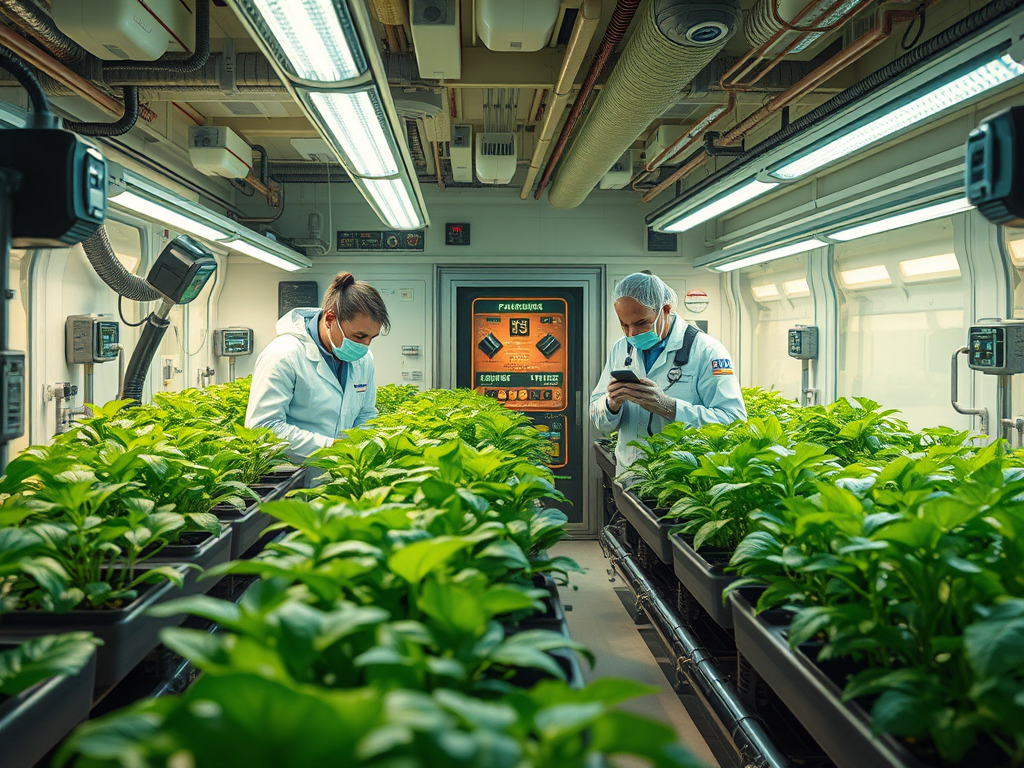
NASA’s main plan involves creating controlled environments where plants can grow safely. These are sealed chambers that maintain the right air, temperature, light, and water balance. Inside these modules, scientists can adjust oxygen and carbon dioxide levels, humidity, and pressure.
These farming pods act like miniature greenhouses that protect plants from radiation and cold while recycling air and water.
Using Martian Soil for Farming
Scientists have tested soil similar to that found on Mars, known as Martian regolith. On its own, this soil cannot support plant life because it contains perchlorates and metals that are toxic. However, NASA studies show that mixing it with nutrients and bacteria from Earth can make it more fertile.
This process is known as bio-soil creation. It may one day allow astronauts to grow crops directly on Martian ground rather than bringing soil from Earth.
Hydroponic and Aeroponic Farming
Since Martian soil is not yet ready for large-scale farming, NASA is focusing on soilless systems.
Hydroponics uses water enriched with minerals, while aeroponics grows plants in an air mist with minimal water. These systems save space and recycle every drop of liquid.
NASA has already succeeded with these techniques on the International Space Station, where astronauts have grown lettuce and radishes in zero gravity.
Artificial Lighting and Power
Mars receives less sunlight than Earth, so NASA plans to use LED lighting that mimics the light spectrum needed for photosynthesis. The red and blue lights help plants grow faster and healthier. Energy for these lights will come from solar panels and compact nuclear sources designed for Mars missions.
Recycling and Sustainability
NASA’s vision is to build a circular life-support system where nothing goes to waste. Carbon dioxide from astronauts will be used by plants to produce oxygen. Water from waste will be purified and reused. This closed-loop ecosystem will help astronauts stay independent of supplies from Earth.
Crops Selected for Mars
NASA’s agricultural team focuses on crops that grow quickly and require less energy.
Leafy greens such as lettuce and spinach are easy to grow and provide vitamins. Root vegetables such as carrots, beets, and potatoes offer high nutrition. Wheat, rice, and beans are also being tested for long-term missions.
NASA’s effort to grow food on Mars is not just about feeding astronauts but about building a foundation for life beyond Earth. Each experiment brings us closer to living sustainably in deep space. By combining technology, plant biology, and smart design, NASA is proving that even the barren soil of Mars can become a source of life.
FAQs
Can plants survive on Mars?
Plants cannot grow naturally on Mars but can thrive inside controlled habitats built by NASA.
Can Martian soil be made usable?
Yes, by removing toxins and adding microbes or nutrients, it can support plant growth.
Can hydroponic systems work on Mars?
Yes, hydroponics allows farming without soil using nutrient-rich water.
Can astronauts eat the plants grown in space?
Yes, NASA has already tested and consumed crops grown aboard the space station.
Can growing food reduce supply needs from Earth?
Yes, it helps astronauts live on Mars for long periods without constant resupply.
Author


Discover more from Southwala
Subscribe to get the latest posts sent to your email.