Southwala Shorts
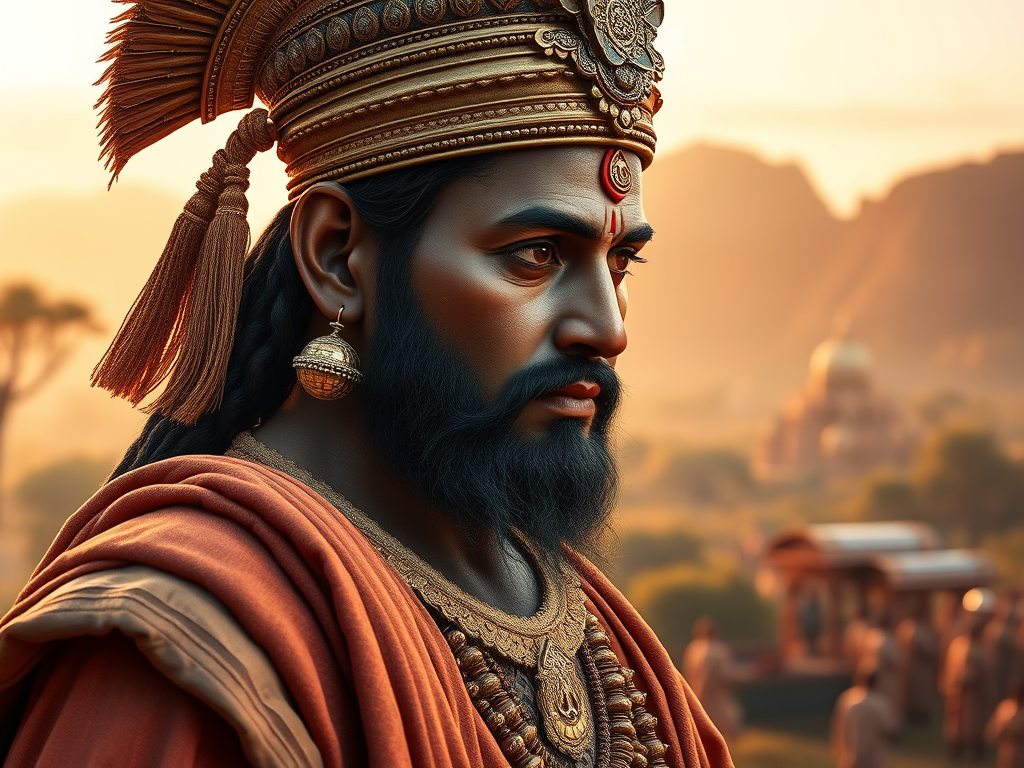
- Among the great rulers of India, Emperor Ashoka of the Maurya Dynasty stands out as a king who changed the course of history.
- Once known for ruthless wars and expansion, Ashoka transformed into a champion of peace and dharma after witnessing the horrors of battle.
- His conversion to Buddhism remains one of the most remarkable turning points in world history.
- Ashoka was the grandson of Chandragupta Maurya and the son of Bindusara.

Among the great rulers of India, Emperor Ashoka of the Maurya Dynasty stands out as a king who changed the course of history. Once known for ruthless wars and expansion, Ashoka transformed into a champion of peace and dharma after witnessing the horrors of battle. His conversion to Buddhism remains one of the most remarkable turning points in world history.
Early Life of Ashoka
Ashoka was the grandson of Chandragupta Maurya and the son of Bindusara. Born around 304 BCE, he grew up in a dynasty that controlled a vast empire stretching across most of India. Known for his intelligence and military skills, Ashoka was appointed as governor in Ujjain and Taxila before becoming emperor.
The Kalinga War: A Turning Point
The most significant event in Ashoka’s life was the Kalinga War (261 BCE).
- Kalinga, located in present-day Odisha, resisted Mauryan control.
- The war was bloody, with over 100,000 people killed and many more displaced.
- Though victorious, Ashoka was deeply disturbed by the suffering and destruction caused by his army.
This emotional shock made him question the path of violence and conquest.
Ashoka’s Embrace of Buddhism
After Kalinga, Ashoka turned towards Buddhism, a faith that emphasized non-violence, compassion, and respect for life.
- He became a follower of the Buddha’s teachings and took vows to uphold dharma (righteousness).
- Instead of wars, he focused on spreading peace and welfare.
- Ashoka declared that true victory lies in winning people’s hearts through kindness, not force.
Reforms After Conversion
Ashoka’s reign after conversion reflected his new values:
- He built hospitals, rest houses, and roads for public welfare.
- He promoted religious tolerance and respect for all faiths.
- He sent Buddhist missionaries to Sri Lanka, Central Asia, and beyond, making Buddhism a global religion.
- The famous Ashokan Edicts, inscribed on rocks and pillars, spread messages of peace, compassion, and moral conduct across the empire.
Historical Legacy of Ashoka
Ashoka is remembered as one of the greatest emperors in Indian and world history.
- His lion capital at Sarnath is now India’s national emblem.
- The Ashoka Chakra, symbolizing dharma, appears on the Indian national flag.
- His life shows how power can be transformed into service and violence into peace.
Ashoka’s rejection of violence and embrace of Buddhism is a lesson in humanity. His decision turned an empire of conquest into an empire of compassion. More than two thousand years later, his story continues to inspire leaders, thinkers, and common people who believe in peace over aggression.
FAQs about Which King of India Rejected Violence and Converted to Buddhism?
Can Ashoka be called the greatest Mauryan ruler?
Yes, his reign combined political strength with moral leadership.
Can the Kalinga War be seen as the turning point of his life?
Yes, the war made him reject violence and seek peace.
Can Buddhism spread globally because of Ashoka?
Yes, his missionaries carried Buddhism to Sri Lanka, Central Asia, and beyond.
Can Ashoka’s edicts still be found in India?
Yes, inscriptions on rocks and pillars remain across many states.
Can modern India trace symbols back to Ashoka?
Yes, the lion capital and Ashoka Chakra are national symbols.
Author


Discover more from Southwala
Subscribe to get the latest posts sent to your email.