Southwala Shorts
- Srikalahasti Temple stands as one of South India’s most sacred and scientifically fascinating shrines.
- Located in the Chittoor district of Andhra Pradesh near Tirupati, this ancient temple is dedicated to Lord Shiva, worshipped here as Kalahasteeswara.
- The temple is famous across India as the “Kashi of the South” and is especially known for the Rahu Ketu Dosha Nivarana Puja, a ritual...
- The temple’s architecture, myths, and spiritual energy make it a place where science, devotion, and tradition blend beautifully.

Srikalahasti Temple stands as one of South India’s most sacred and scientifically fascinating shrines. Located in the Chittoor district of Andhra Pradesh near Tirupati, this ancient temple is dedicated to Lord Shiva, worshipped here as Kalahasteeswara. The temple is famous across India as the “Kashi of the South” and is especially known for the Rahu Ketu Dosha Nivarana Puja, a ritual believed to remove obstacles caused by planetary positions.
The temple’s architecture, myths, and spiritual energy make it a place where science, devotion, and tradition blend beautifully.
The Legend Behind Srikalahasti
According to legend, three devotees, a spider (Sri), a serpent (Kala), and an elephant (Hasti), worshipped Lord Shiva with pure devotion in different ways. The spider spun a web to protect the Shiva Linga from dust and sunlight, the serpent placed precious stones around it, and the elephant washed it daily with water from the river.
One day, their worship methods clashed. In the battle that followed, all three died. Lord Shiva, moved by their devotion, blessed them with salvation and took the combined name “Srikalahasteeswara.” The story represents the purity of intention in worship, showing that devotion matters more than ritual.
The Connection with the Element of Air
Srikalahasti is one of the Pancha Bhoota temples, representing the five natural elements. Here, Lord Shiva is worshipped as the embodiment of Vayu (air). Devotees believe the presence of air can be felt in the sanctum as the lamp flames flicker gently even in a closed space without any wind. This unique feature symbolizes the invisible power of life breath.
The temple teaches that life is sustained by air and that every breath is a reminder of divine energy.
Architectural Brilliance and Temple Structure
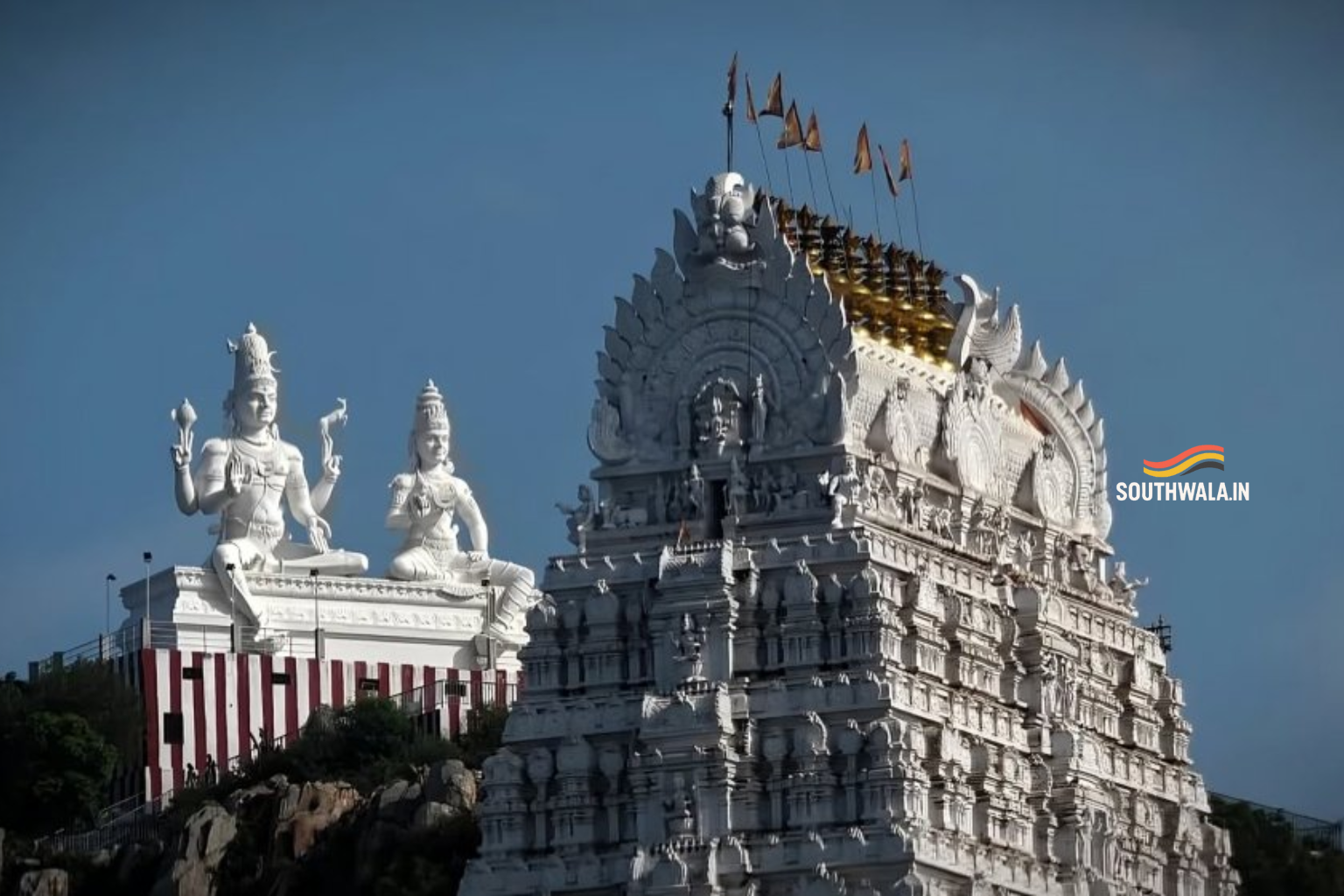
The temple’s architecture is a masterpiece of Dravidian style, built by the Pallava and Chola kings. The towering Gopuram at the entrance rises to over 120 feet, welcoming visitors with detailed carvings of deities, dancers, and celestial figures. Inside, the sanctum is carved out of a single stone hill, making it both ancient and architecturally rare.
The main shrine houses the self-manifested Shiva Linga. Unlike other temples, priests do not touch it. The deity is adorned and worshipped without direct human contact, symbolizing the untouchable purity of the air element.
Nearby, there are shrines dedicated to Goddess Gnanaprasunambika, Lord Subramanya, and Rahu-Ketu. Devotees often visit these shrines as part of their temple circuit.
The Rahu-Ketu Dosha Puja
Srikalahasti is world-famous for its Rahu-Ketu Dosha Nivarana Puja. People from across India and abroad visit to perform this ritual to reduce the effects of certain planetary alignments in their horoscopes. The puja is performed daily, and thousands of devotees attend it every month.
This ritual is believed to bring relief from obstacles related to marriage, career, and health. The temple priests guide devotees based on their birth charts, and the puja is said to bring balance to one’s energy and destiny.
The Spiritual Energy and Devotee Experience
Walking inside Srikalahasti feels like stepping back in time. The air is heavy with the sound of bells and chants, and the calm energy inside the main sanctum gives a feeling of deep peace. The temple’s atmosphere encourages self-reflection. Many devotees describe feeling lighter and calmer after offering prayers here.
The temple stands on the banks of the river Swarnamukhi, which adds to the serenity of the surroundings. Pilgrims often take a holy dip before entering the temple. The reflection of the temple gopuram in the water at sunrise creates a stunning sight.
The Historical Importance
Srikalahasti’s origins date back nearly 2,000 years. References to it are found in ancient texts like the Skanda Purana. It was patronized by Pallava, Chola, and Vijayanagara kings, who contributed richly to its expansion. Krishnadevaraya, the ruler of Vijayanagara, renovated the main tower and added intricate carvings that remain intact to this day.
The temple has also been an important center of Shaivism in South India. Many saints, including Appar and Sundarar, have sung hymns in praise of the deity here.
The Symbolism of Faith and Breath
The temple’s deeper message lies in its connection to breath. Every living being survives because of air. The constant movement of breath mirrors the constant movement of life itself. Lord Shiva in Srikalahasti represents that unseen force which keeps life going.
This concept makes the temple not just a place of prayer but a reminder of how faith, like air, is invisible yet powerful.
The Experience for Modern Visitors
For today’s visitors, Srikalahasti offers both spiritual depth and architectural wonder. The rituals, chants, and atmosphere make it a place where the mind naturally slows down. It is also easily accessible from Tirupati, making it a must-visit for pilgrims heading to both temples.
The temple remains open throughout the year, with special festivals like Maha Shivaratri drawing lakhs of devotees. The sight of the temple lit up at night with oil lamps and chants echoing across the valley leaves a lasting impression.
The Eternal Message of Srikalahasti
Srikalahasti is not only about rituals but about realizing the connection between life and the divine through air and breath. The temple stands as proof that spirituality is timeless, and its lessons are as relevant today as they were thousands of years ago. Every visitor leaves with a sense of stillness, gratitude, and reverence toward life itself.
Frequently Asked Questions (FAQs)
Why is Srikalahasti called the temple of air
It is one of the five temples representing the natural elements. The Shiva Linga here represents the element of air, and devotees believe the presence of wind energy is felt inside the sanctum.
How old is the Srikalahasti Temple
The temple is believed to be over 2,000 years old, with contributions from the Pallava, Chola, and Vijayanagara kings.
Why is the Rahu-Ketu puja performed here?
The temple is known for removing the effects of planetary doshas, and special rituals are performed daily to bring peace and balance to devotees’ lives.
Is there any connection between Srikalahasti and Tirupati
Yes. Both temples are spiritually linked. Devotees often visit Srikalahasti before Tirupati as a form of cleansing and preparation for Lord Venkateswara’s darshan.
Can visitors feel any unique experience inside the temple
Many devotees report feeling a calm flow of air and a deep sense of silence during prayers. The spiritual energy of the place makes the experience memorable.
Author


Discover more from Southwala
Subscribe to get the latest posts sent to your email.