Southwala Shorts
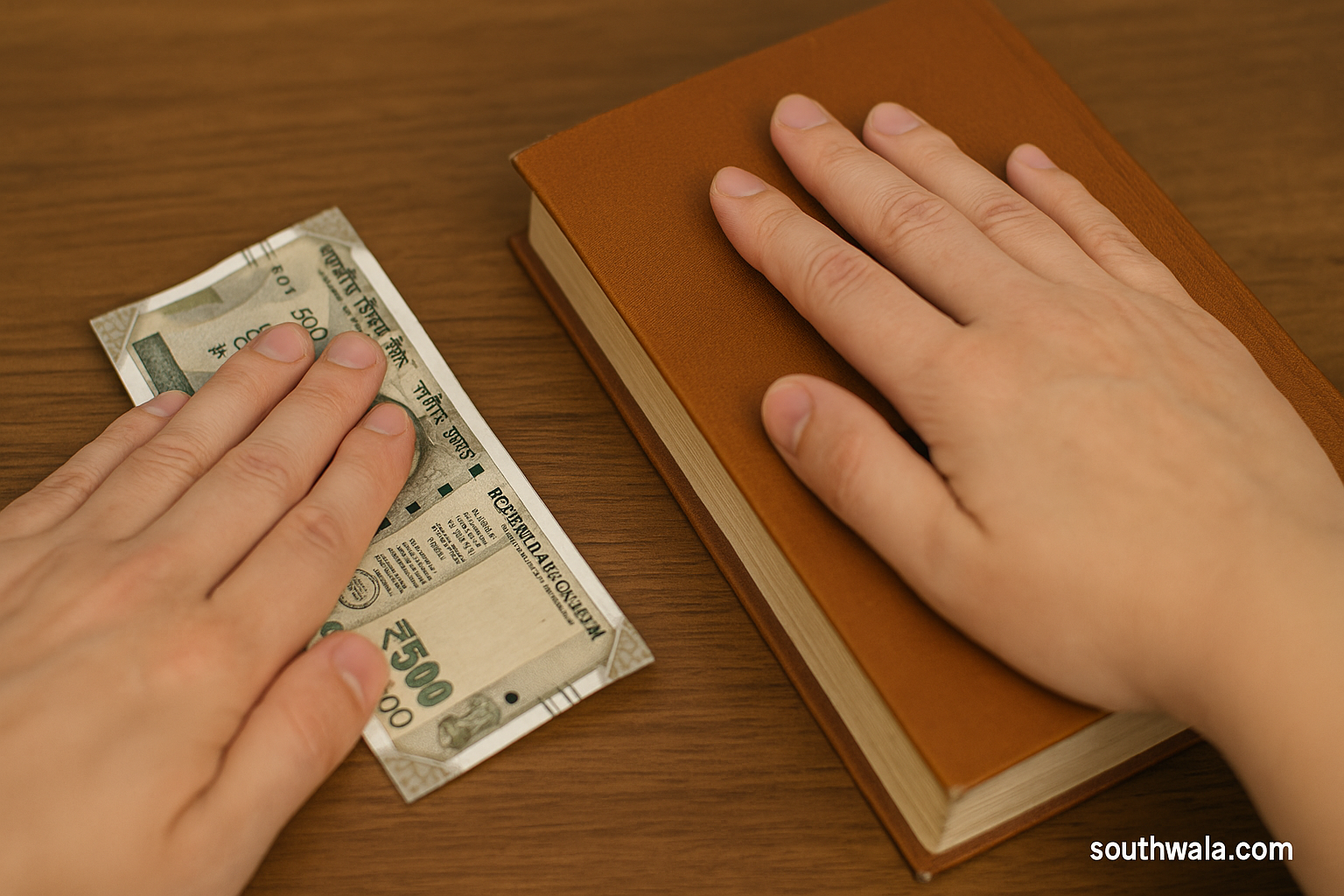
- In India, it is common to see people touch a book or currency to their forehead if it accidentally falls on the ground.
- This small gesture may look simple, but it carries deep cultural meaning.
- Books and money are not seen as ordinary objects.
- They are symbols of knowledge and prosperity, two powerful forces that shape life.

In India, it is common to see people touch a book or currency to their forehead if it accidentally falls on the ground. This small gesture may look simple, but it carries deep cultural meaning. Books and money are not seen as ordinary objects. They are symbols of knowledge and prosperity, two powerful forces that shape life.
Books as a Symbol of Knowledge
In Indian tradition, books represent the goddess Saraswati, the deity of wisdom and learning. Dropping a book is considered disrespectful because it is like insulting the source of knowledge. To show gratitude, people touch the book to their forehead or chest. This is a way of reminding themselves that learning is sacred and should never be taken lightly.
Money as a Symbol of Wealth
Money is connected to the goddess Lakshmi, who represents prosperity and fortune. By treating currency with respect, people show their value for the blessings of wealth. Even a single coin is considered important because it reflects the hard work and opportunities that allow people to earn. Touching fallen money to the forehead is a way of saying thank you to Lakshmi.
The Spiritual View
Beyond religion, this practice also reflects the belief that energy flows through objects. Books carry the energy of learning, and money carries the energy of abundance. By showing respect, people align themselves with positive vibrations instead of ignoring or wasting them.
The Psychological Angle
Psychologists explain that rituals like these build mindfulness. When people treat books and money with respect, they stay aware of their importance. This prevents careless behavior and creates discipline in daily life. For example, a student who respects books is more likely to study seriously. A person who respects money is more likely to use it wisely.
The Social Value
This tradition also builds community values. Children who grow up practicing it learn that knowledge and wealth must be honored. It creates a culture where education and hard work are valued, not just material possessions.
FAQs
1. Why do Indians touch books when they fall on the ground?
Because books represent knowledge and the goddess Saraswati. Touching them shows respect for learning.
2. Why is money treated with such respect in India?
Money is connected with goddess Lakshmi, the giver of wealth, so even small amounts are valued and honored.
3. Is this practice only religious?
No. It also has cultural, psychological, and social reasons. It teaches people to value learning and resources.
4. Do young generations still follow this habit?
Yes, many do, especially in traditional families, schools, and temples, though urban youth may practice it less often.
5. Can this be seen outside India?
Yes. Countries like Nepal, Sri Lanka, and other South Asian regions with similar traditions also show respect to books and money.
Author


Discover more from Southwala
Subscribe to get the latest posts sent to your email.