Southwala Shorts
- Eating and drinking in space sound simple, but in zero gravity, even basic actions become complex science.
- Without gravity to pull food and liquids down, astronauts rely on specially designed packaging, equipment, and techniques to ensure they can eat safely and stay...
- Space food is carefully planned long before the mission begins.
- Every meal must provide the right nutrition, stay fresh for months, and be easy to handle in microgravity.

Eating and drinking in space sound simple, but in zero gravity, even basic actions become complex science. Without gravity to pull food and liquids down, astronauts rely on specially designed packaging, equipment, and techniques to ensure they can eat safely and stay healthy.
Food Design for Space Missions
Space food is carefully planned long before the mission begins. Every meal must provide the right nutrition, stay fresh for months, and be easy to handle in microgravity. NASA’s food scientists prepare meals that are lightweight, non-perishable, and easy to heat or hydrate.
Different types of food include:
- Thermostabilized food: Heat-treated to destroy bacteria and sealed in pouches (like curries or soups).
- Freeze-dried meals: Water is removed, making the food weightless and shelf-stable. Astronauts add hot water before eating.
- Snacks: Nuts, granola bars, and dried fruits are common because they don’t crumble easily.
- Fresh items: Occasionally sent on cargo missions, including fruits and tortillas (instead of bread).
Eating in Microgravity
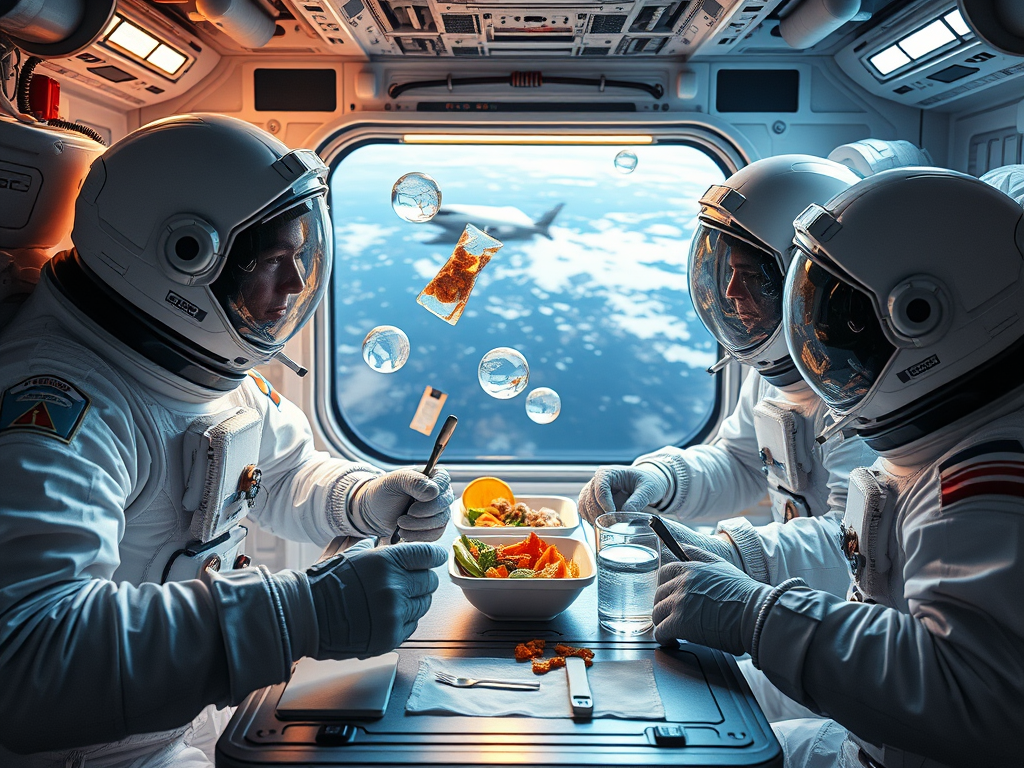
Gravity keeps food on the plate and drinks in the glass on Earth, but in space, everything floats. To manage this:
- Astronauts eat from vacuum-sealed pouches or magnetic trays to prevent floating crumbs.
- Forks, spoons, and knives have Velcro or magnets to stick to the tray.
- Tortillas replace bread because they don’t create crumbs that can damage equipment or get into eyes and noses.
Astronauts must secure everything before opening it. Even a small spill can become a floating hazard.
Drinking in Space
Liquid behaves differently in space. Without gravity, water forms floating spheres. To avoid spills, astronauts drink through straws attached to special sealed pouches.
- Drinks like water, coffee, and juice are prepackaged in these pouches.
- Valves prevent liquids from escaping.
- Rehydration units add water to powdered drinks.
For long missions, water is even recycled from humidity, sweat, and urine, purified through advanced filtration systems. This recycling ensures sustainability on the International Space Station (ISS).
Food Experience and Taste
In space, food tastes different. Due to fluid shift in the body, astronauts often feel congested, dulling their sense of taste. To fix this, they prefer spicy or strongly flavored meals.
Hot sauce, mustard, and wasabi are popular because salt and pepper are only available in liquid form powders would float away.
Eating Together in Space
Even with tight schedules, astronauts try to eat together. Shared meals bring a sense of normalcy, reduce stress, and maintain team bonding. Every crew member contributes by sharing their country’s food, for example, Japanese miso soup, Indian curries, or Italian pasta.
Challenges of Space Eating
Space meals must solve multiple challenges:
- Prevent contamination in zero gravity.
- Ensure nutrition for muscle and bone health.
- Avoid excess packaging waste.
- Maintain food variety to prevent appetite loss.
Future missions to Mars aim to include space farming growing lettuce, tomatoes, and microgreens aboard spacecraft to provide fresh food and oxygen.
Eating and drinking in space is a careful balance between science, technology, and comfort. From magnetic trays to recycled water, every system is designed to keep astronauts nourished, safe, and motivated. Each meal is more than food; it’s a reminder of home, teamwork, and human adaptability beyond Earth.
FAQs
Can astronauts eat fresh food in space?
Yes, occasionally fresh fruits and vegetables are sent from Earth, but most food is packaged and preserved.
Can drinks float away in space?
No, special pouches with straws and valves prevent liquids from escaping.
Can food taste different in space?
Yes, reduced gravity affects blood flow to the head, dulling taste buds, so astronauts prefer stronger flavors.
Can astronauts cook in space?
Not like on Earth. They can heat meals using warmers but cannot fry, boil, or use open flames.
Can food be grown in space?
Yes, small plants like lettuce and herbs have been successfully grown on the ISS as part of future space farming plans.
Author


Discover more from Southwala
Subscribe to get the latest posts sent to your email.