Southwala Shorts
- Jupiter is more than a giant planet in our night sky.
- It is the Solar System’s protector, gravity master, and silent stabilizer.
- If it vanished overnight, the effects would ripple across space for millions of years.
- The change would not destroy Earth immediately, but it would rewrite the balance of our cosmic neighborhood in slow, unpredictable ways.

Jupiter is more than a giant planet in our night sky. It is the Solar System’s protector, gravity master, and silent stabilizer. If it vanished overnight, the effects would ripple across space for millions of years. The change would not destroy Earth immediately, but it would rewrite the balance of our cosmic neighborhood in slow, unpredictable ways.
The Giant That Holds Everything Together
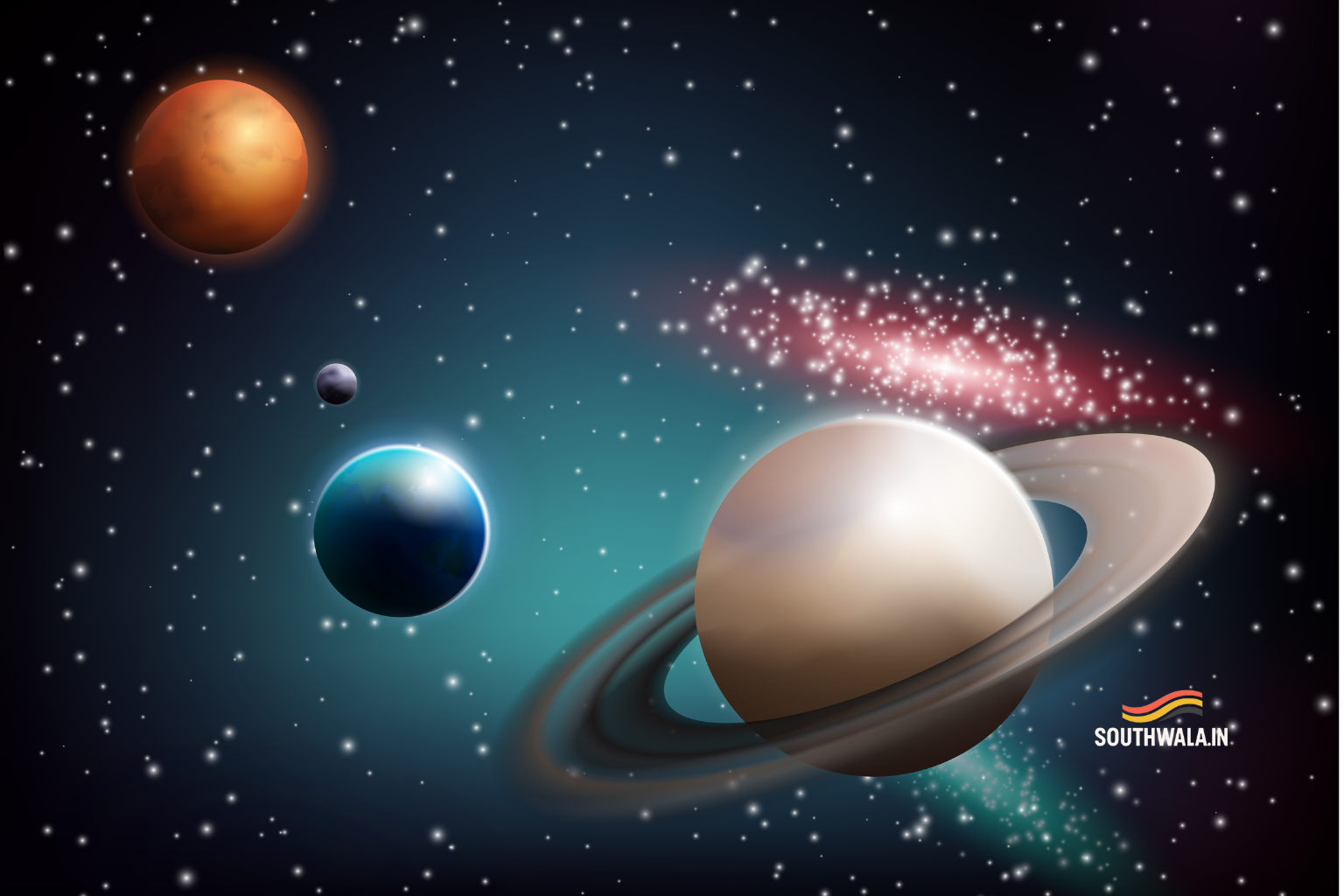
Jupiter is the largest planet in the Solar System, more than 300 times the mass of Earth. Its gravity helps keep many things in order, from protecting the inner planets to controlling the asteroid belt between Mars and itself. This gravitational control acts like an invisible shield around Earth, pulling in or deflecting asteroids and comets that might otherwise collide with us.
If Jupiter suddenly disappeared, that balance would collapse instantly. The gravitational structure that holds the Solar System stable would shift, and every planet’s path would slightly change over time.
The Silent Role of Jupiter’s Gravity
Jupiter’s gravity acts as a guardian. It attracts or destroys many asteroids that wander too close to the inner Solar System. Without it, millions of small rocky bodies from the asteroid belt and outer Solar System would be left without direction. Some of these would slowly drift toward the Sun and increase the risk of hitting Earth or Mars.
In simple terms, Jupiter plays cosmic goalkeeper. Take it away, and the number of asteroid impacts over the next few million years could rise dramatically.
The Effect on Other Planets
If Jupiter disappeared instantly, the other planets would not fly away immediately, because the Sun still provides most of the Solar System’s gravity. But their orbits would become slightly unstable over time.
Saturn, which is the next largest planet, would begin to drift or change its path slowly. The asteroid belt between Mars and Jupiter would lose its structure, with many of its rocks and minor planets moving unpredictably. Over thousands of years, this could create chaos across the inner Solar System, with more debris crossing Earth’s orbit.
For moons and smaller bodies that depend directly on Jupiter’s pull, like Europa, Io, Ganymede, and Callisto, their fate would be instant. Without Jupiter’s gravity, they would scatter into space. Some might drift toward the Sun; others could be captured by Saturn or ejected out of the Solar System entirely.
The Impact on Earth
For Earth, the change would be gradual rather than sudden. There would be no immediate explosion, no shift in gravity we could feel. But over long periods, Earth would become more vulnerable to collisions. Jupiter currently absorbs or deflects comets coming from the outer Solar System. Without it, many icy bodies from the Kuiper Belt would have an easier path toward the Sun, crossing Earth’s orbit.
Scientists estimate that without Jupiter, the rate of catastrophic impacts on Earth could increase several times. While these collisions might not happen tomorrow, over millions of years, they could reset the evolution of life itself.
The Loss of a Planetary Magnet
Jupiter also generates the strongest magnetic field of any planet in our Solar System. It helps protect its moons from cosmic radiation and creates powerful auroras. Without Jupiter’s magnetic influence, the space environment between Mars and Saturn would become harsher. Radiation from the Sun and cosmic particles from deep space would move more freely.
The loss of this magnetic shield would not affect Earth directly, but it would make future human missions to the outer planets more dangerous, as the radiation levels there would rise dramatically.
The Disappearance of a Gas Giant’s Legacy
If Jupiter vanished, the Solar System’s structure would slowly deform. Over tens of millions of years, orbits might overlap, planetary collisions could become more likely, and the neat spacing of planets we see today could dissolve into chaos.
Even the beautiful night sky would change. The bright dot of Jupiter, often the third brightest object after the Moon and Venus, would be gone. Ancient stargazers and modern scientists alike would lose a constant presence that has guided human observation for centuries.
The Larger Lesson from Jupiter’s Existence
Jupiter shows how interconnected the Solar System truly is. Every planet and moon depends on the balance of forces around it. Jupiter’s existence ensures that life on Earth remains relatively safe and stable. Its disappearance would not end life instantly, but it would remove one of the key reasons why Earth has stayed peaceful for billions of years.
The Solar System without Jupiter would be like a clock missing its central gear still ticking for a while, but slowly losing balance until it stops working properly.
Frequently Asked Questions (FAQs)
Why Jupiter is important for Earth’s safety
Jupiter’s gravity captures or deflects asteroids and comets that could otherwise hit Earth, reducing the number of catastrophic impacts.
How Jupiter keeps the Solar System stable
Its massive gravity helps maintain the orbits of planets, the asteroid belt, and smaller bodies, preventing chaos in the system.
If Jupiter disappeared, would Earth move out of orbit
No, Earth would continue orbiting the Sun, but small changes in gravitational balance would make its path slightly unstable over long periods.
How would other planets change without Jupiter?
Saturn, Uranus, and Neptune would gradually shift their positions, while the asteroid belt would become disorganized, sending debris toward the inner planets.
Would life survive in a Solar System without Jupiter
Life on Earth could continue for a while, but increased asteroid and comet impacts might eventually threaten life’s long-term survival.
Author


Discover more from Southwala
Subscribe to get the latest posts sent to your email.