Southwala Shorts
- The Allahabad High Court is not just another judicial institution in India; it is a cornerstone of the country’s legal evolution.
- Established during British rule and continuing into the modern democratic era, this court has witnessed, shaped, and safeguarded some of India’s most defining moments in...
- Located in Prayagraj (formerly Allahabad), this High Court holds a unique place in India’s judiciary.
- It is one of the oldest high courts in the country and has contributed immensely to both the Indian Constitution and the nation’s democratic fabric.

The Allahabad High Court is not just another judicial institution in India; it is a cornerstone of the country’s legal evolution. Established during British rule and continuing into the modern democratic era, this court has witnessed, shaped, and safeguarded some of India’s most defining moments in law, politics, and civil rights.
Located in Prayagraj (formerly Allahabad), this High Court holds a unique place in India’s judiciary. It is one of the oldest high courts in the country and has contributed immensely to both the Indian Constitution and the nation’s democratic fabric.
Historical Background and Establishment
The Allahabad High Court was founded on March 17, 1866, under the Indian High Courts Act of 1861, passed by the British Parliament. It replaced the Sudder Diwani Adalat and Sudder Nizamat Adalat, which were the main civil and criminal courts during colonial India.
Its creation marked the beginning of a new era of codified justice in northern India. The court started functioning from the city of Agra and was later shifted to Allahabad in 1869. The move to Allahabad was a strategic choice due to the city’s administrative and intellectual prominence at that time.
The High Court became the seat of major legal developments, setting the foundation for several legal interpretations that influenced post-Independence lawmaking.
Architectural and Institutional Significance
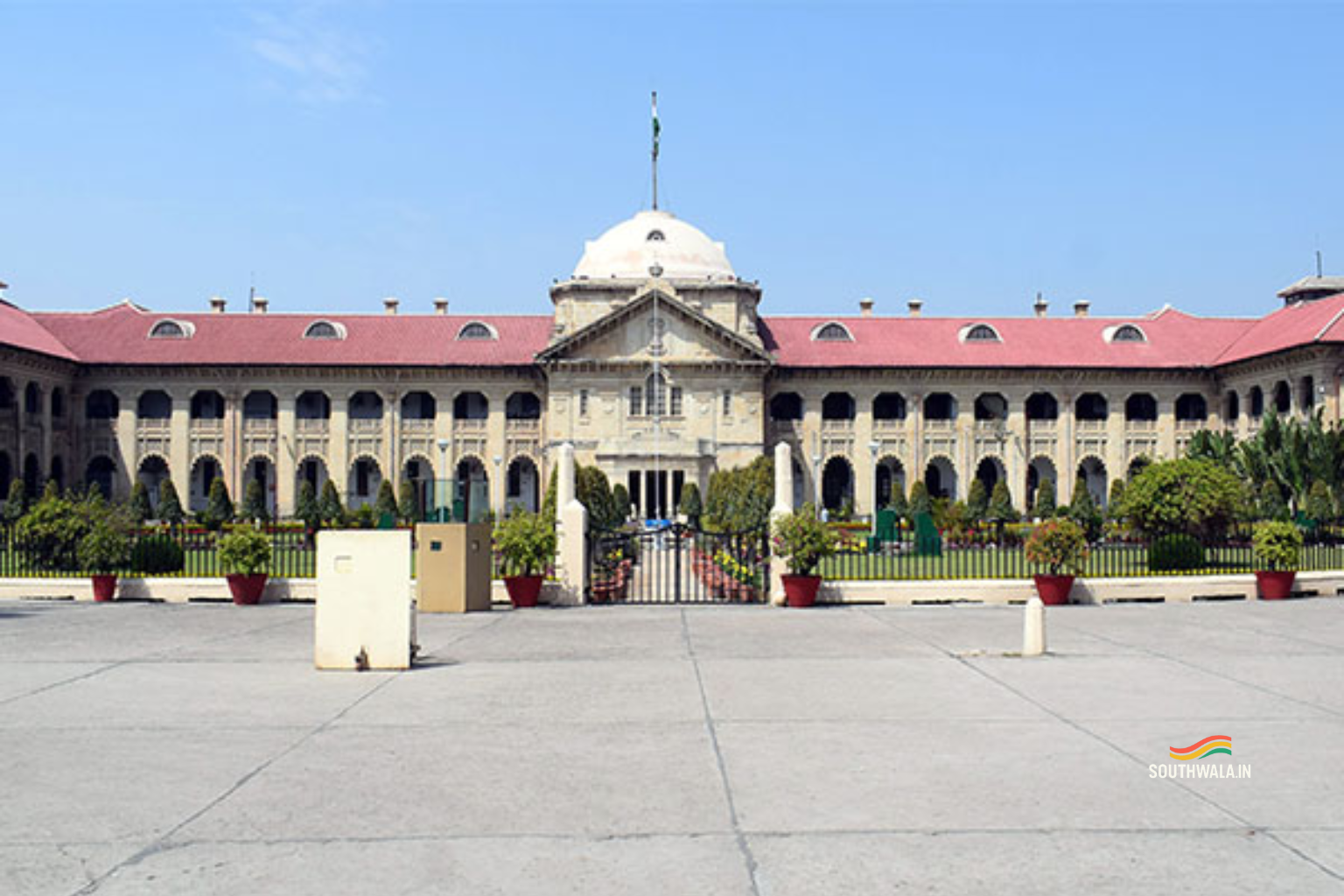
The building of the Allahabad High Court is an architectural landmark. Constructed in classical colonial style, it reflects the dignity and authority of the judiciary. Over the years, several extensions were added, but the structure still maintains its original grandeur.
Inside, the court functions through various divisions and benches handling constitutional, civil, criminal, and revenue cases. The Lucknow Bench, established in 1948, serves the legal needs of the Awadh region.
The Allahabad High Court’s jurisdiction covers the entire state of Uttar Pradesh, which makes it the largest High Court in India in terms of both area and caseload.
Landmark Judgments that Shaped India
The Allahabad High Court has delivered several landmark judgments that have changed the course of Indian history. Among them, the 1975 verdict against then Prime Minister Indira Gandhi stands as one of the most defining moments in Indian democracy.
In that case, Justice Jagmohan Lal Sinha found Indira Gandhi guilty of electoral malpractice, leading to her disqualification. The judgment directly triggered the declaration of the Emergency (1975-77), one of the most controversial periods in Indian politics.
Beyond politics, the court has played a crucial role in protecting fundamental rights, ensuring the rule of law, and upholding the constitutional vision of equality and justice.
Other important cases include decisions on reservation policies, religious disputes, environmental issues, and administrative reforms. Each verdict reflects the court’s continuing role as a guardian of justice.
The Ayodhya Case: A Defining Chapter
One of the most complex and long-running cases in India’s judicial history, the Ayodhya dispute, was handled for decades by the Allahabad High Court.
In 2010, the court delivered a historic verdict dividing the disputed land among three parties, like the deity Ram Lalla, the Sunni Waqf Board, and the Nirmohi Akhara. Though the final resolution came from the Supreme Court in 2019, the Allahabad High Court’s judgment remains a landmark in balancing faith, evidence, and legal reasoning.
This case highlighted the court’s ability to handle sensitive religious and social matters with caution and fairness.
Structure, Jurisdiction, and Functioning
The Allahabad High Court exercises jurisdiction over the entire state of Uttar Pradesh. It deals with a massive number of cases, from public interest litigations (PILs) to constitutional reviews.
The court has over 160 judges, including both permanent and additional judges, making it one of the largest judicial benches in Asia. It functions through two primary benches, the Principal Bench in Prayagraj and the Lucknow Bench.
In addition to handling cases directly, it supervises subordinate courts across the state, ensuring that justice reaches even the smallest districts.
Contribution to Indian Democracy
The Allahabad High Court’s legacy is deeply intertwined with India’s democratic growth. It has produced some of the finest legal minds, judges, and advocates who later rose to serve in the Supreme Court of India and other important constitutional positions.
Its emphasis on fairness, independence, and constitutional morality has consistently reinforced public faith in the judiciary. Even in politically charged cases, the court has maintained its autonomy and integrity, often standing as the last line of defense for citizens’ rights.
Modern Reforms and Digital Transformation
In recent years, the Allahabad High Court has adopted technology-driven reforms to improve transparency and efficiency. The introduction of e-filing, virtual hearings, and online case tracking systems has made it more accessible to lawyers and litigants.
These digital initiatives gained momentum during the COVID-19 pandemic, ensuring uninterrupted justice delivery. The court continues to lead in technological adoption among Indian judicial institutions.
The Allahabad High Court stands as a living institution of India’s legal and democratic journey. From colonial times to the digital age, it has evolved while preserving the core values of justice, independence, and equality.
It has withstood political pressure, adapted to social change, and upheld the Constitution with courage and conviction. The court’s legacy is not just in its judgments but in its unwavering commitment to truth and fairness.
In many ways, the Allahabad High Court reflects the soul of India’s justice system resilient, evolving, and deeply rooted in the pursuit of dharma, or righteous law.
FAQs
1. How did the Allahabad High Court come into existence?
It was established in 1866 under the Indian High Courts Act of 1861 to replace the old Sudder courts during British rule.
2. How does the Allahabad High Court function?
The court operates through two benches, in Prayagraj and Lucknow, and supervises all district and subordinate courts in Uttar Pradesh.
3. How has the court influenced Indian democracy?
Through landmark rulings like the 1975 verdict against Indira Gandhi and several constitutional cases, it has reinforced judicial independence and accountability.
4. How does the Allahabad High Court handle its large caseload?
It employs multiple judges, digital case systems, and specialized benches to manage one of the world’s heaviest judicial workloads.
5. How has technology changed the court’s operations?
Digital filing, virtual hearings, and online case monitoring have improved accessibility and transparency for both citizens and lawyers.
Author


Discover more from Southwala
Subscribe to get the latest posts sent to your email.