Southwala Shorts
- Speed defines power, engineering, and precision.
- In the world of supercars, every brand dreams of holding the title of the fastest car on Earth.
- Reaching beyond 400 km/h is not just about design; it’s about defying physics.
- The race for ultimate speed has pushed boundaries of aerodynamics, materials, and technology.

Speed defines power, engineering, and precision. In the world of supercars, every brand dreams of holding the title of the fastest car on Earth. Reaching beyond 400 km/h is not just about design; it’s about defying physics. The race for ultimate speed has pushed boundaries of aerodynamics, materials, and technology.
As of recent verified records, the SSC Tuatara holds the top spot as the fastest production car in the world.
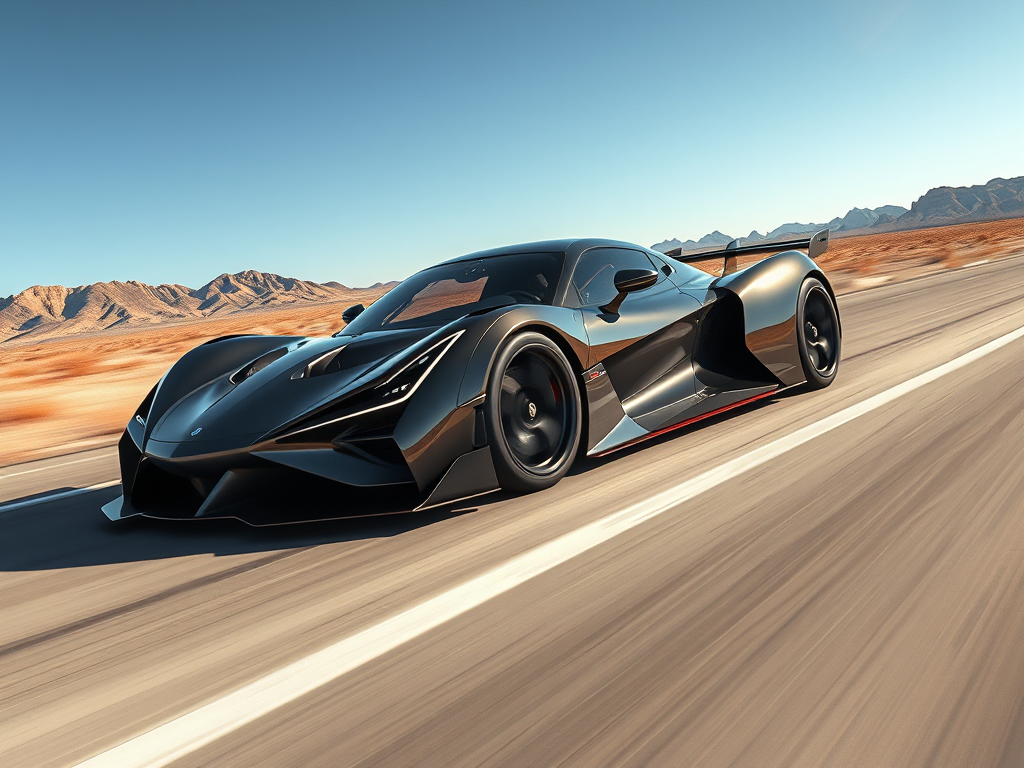
SSC Tuatara: The Speed King
The SSC Tuatara, built by Shelby SuperCars (SSC) North America, achieved an astonishing top speed of 508.73 km/h (316.11 mph) during its official run in Nevada, USA.
It is powered by a 5.9-litre twin-turbo V8 engine producing up to 1,750 horsepower on E85 fuel. The car weighs only 1,247 kg, thanks to its full carbon-fibre body.
Its aerodynamic shape, designed with aerospace precision, gives it one of the lowest drag coefficients ever achieved in a road car (0.279 Cd). The SSC Tuatara’s performance represents the highest level of mechanical balance, downforce control, and heat management ever engineered for road use.
Engineering Beyond Limits
The Tuatara’s record is not about raw power alone. The real achievement lies in its stability at extreme speeds. The car’s design allows it to cut through the air efficiently while maintaining control, even when reaching speeds where a minor imbalance can turn fatal.
The gearbox, designed by CIMA in Italy, uses a seven-speed robotized manual system that shifts gears in just 100 milliseconds. Advanced computational fluid dynamics (CFD) analysis and real-time data modeling were used during its creation to perfect the balance and aerodynamic flow.
Every part of this car, from its carbon monocoque chassis to its titanium exhaust, has one goal: speed without compromise.
The Speed Battle: Tuatara vs Bugatti vs Koenigsegg
While the SSC Tuatara holds the top verified record, two other engineering marvels remain close contenders:
- Bugatti Chiron Super Sport 300+ touched 490.48 km/h (304.77 mph) in Germany. Bugatti voluntarily stopped pursuing further speed tests, focusing instead on luxury-speed balance.
- Koenigsegg Agera RS reached 447.19 km/h (277.87 mph) in 2017, a record that stood for several years before Tuatara surpassed it.
Each of these hypercars shows different philosophies like Bugatti focuses on refinement, Koenigsegg on innovation, and SSC on pure, unrestrained velocity.
The Science Behind Extreme Speed
At over 300 mph, a car faces massive aerodynamic drag and air pressure. Air becomes as dense as water at those speeds, making design a matter of life and death. Engineers focus on:
- Aerodynamic stability to prevent lift-off.
- Thermal regulation to stop engines from overheating.
- Tire technology to handle rotational speeds beyond 5,000 RPM.
Michelin, for example, develops specialized tires for hypercars that are tested under NASA-grade wind tunnels.
At this level, the car is not just a machine; it is a symphony of science, art, and courage.
The Future of Speed: Electric Hypercars
The speed race is now entering a new chapter of electric power.
Models like the Rimac Nevera and Lotus Evija are redefining speed with instant torque delivery. The Rimac Nevera can accelerate from 0 to 100 km/h in just 1.74 seconds, faster than any petrol-powered car ever built.
Electric hypercars use energy more efficiently, though they still struggle to sustain top speeds for long durations due to battery heat and energy density limits. The next revolution will combine the aerodynamics of SSC with electric innovation, creating machines that rewrite speed records again.
The title of “fastest car in the world” is more than a number it is a story of human ambition. From the desert runs of Nevada to the wind tunnels of Europe, engineers have proven that imagination can move faster than fear.
The SSC Tuatara may hold the current crown, but the pursuit of speed never ends. As technology evolves, so does the dream to go faster, farther, and beyond the limits of design.
FAQs
Can the SSC Tuatara be driven on normal roads?
Yes, it is a street-legal production car, though built primarily for high-speed performance.
Can the Bugatti Chiron Super Sport 300+ beat the Tuatara again?
Bugatti has stepped away from speed record races, focusing on engineering refinement instead.
Can electric cars match the top speeds of petrol hypercars?
Electric hypercars excel in acceleration but still face thermal and energy limitations at high speeds.
Can regular tires handle such high-speed cars?
No, hypercars use specially engineered tires tested under extreme pressure and temperature conditions.
Can any Indian company create a hypercar in the future?
Yes, with growing EV and performance sectors, Indian startups are exploring niche hyper-performance prototypes.
Author


Discover more from Southwala
Subscribe to get the latest posts sent to your email.