Southwala Shorts
- Every time you open an app, scroll through your social media feed, or search for something on Google, the content that appears is not a...
- It is chosen by algorithms working silently in the background.
- These digital systems decide what you see, in what order, and how often, based on your behavior, preferences, and data.
- Understanding how they work helps you see the online world more clearly instead of being controlled by it.

Every time you open an app, scroll through your social media feed, or search for something on Google, the content that appears is not a coincidence. It is chosen by algorithms working silently in the background. These digital systems decide what you see, in what order, and how often, based on your behavior, preferences, and data. Understanding how they work helps you see the online world more clearly instead of being controlled by it.
The Invisible System Behind Every Platform
An algorithm is a set of rules or instructions that a computer follows to complete a task. In the digital world, algorithms decide what videos you watch, what news you read, and even what products you buy.
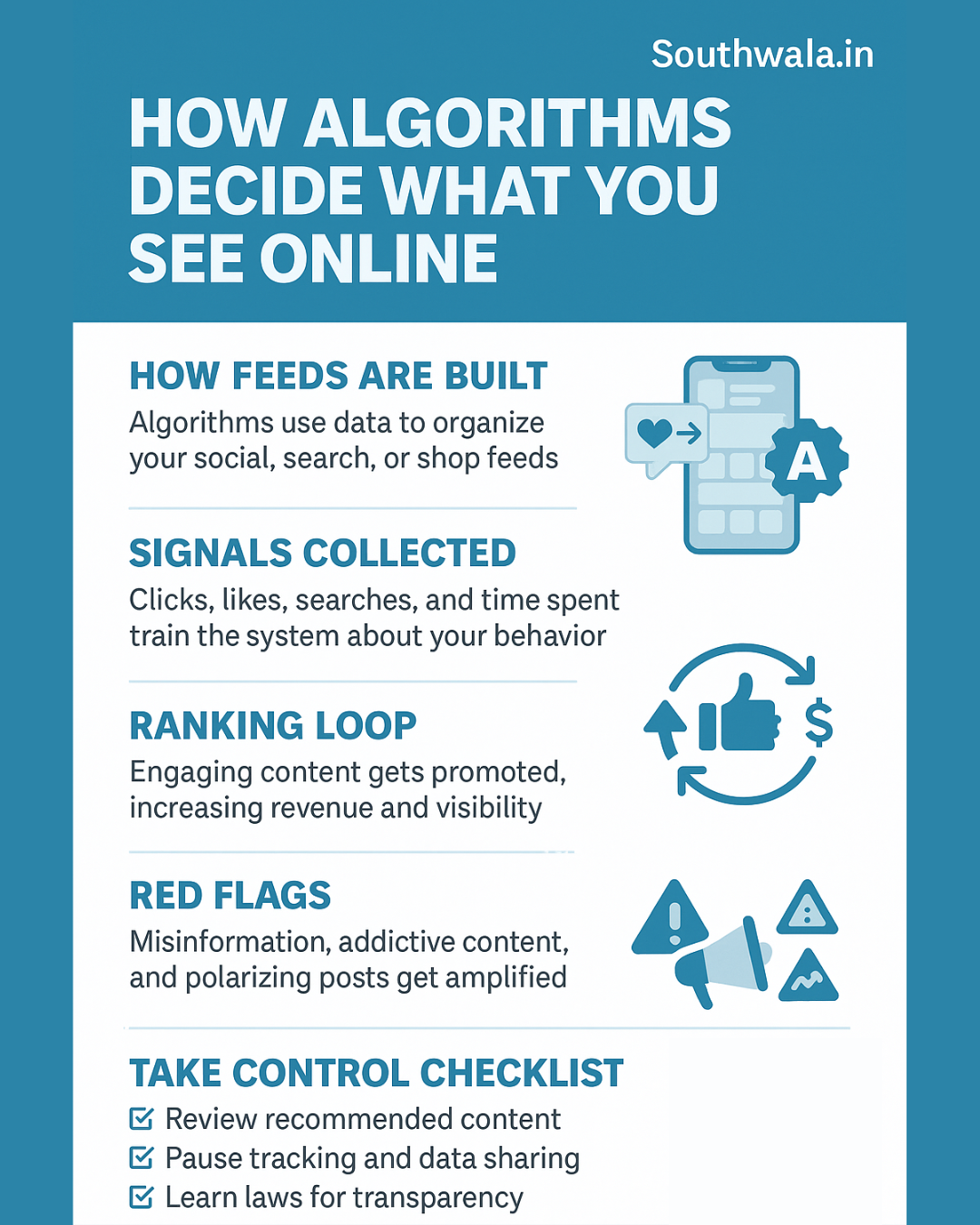
Every click, like, share, comment, and pause sends information back to the system. Over time, this builds a personal profile of who you are online. The algorithm learns your interests, predicts your next move, and filters your experience to keep you engaged.
This constant learning process is called personalization. The goal is to make your online experience more relevant, but it also shapes your reality by controlling what information you receive.
The Power of Engagement
Most modern algorithms are built around one idea is engagement. They are designed to show you the content that keeps you active on the platform for as long as possible.
If you spend more time on a type of post, the system assumes you want more of it. It repeats this cycle until your feed becomes a reflection of your habits and emotions. This is known as a feedback loop.
Engagement-driven systems measure success not by accuracy or truth, but by attention. The more time you spend scrolling, the more ads you see. This is how free platforms generate revenue.
How Algorithms Work Across Different Platforms
Each major digital platform uses its own algorithm, though the principle remains the same.
Social Media Platforms like Instagram, Facebook, and X prioritize posts from people and pages you interact with most. Photos, videos, and reels that gather more reactions rise higher on feeds.
Search Engines such as Google sort billions of web pages using hundreds of ranking signals like relevance, site quality, and loading speed to show the most suitable results.
Video Platforms like YouTube measure watch time and interaction. The longer people watch a video, the more likely the system is to recommend it to others.
E-commerce Sites like Amazon or Flipkart use your purchase history and browsing data to recommend products or show sponsored listings.
Streaming Platforms like Netflix and Spotify track your viewing or listening patterns and suggest content that matches your taste.
These systems create an experience that feels personal but is heavily influenced by business goals.
The Role of Data in Decision Making
Every action online generates data. This data fuels algorithmic decision-making. The more data collected, the more accurate the predictions become.
If you linger on fitness videos, the algorithm categorizes you as health-focused. If you shop for travel gear, it assumes you enjoy exploring. It then filters ads, posts, and recommendations around those themes.
Your online profile becomes an identity built entirely by data. This is how algorithms appear to know you better than you know yourself.
The Problem of Bias and Control
Algorithms are built by humans, and human choices influence how they work. If the data used to train them is biased, the outcomes can be biased too.
For example, search results may favor certain viewpoints. News feeds might promote divisive content because it triggers higher engagement. Over time, this creates digital bubbles where people see only content that confirms their beliefs.
The design of these systems also encourages addiction. By constantly rewarding engagement with more of the same type of content, users fall into endless cycles of scrolling or watching.
The Balance Between Help and Harm
Algorithms make life easier by saving time and customizing experiences. They help find relevant news, suggest entertainment, and simplify decisions. But they also limit exposure to diverse information and manipulate attention for profit.
The solution lies in awareness and control. Users can train their algorithms consciously by liking, saving, or following content that adds value instead of draining energy. Many platforms now allow people to switch off personalized recommendations or clear their data history.
When users take charge of their digital habits, they reduce the algorithm’s control over their thoughts.
The Push for Algorithm Transparency
Governments and organizations worldwide are now asking tech companies to disclose how their algorithms work. India’s upcoming Digital India Act and the European Union’s Digital Services Act aim to make algorithms more transparent, especially regarding misinformation and privacy.
The next stage of digital evolution will likely involve shared responsibility algorithms designed for fairness and users educated enough to manage their online environments consciously.
The Human Connection Behind the Code
Algorithms are not good or evil by themselves. They reflect the data they receive and the intentions behind their design. They amplify human behavior, both positive and negative.
The key is awareness. The more people understand how digital systems work, the more power they have to use them wisely instead of being used by them. Algorithms can either shape habits unconsciously or serve as tools for learning and growth. The choice rests with the user.
Frequently Asked Questions (FAQs)
How do algorithms know my interests
Algorithms study your online actions, such as clicks, likes, and watch time, to identify your preferences and predict future behavior.
Can algorithms affect my opinions?
Yes, by repeatedly showing similar types of content, algorithms can strengthen certain beliefs and limit exposure to different viewpoints.
Do all websites use the same kind of algorithm?
No, each platform uses unique formulas based on its goals, such as user engagement, sales, or ad revenue.
Can I control what an algorithm shows me?
Users can change privacy settings, clear watch history, and interact only with meaningful content to influence future recommendations.
Is it possible for algorithms to be unbiased?
Total neutrality is difficult since algorithms learn from human data, but ethical design and transparency can reduce bias significantly.
Author


Discover more from Southwala
Subscribe to get the latest posts sent to your email.