Southwala Shorts
- NASA has confirmed that Earth has gained a temporary companion, a small asteroid named 2025 PN7, which will travel alongside our planet until around the...
- Though it’s being called a “second moon,” astronomers say it’s not a real moon like the one that lights up our night sky.
- Instead, 2025 PN7 is what scientists call a “quasi-moon.” It doesn’t orbit Earth directly but moves around the Sun in a path that closely matches...
- This unusual motion makes it seem like the asteroid is looping around our planet, even though it’s actually following its own solar orbit.

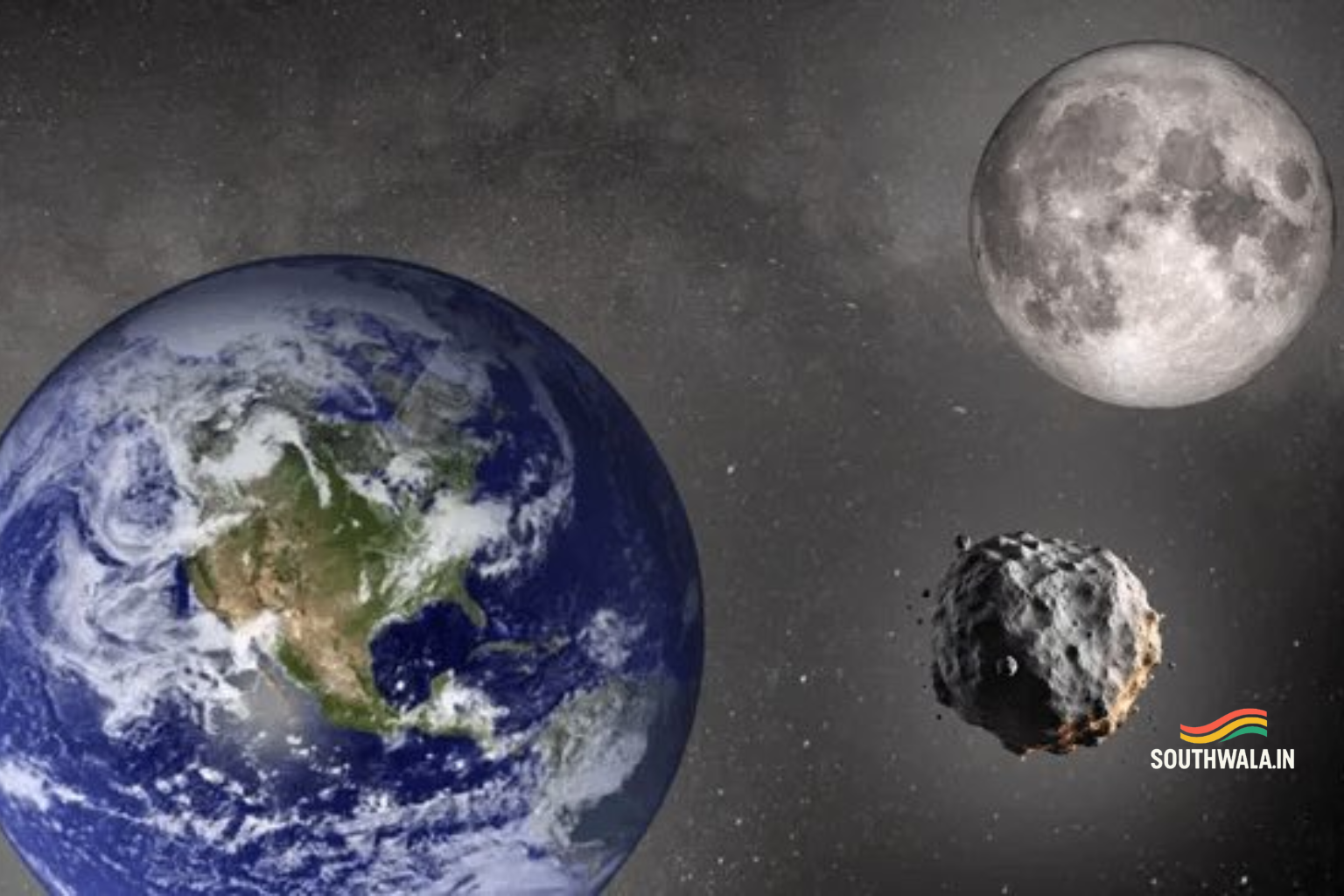
NASA has confirmed that Earth has gained a temporary companion, a small asteroid named 2025 PN7, which will travel alongside our planet until around the year 2083. Though it’s being called a “second moon,” astronomers say it’s not a real moon like the one that lights up our night sky.
Instead, 2025 PN7 is what scientists call a “quasi-moon.” It doesn’t orbit Earth directly but moves around the Sun in a path that closely matches Earth’s orbit. This unusual motion makes it seem like the asteroid is looping around our planet, even though it’s actually following its own solar orbit.
What We Know About 2025 PN7
According to NASA’s tracking data, 2025 PN7 measures roughly 18 to 36 meters wide, about the size of a large house. It was first spotted in August 2025 by astronomers using the Pan-STARRS telescope in Hawaii. Researchers later confirmed that the object has likely been traveling near Earth for several decades but went unnoticed because it’s extremely faint, with a brightness far beyond what the human eye can see.
Experts emphasize that the asteroid poses no danger to Earth. Its orbit keeps it at a safe distance, and there’s no risk of collision in the foreseeable future.
Why It Matters
While 2025 PN7 may not be as large or bright as our Moon, its discovery provides valuable insights into how small near-Earth objects move through space. Scientists say studying such quasi-moons can improve understanding of orbital mechanics and could even help plan future space missions or asteroid defense programs.
A Rare Celestial Visitor
Earth has had a few quasi-moons before, but they don’t stay forever. Like cosmic hitchhikers, these small asteroids eventually drift away as gravity and orbital shifts pull them out of sync. According to NASA, 2025 PN7 will remain our temporary companion for nearly six decades, making it one of the longest-lasting quasi-moons on record.
So, while you won’t see it glowing in the night sky, Earth now officially has a “second moon”, a small reminder of the constant cosmic dance that takes place in our solar system.
Author


Discover more from Southwala
Subscribe to get the latest posts sent to your email.