Southwala Shorts
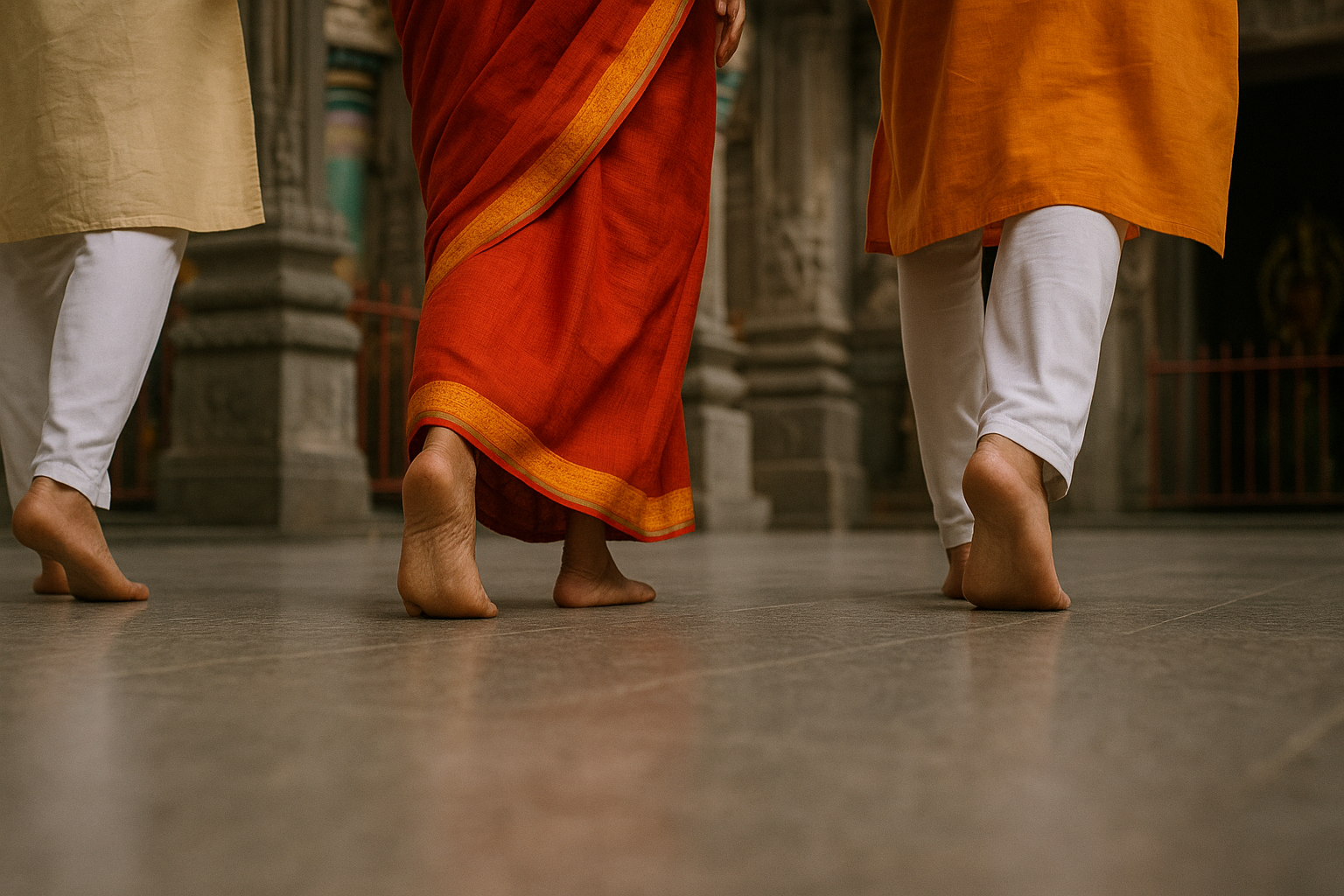
- In almost every temple across India, you will notice the same scene at the entrance.
- Footwear neatly lined up outside and devotees stepping in barefoot.
- While many see it simply as a rule, the reason runs much deeper.
- It is a tradition that combines spiritual symbolism, ancient architectural wisdom, and even health science.

In almost every temple across India, you will notice the same scene at the entrance. Footwear neatly lined up outside and devotees stepping in barefoot. While many see it simply as a rule, the reason runs much deeper. It is a tradition that combines spiritual symbolism, ancient architectural wisdom, and even health science.
Stepping Into the Divine Space
In Hindu culture, a temple is not just a building. It is considered the home of the deity. Just as you would not walk into someone’s house wearing muddy shoes, devotees remove footwear to show respect and maintain cleanliness. By going barefoot, you leave behind the dust, noise, and distractions of the outside world and enter the temple in a state of purity.
The Spiritual Energy Connection
Many temples are constructed on land chosen for its strong spiritual vibrations. Ancient temple builders studied the earth’s magnetic field and energy flow before laying the foundation. Walking barefoot allows your body to directly absorb these positive vibrations from the ground, which believers say can calm the mind and uplift the spirit.
Science Meets Tradition
While the spiritual explanation is ancient, science offers its own insights. The human foot has over 7,000 nerve endings and numerous acupressure points. Walking barefoot on natural stone floors stimulates these points, improving blood circulation, relieving tension, and even supporting organ health. In this way, a temple visit becomes both a spiritual and physical recharge.
The Cooling and Calming Effect
Temple floors, often made from granite or marble, remain cool even in summer. This natural cooling effect soothes the nervous system and prepares the mind for meditation or prayer. The sensation of cold stone under bare feet can slow the heart rate and promote mental focus.
Rooted in Sacred Texts
References to barefoot worship appear in several Hindu scriptures, including the Vedas and Puranas. The act is linked to humility, surrender, and grounding, a reminder that in front of the divine, everyone stands equal. Over centuries, this evolved into an unshakable practice across most Indian places of worship.
Beyond Hinduism
Walking barefoot in sacred places is not unique to Hinduism. Sikhs remove shoes before entering a gurdwara, Muslims before entering a mosque, and Buddhists before stepping into a monastery. Across cultures, bare feet symbolise humility, respect, and equality before the sacred.
Walking barefoot in temples is not just a rule of tradition. It is an experience. It purifies, connects, and heals. It is the quiet act of grounding yourself in the present moment, leaving the material world behind, and stepping into a space where the divine is believed to reside.
FAQs
1. Why do temples not allow shoes inside?
To maintain purity, cleanliness, and respect for the sacred space.
2. Do temple floors really have energy?
According to traditional beliefs and some scientific studies on earthing, natural stone floors can store and transmit energy.
3. Is barefoot walking good for health?
Yes, it can improve circulation, stimulate acupressure points, and reduce stress.
4. What if the floor is too hot or cold?
Some temples provide mats or shaded pathways, but traditionally, the natural temperature is part of the experience.
5. Is it mandatory in all Indian temples?
Almost all Hindu temples follow it strictly, though the enforcement may vary.
Author


Discover more from Southwala
Subscribe to get the latest posts sent to your email.