Southwala Shorts
- In the thick forests of Kerala lies a temple that is not just a place of worship but a test of patience, purity, and faith.
- The Sabarimala Temple, dedicated to Lord Ayyappa, stands high in the Western Ghats and welcomes millions of devotees each year.
- Visiting this temple is not just about praying to God.
- It is about changing yourself before meeting the divine.

In the thick forests of Kerala lies a temple that is not just a place of worship but a test of patience, purity, and faith. The Sabarimala Temple, dedicated to Lord Ayyappa, stands high in the Western Ghats and welcomes millions of devotees each year. Visiting this temple is not just about praying to God. It is about changing yourself before meeting the divine.
The Story of Lord Ayyappa
According to ancient belief, Lord Ayyappa was born to Lord Shiva and Mohini, the female form of Lord Vishnu. His purpose was to destroy a demoness named Mahishi. After completing that mission, Ayyappa gave up worldly life and chose to meditate in the forests of Sabarimala. The temple we see today is believed to be built where he sat in deep meditation.
The name “Sabarimala” comes from the tribal people called “Sabaras,” who were the earliest devotees of Ayyappa. It shows how this temple’s roots were built on inclusion and respect for all communities.
The 41 Days of Preparation
Before visiting Sabarimala, every devotee follows 41 days of discipline called vratham. During these days, they give up meat, alcohol, anger, luxury, and comfort. They wear simple black or blue clothes, walk barefoot, and live a humble life. The idea is to detach from everyday distractions and purify both body and mind.
They call each other “Swami,” meaning “Lord,” to remind themselves that everyone is equal in front of Ayyappa. The 41 days prepare the pilgrim to enter the temple not as an individual but as a disciplined soul.
The Climb to the 18 Steps
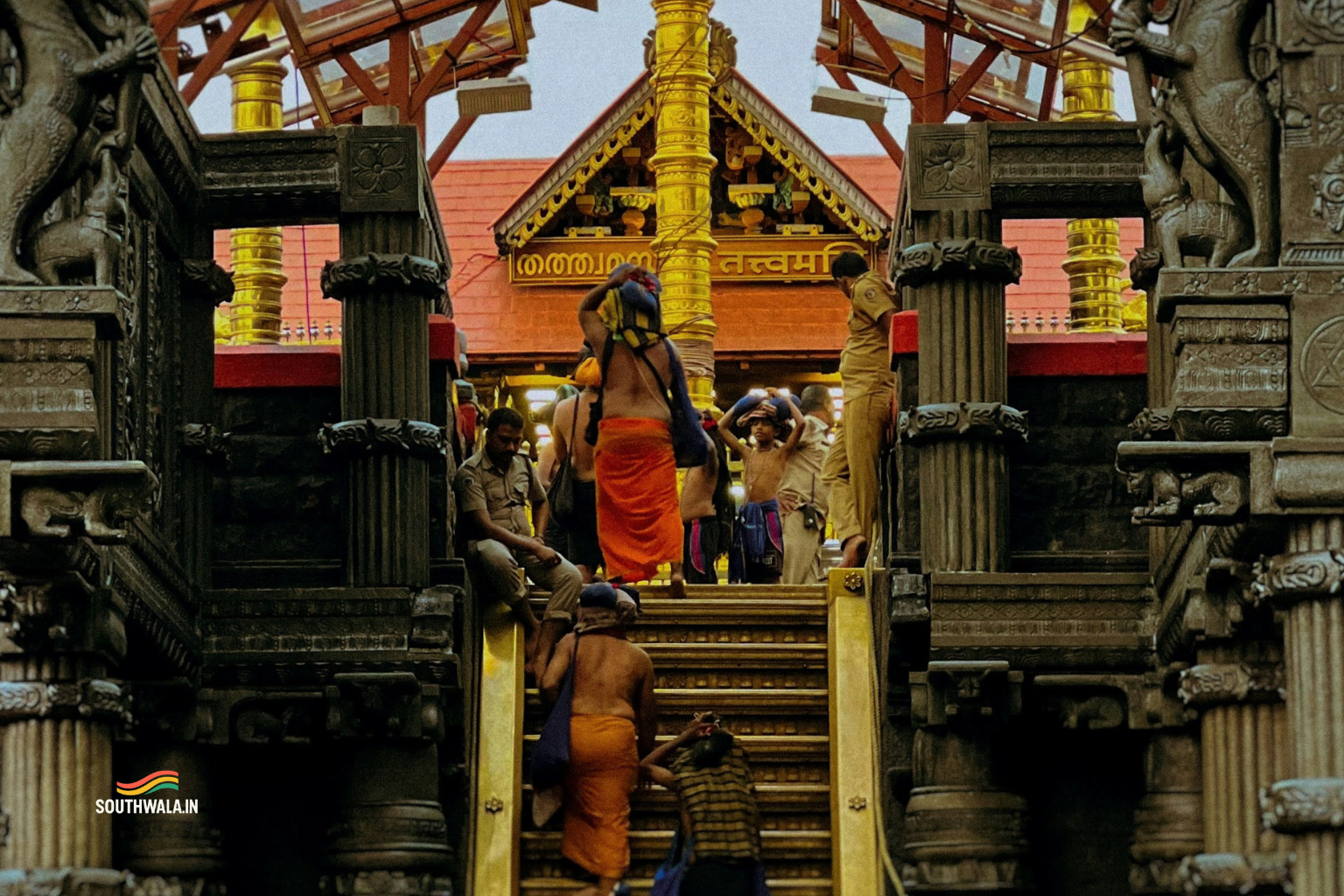
The journey to the temple is long and challenging. Pilgrims walk through forests and hills, often barefoot, carrying a sacred bundle called Irumudi Kettu on their head. Inside this bag are offerings for the Lord and food for the journey.
At the temple, devotees climb the famous 18 steps, known as Pathinettam Padi. Each step represents something deeper like human senses, emotions, qualities of nature, knowledge, and ego. Climbing them means rising above worldly attachments before meeting the divine.
A Temple That Treats Everyone Equal
Sabarimala is one of the few temples in India that truly practices equality. There is no special treatment for the rich or the powerful. Everyone wears the same kind of clothes, carries the same offering, and addresses each other with respect. The spirit of the place reminds every visitor that faith erases social boundaries.
There is also a small shrine near the temple for Vavar, a Muslim saint believed to be a companion of Lord Ayyappa. This friendship between a Hindu god and a Muslim saint shows how deeply the temple values unity and harmony.
The Magical Light of Makaravilakku
Sabarimala Temple opens only on special days, mainly during Mandala Pooja (mid-November to December), Makaravilakku (January), Vishu (April), and the first five days of every Malayalam month.
During Makaravilakku, millions of people gather to witness a divine light appearing on a distant hill. It is believed to be a sign of Ayyappa’s blessing. The sight fills the entire region with devotion and silence.
The Debate Around Belief and Entry
In recent times, Sabarimala became a topic of discussion because of its traditional rule that restricts entry of women between the ages of 10 and 50. The belief is that Lord Ayyappa has taken a lifelong vow of celibacy, and this rule preserves that vow. While courts and social groups have discussed the issue, most devotees see it as a matter of faith, not discrimination.
The Real Meaning of the Journey
The journey to Sabarimala is not only physical but deeply spiritual. The long walk, the silence of the forest, the chant of “Swamiye Saranam Ayyappa,” and the climb of the 18 steps all carry one message to surrender. The temple teaches that to meet the divine, one must let go of pride, greed, and ego.
Even today, despite modern travel and technology, the tradition remains the same. Every devotee still walks, prays, and chants together. For many, the pilgrimage feels like pressing the reset button of life. It teaches how to live with purity, patience, and humility.
A Place Beyond Religion
Sabarimala is not just a temple. It is a symbol of how faith, equality, and self-discipline can bring people together. Every pilgrim who completes the journey carries home more than blessings; they carry a new sense of peace and strength. The forest, the steps, the chant, and the silence all remind us that true devotion is not about asking from God but about finding peace within ourselves.
Frequently Asked Questions (FAQs)
Why is Lord Ayyappa worshipped at Sabarimala?
Lord Ayyappa is believed to have meditated at this place after fulfilling his divine duty, and the temple was built to honor his eternal presence.
How do pilgrims prepare before visiting Sabarimala?
They observe 41 days of purity and discipline, giving up comforts and focusing on prayer and self-control.
Why do devotees wear black or blue clothes?
These colors show simplicity and humility, reminding devotees to stay detached from material life.
Why are there 18 sacred steps in the temple?
Each step represents a stage in spiritual growth, symbolizing victory over human weaknesses and the ego.
Why do people chant “Swamiye Saranam Ayyappa”?
The chant means “Lord Ayyappa, I seek refuge in you,” expressing devotion, surrender, and faith.
Author


Discover more from Southwala
Subscribe to get the latest posts sent to your email.