Southwala Shorts
- The IT Act, 2000 as India’s cyber law.
- It’s the rulebook that decides what’s legal and what’s criminal in the digital world.
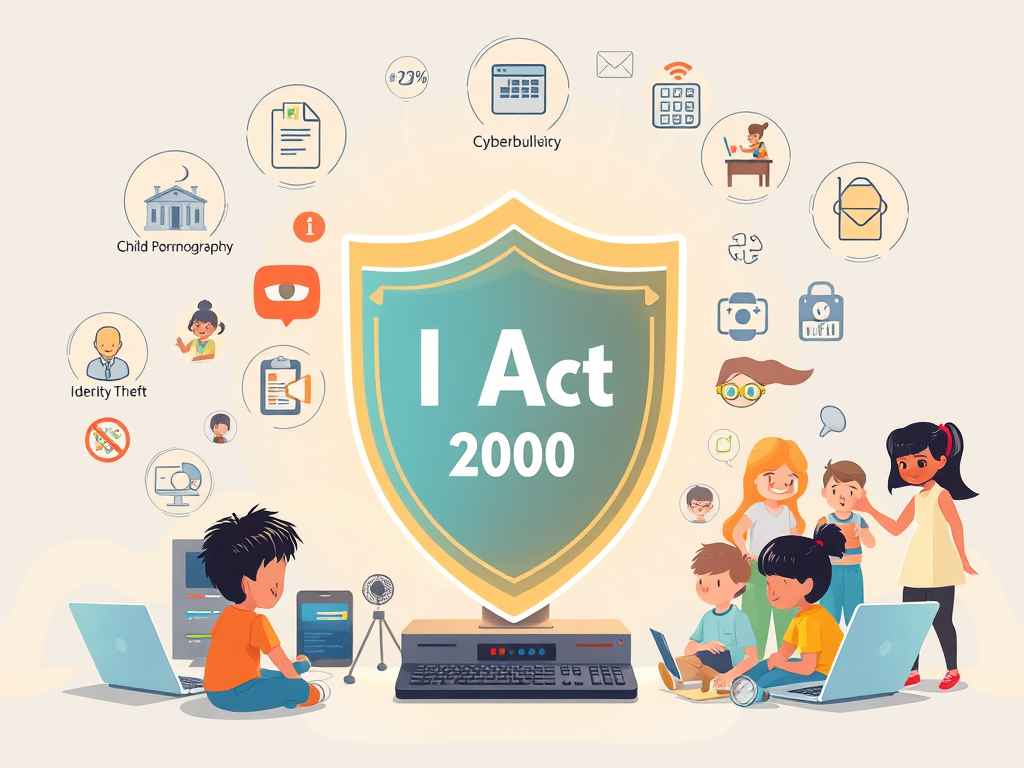
- When it comes to kids (under 18), this law is the shield that guards them against:
- This law was India’s answer to the internet boom because crimes also went digital.

The IT Act, 2000 as India’s cyber law. It’s the rulebook that decides what’s legal and what’s criminal in the digital world. When it comes to kids (under 18), this law is the shield that guards them against:
- Cyberbullying
- Child pornography
- Online stalking
- Identity theft
- Trafficking and exploitation on the internet
This law was India’s answer to the internet boom because crimes also went digital.
Why Do We Need It?
Simple: Kids are spending more time online than ever gaming, Insta, YouTube, reels, even crypto apps. The internet can be fun, but predators lurk in the same space. Without a strong cyber law, children become soft targets.
Key Protections Under IT Act for Kids
- Section 67B: Directly targets child pornography – publishing, transmitting, or browsing such content is illegal.
- Section 66E: No one can capture or share private images of children without consent.
- Section 66C/D: Protects against online identity theft, phishing, cheating.
- Section 69A: Allows the government to block websites/apps promoting child porn or harmful content.
Basically, this law makes sure the internet isn’t a free-for-all playground for criminals.
Punishment and Bail
If someone violates these provisions, here’s what the law says:
- Section 67B (Child Pornography)
- Jail: Up to 5 years for first offence, up to 7 years for repeat offences.
- Fine: ₹10 lakh.
- Bailable? – First offence is usually bailable, repeat offences may not be.
- Section 66E (Violation of Privacy)
- Jail: Up to 3 years.
- Fine: ₹2 lakh.
- Bailable offence.
- Section 66C/D (Identity theft, cheating)
- Jail: Up to 3 years.
- Fine: ₹1 lakh.
- Bailable offences.
But here’s the twist: If these actions overlap with the Indian Penal Code (IPC), the charges get heavier.
IPC + IT Act Combo (Double Trouble)
The IT Act works hand-in-hand with IPC:
- IPC Section 292 – Obscene material (includes child porn).
- IPC Section 354C – Voyeurism (recording a minor without consent).
- IPC Section 509 – Insulting modesty of a woman (applies to minors too).
- POCSO Act, 2012 – Adds even stricter punishment for sexual crimes against children.
So, if someone is caught with child porn, they’re not only facing IT Act penalties but also POCSO + IPC. That’s a legal triple strike.
Real-World Cases
- 2019, Hyderabad: Police busted a WhatsApp group circulating child porn. Members faced charges under Section 67B of IT Act + POCSO + IPC.
- 2020, Kerala: A schoolgirl’s morphed images went viral. Accused was booked under Section 66E IT Act + IPC 354C.
- 2021, Delhi: Police cracked down on “Bois Locker Room” Instagram group where minors were targeted. Cybercrime + IT Act + IPC were slapped on the admins.
Why This Matters to Gen Z
Let’s be real most Gen Z live online. If you’re under 18, your data, photos, and even gaming avatars are protected by law. If someone tries to harass you online, or circulates your photos without consent, the law is on your side.
Simple Example
Imagine a 15-year-old girl is tricked into sharing private images on Instagram. The guy who shares it:
- Gets punished under Section 66E IT Act (privacy violation).
- Plus 67B if content is sexual.
- Plus POCSO since she’s a minor.
- Jail + heavy fines + social shame.
Kids under 18 are fully protected online by IT Act + IPC + POCSO.
Bailable offences exist, but repeat and sexual offences attract non-bailable provisions.
Parents and kids should know these rights silence helps criminals, reporting ensures justice.
FAQs
1. What is Section 67B of the IT Act?
It bans publishing, transmitting, or browsing child pornography online.
2. Is cyberbullying against children punishable in India?
Yes, under IT Act (Sections 66C/D/E) and IPC provisions.
3. Is it bailable if someone is caught with child pornography?
First offence may be bailable, but repeat offences and POCSO charges make it non-bailable.
4. Can children file complaints online?
Yes, cybercrime.gov.in has a dedicated child abuse reporting portal.
5. Does IT Act cover social media crimes?
Yes, from Instagram harassment to WhatsApp groups all digital platforms fall under it.
Author


Discover more from Southwala
Subscribe to get the latest posts sent to your email.