
Southwala Shorts
- The city of Portland, Oregon, has once again become the center of a national debate, this time not over violent clashes but over constitutional limits.
- As protests outside the U.S.
- Immigration and Customs Enforcement (ICE) office continue calmly, a major legal battle is unfolding in the background over whether former President Donald Trump’s administration had...
- The protests, which began as demonstrations against immigration enforcement and federal policies, have remained largely peaceful in recent weeks.

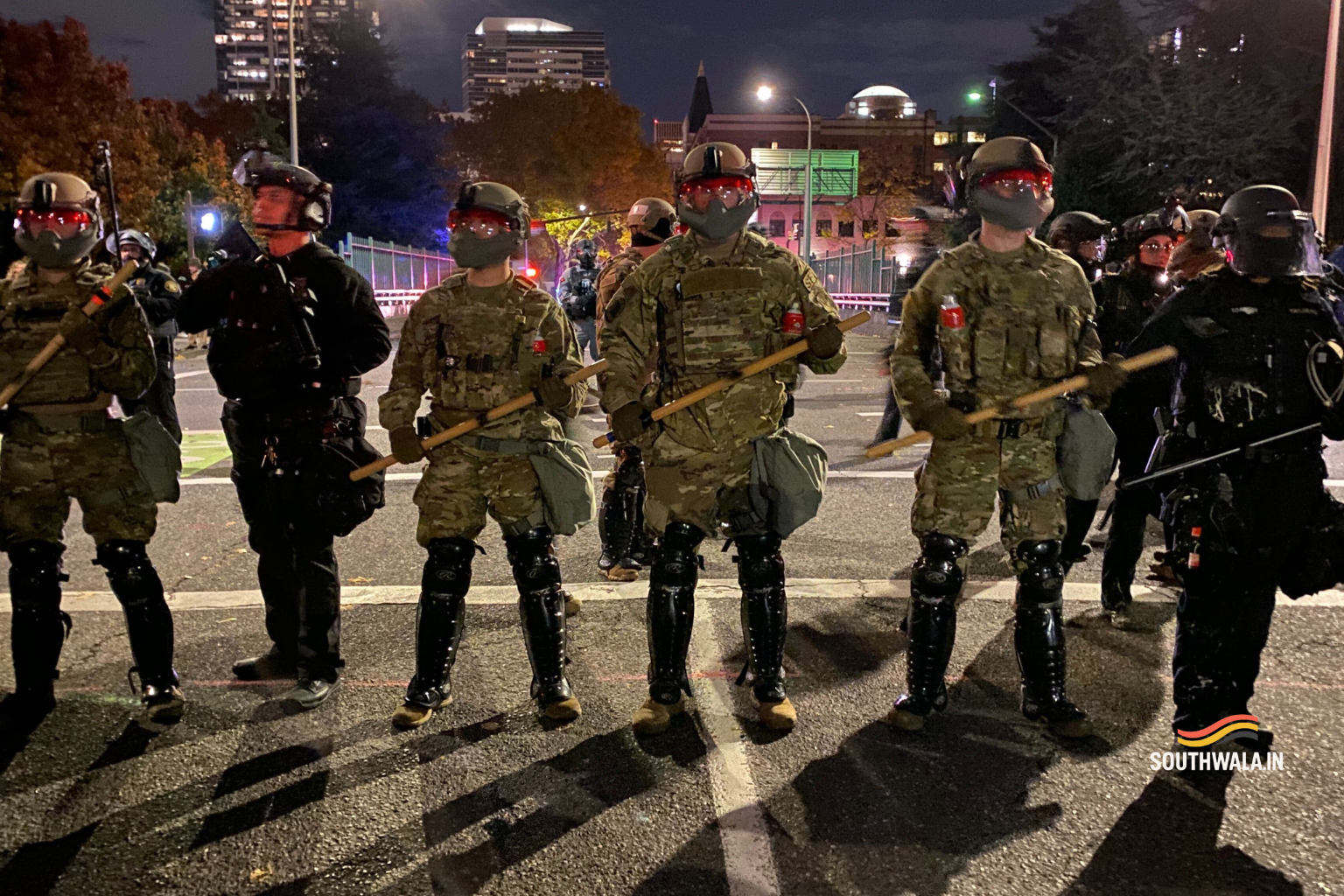
The city of Portland, Oregon, has once again become the center of a national debate, this time not over violent clashes but over constitutional limits. As protests outside the U.S. Immigration and Customs Enforcement (ICE) office continue calmly, a major legal battle is unfolding in the background over whether former President Donald Trump’s administration had the authority to deploy federal troops to the city.
The protests, which began as demonstrations against immigration enforcement and federal policies, have remained largely peaceful in recent weeks. Police reports show minimal property damage or arrests, and organizers have emphasized non-violence and community awareness. Despite this, the Trump administration had earlier announced plans to send National Guard troops to Portland, citing “federal property protection” and concerns about potential unrest.
Oregon state officials and Portland’s city government challenged the move, arguing that the deployment was unnecessary and infringed on state sovereignty. They claimed the protests did not warrant military intervention and accused the federal government of overreach. A federal district judge temporarily blocked the deployment, ruling that the situation did not justify extraordinary measures.
Now, the U.S. Court of Appeals for the Ninth Circuit has agreed to rehear the case in an expanded panel, marking a rare and significant review. The court’s decision will determine whether a president can unilaterally federalize National Guard troops within a state against that state’s wishes, a constitutional question with wide implications.
Legal experts say the outcome could redefine the limits of executive power in handling domestic unrest. If the court sides with Oregon, it could restrict future presidents from deploying troops without state consent. If it rules in Trump’s favor, it would set a precedent for broader federal control in protest situations.
For Portland, a city that has long balanced activism with civic order, this moment reflects a deeper struggle not between protesters and police, but between local autonomy and federal authority. As the Ninth Circuit deliberates, the city remains calm, the protests steady, and the legal stakes higher than ever for the future of state-federal relations in America.
Author


Discover more from Southwala
Subscribe to get the latest posts sent to your email.

