
Southwala Shorts
- New York City mayoral candidate Zohran Mamdani has openly criticised Indian Prime Minister Narendra Modi, saying that the India he grew up admiring belonged to...
- Speaking at a Diwali outreach event in Queens, Mamdani said his vision of India is rooted in pluralism, equality, and coexistence, which he believes is...
- “I grew up with an understanding of India that was pluralistic, an India where everyone belonged,” Mamdani said.
- “But under Modi’s leadership, that inclusiveness is being replaced by a vision that only has space for certain kinds of Indians.”

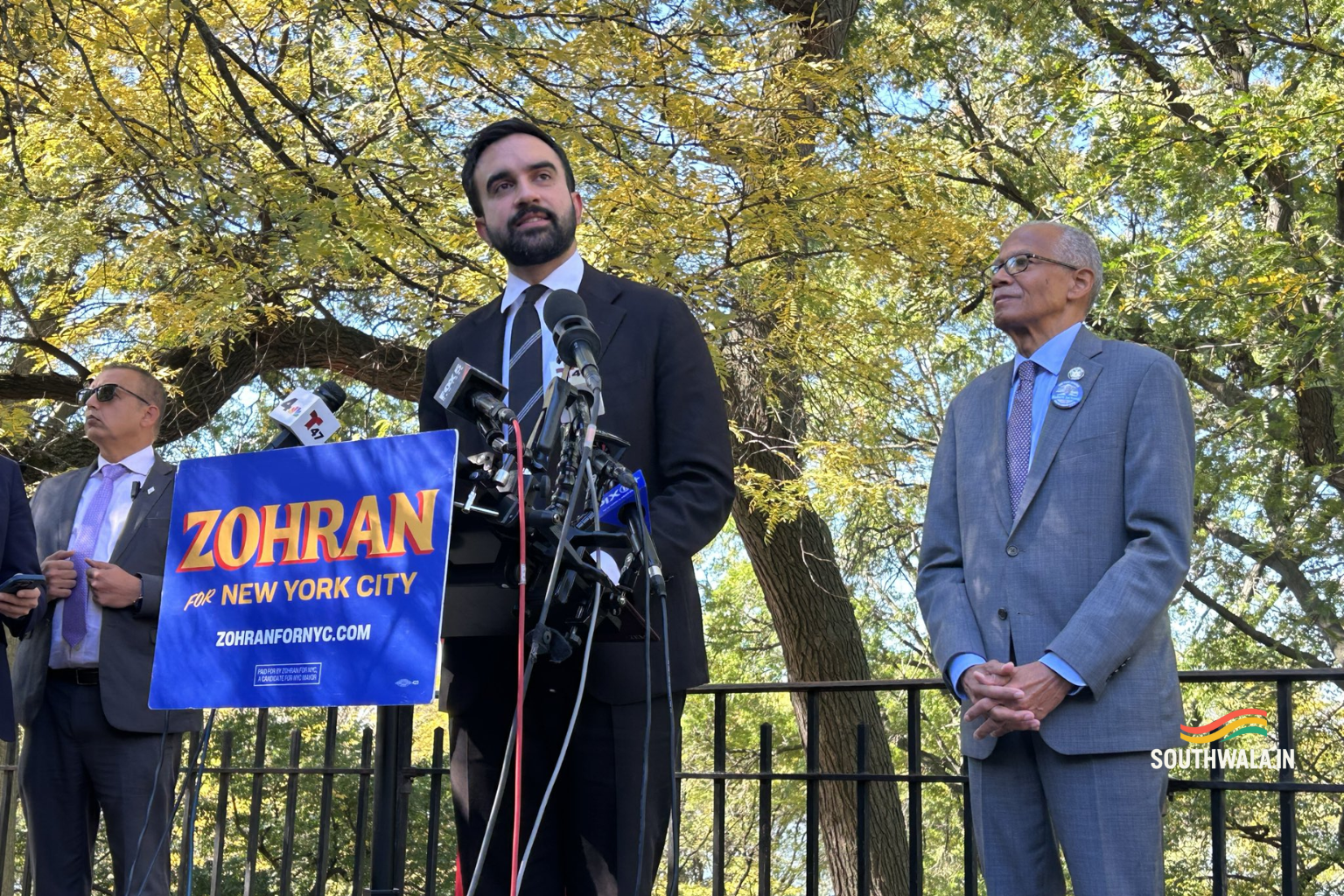
New York City mayoral candidate Zohran Mamdani has openly criticised Indian Prime Minister Narendra Modi, saying that the India he grew up admiring belonged to everyone regardless of faith, caste, or community. Speaking at a Diwali outreach event in Queens, Mamdani said his vision of India is rooted in pluralism, equality, and coexistence, which he believes is under threat in today’s political climate.
“I grew up with an understanding of India that was pluralistic, an India where everyone belonged,” Mamdani said. “But under Modi’s leadership, that inclusiveness is being replaced by a vision that only has space for certain kinds of Indians.”
As part of his campaign efforts, Mamdani visited four temples in Queens, engaging with the Hindu-American community to celebrate Diwali and share his message of unity. He later posted photos of the visits on social media, describing them as “moments of shared faith, culture, and respect.”
Mamdani, who represents Astoria, Queens, in the New York State Assembly, has long been vocal on issues of equality and social justice. His remarks at the Diwali event reflected his broader campaign theme promoting inclusive governance at home while upholding democratic and pluralistic values globally.
Mamdani’s comments echo a growing sentiment among sections of the Indian diaspora who believe India’s social fabric has changed under the Bharatiya Janata Party (BJP). By contrasting his “plural India” with what he described as “a narrow, exclusionary India,” Mamdani sought to appeal to voters who identify with secular and inclusive values.
He made it clear, however, that his intention was not to divide communities but to remind people of the India that inspired him, one of tolerance and unity.
The remarks drew attention both in the US and India, highlighting how Indian politics continues to resonate among the global diaspora. For Mamdani, whose roots lie in East Africa and India, the message was personal, a call for empathy, equality, and remembrance of the India “that welcomed all.”
Author


Discover more from Southwala
Subscribe to get the latest posts sent to your email.

