
Southwala Shorts
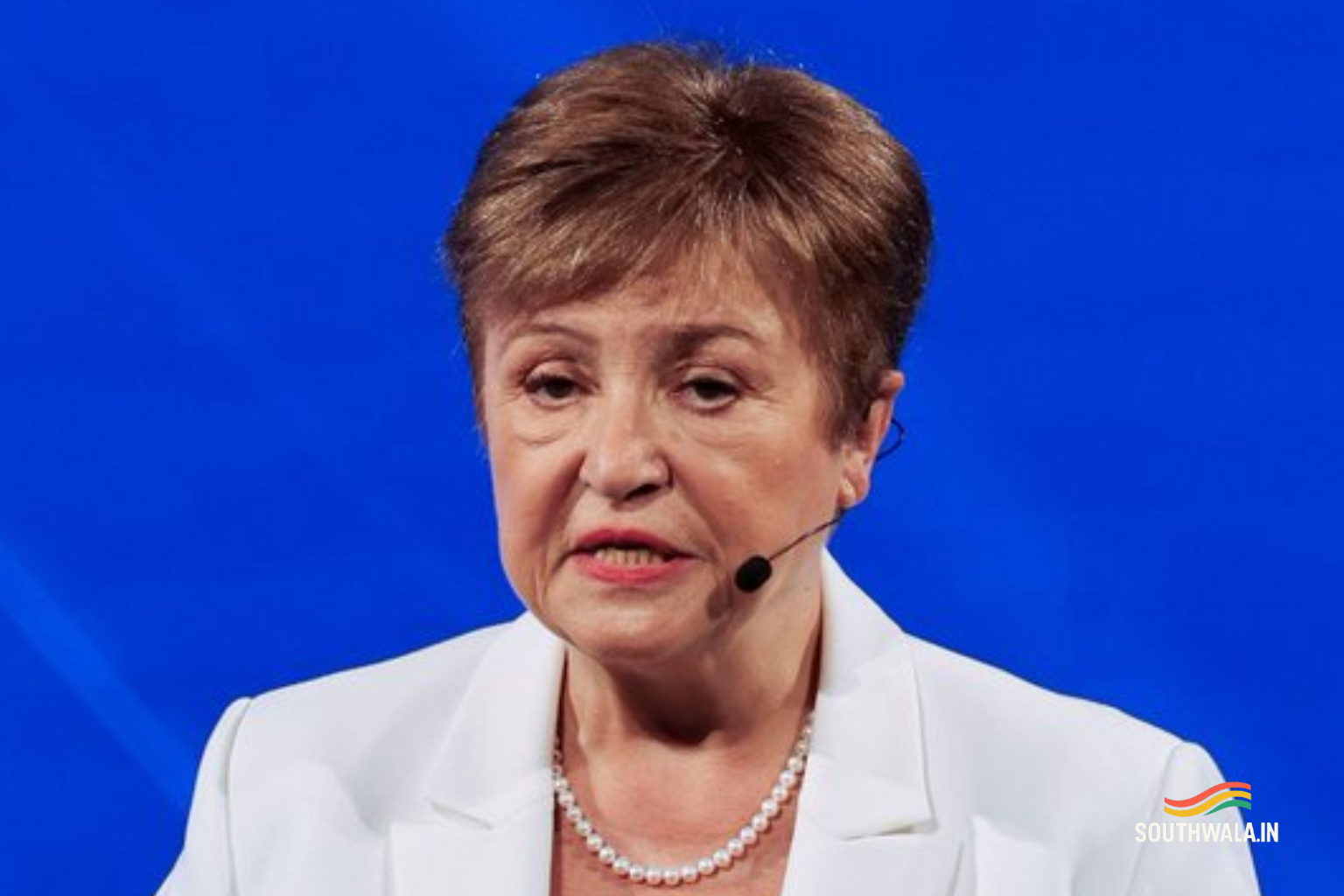
- The head of the International Monetary Fund (IMF), Kristalina Georgieva, has credited the restraint shown by most countries in not retaliating against U.S.
- President Donald Trump’s trade tariffs as one of the key factors bolstering global economic stability.
- Speaking during a recent global economic forum, Georgieva said that while tariffs introduced by the U.S.
- had initially raised fears of a trade war, the decision by many governments to avoid countermeasures has helped the global economy remain steady.

The head of the International Monetary Fund (IMF), Kristalina Georgieva, has credited the restraint shown by most countries in not retaliating against U.S. President Donald Trump’s trade tariffs as one of the key factors bolstering global economic stability.
Speaking during a recent global economic forum, Georgieva said that while tariffs introduced by the U.S. had initially raised fears of a trade war, the decision by many governments to avoid countermeasures has helped the global economy remain steady.
IMF Perspective on Tariff Impact
Georgieva explained that the “measured response” from trading partners prevented further disruptions to global supply chains and allowed international trade to adjust without collapsing. She noted that this restraint “demonstrates the maturity and foresight” of policymakers who prioritized long-term economic stability over short-term retaliation.
According to the IMF’s latest assessment, global trade volumes have remained largely resilient despite recent tariff adjustments, with emerging markets continuing to show moderate growth.
Avoiding Trade Escalation
Georgieva emphasized that while tariffs can create temporary uncertainty, large-scale retaliatory trade measures could have had far more damaging consequences. “Resisting the temptation to retaliate has played a stabilizing role in an already fragile global economy,” she said.
The IMF chief also underlined the importance of dialogue and cooperation among leading economies to maintain open trade and reduce policy unpredictability. “Avoiding escalation allows economies to redirect focus toward investment, job creation, and innovation,” she added.
Georgieva’s comments come at a time when several global organizations have warned of slowing growth due to inflation pressures and geopolitical uncertainty. The IMF has urged governments to maintain flexible trade policies while managing domestic inflation and fiscal consolidation.
She reiterated that cooperation between nations remains critical to ensuring global recovery and long-term resilience, particularly as economies continue adapting to shifting trade dynamics.
The IMF is expected to release its updated World Economic Outlook later this month, offering new projections for 2026 based on trade, investment, and fiscal trends.
Author


Discover more from Southwala
Subscribe to get the latest posts sent to your email.

