
Southwala Shorts
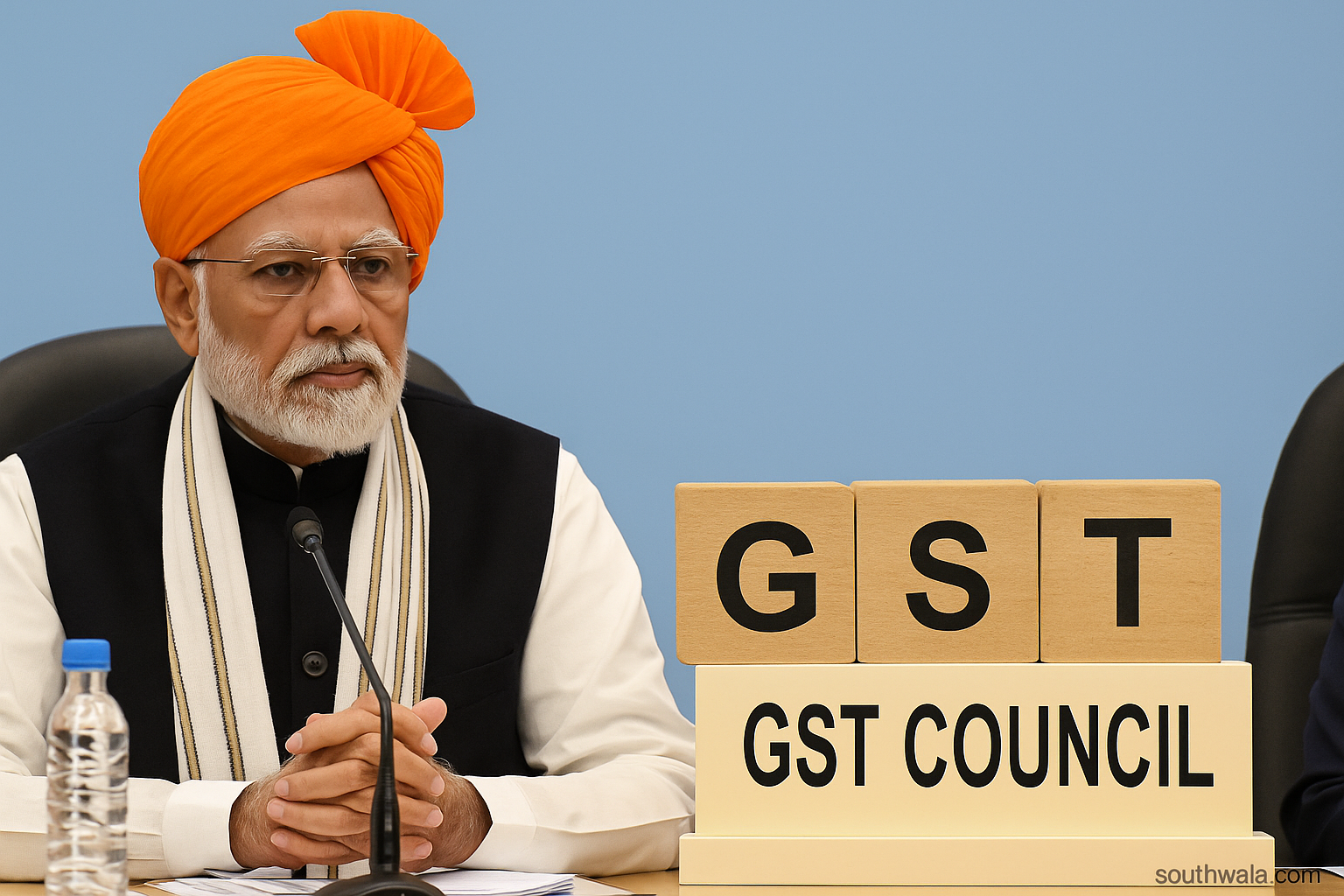
- Goods and Services Tax (GST) Council is set to meet this week with a key focus on simplifying India’s indirect tax structure.
- The agenda includes rationalising GST rates, with proposals to consolidate them into two main slabs are 5 percent and 18 percent.
- This move aims to make the system more transparent and easier for businesses and consumers to follow.
- Since its introduction in 2017, GST has had multiple tax slabs, ranging from 5 per cent to 28 per cent, with higher rates on luxury...

Goods and Services Tax (GST) Council is set to meet this week with a key focus on simplifying India’s indirect tax structure. The agenda includes rationalising GST rates, with proposals to consolidate them into two main slabs are 5 percent and 18 percent. This move aims to make the system more transparent and easier for businesses and consumers to follow.
Addressing Complex Rate System
Since its introduction in 2017, GST has had multiple tax slabs, ranging from 5 per cent to 28 per cent, with higher rates on luxury and sin goods. Over time, experts and industry bodies have called for a simpler structure to reduce confusion and improve compliance. The council’s latest discussions come in response to these demands and in line with the government’s goal of making GST more efficient.
Proposed Higher Rate on Luxury Items
While most goods and services may be streamlined into the two primary slabs, the council is also considering maintaining a higher rate of 40 per cent on certain luxury and sin items. This ensures that goods such as high-end cars, tobacco, and liquor continue to attract higher taxes, both as a revenue source and as a measure to discourage excessive consumption.
Impact on States Revenues
One of the central questions before the council is whether states will lose revenue due to rate rationalisation. Several state governments have expressed concerns that lowering or merging rates could reduce their share of GST collections. To address this, the council may explore mechanisms to balance revenue requirements while simplifying the tax system.
Balancing Reform and Stability
The GST Council meeting is expected to weigh reforms against fiscal realities. While simplification could improve ease of doing business and compliance, the challenge lies in ensuring that states do not face revenue shortfalls. The outcome of this meeting will be closely watched by businesses, policymakers, and consumers, as it could mark a significant step in India’s ongoing tax reform journey.
Author


Discover more from Southwala
Subscribe to get the latest posts sent to your email.

