
Southwala Shorts
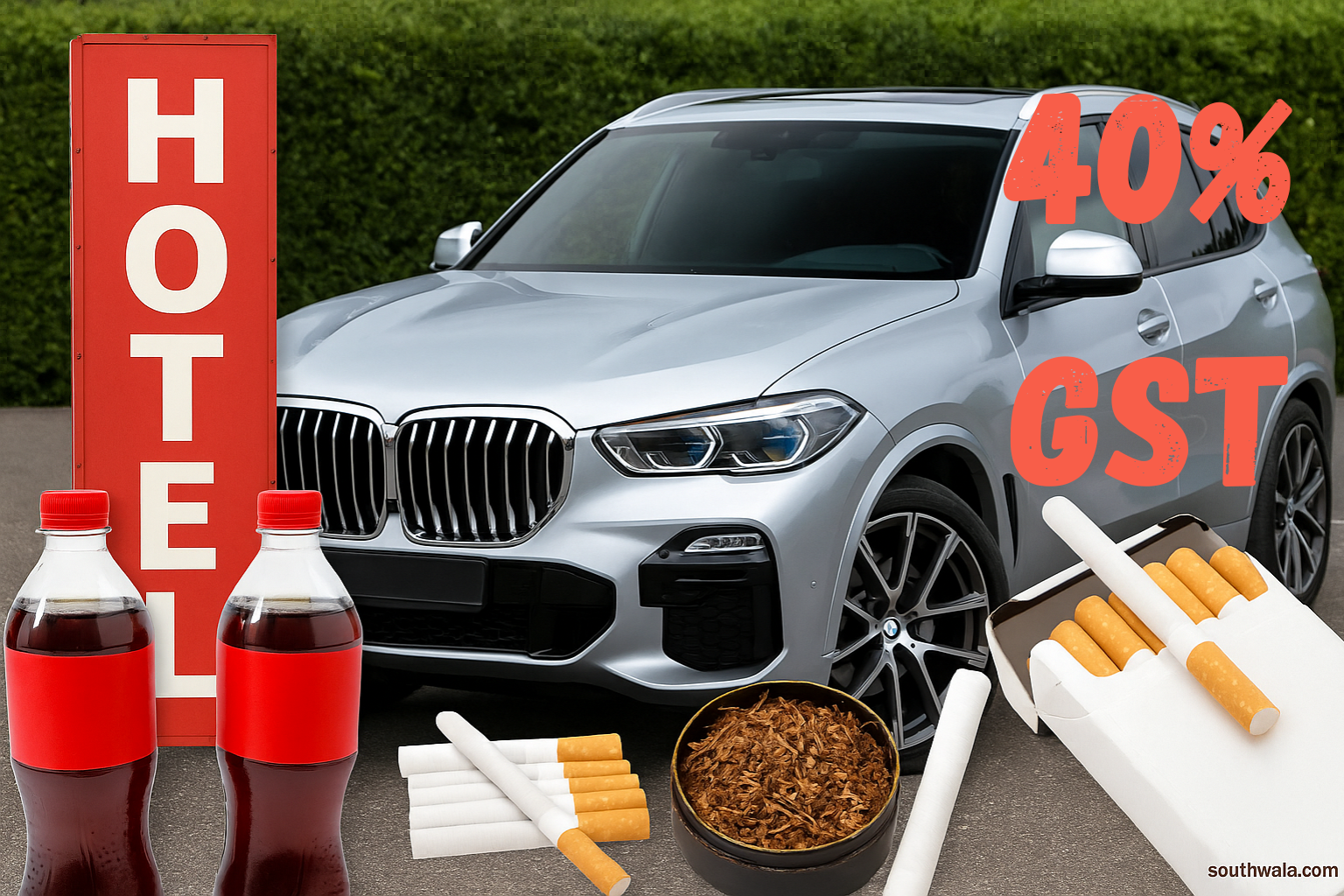
- GST 2.0 has put all sin and luxury goods under a single 40% slab.
- This is the government’s way of sending a message: while essentials like food and medicines are now tax-free, luxuries and harmful products come at a...
- Earlier, these items were scattered across multiple slabs 28% plus various cesses, which made compliance messy and prices unpredictable.
- Now, with one clear 40% slab, the tax system is simpler, though still heavy on the wallet.

GST 2.0 has put all sin and luxury goods under a single 40% slab. This is the government’s way of sending a message: while essentials like food and medicines are now tax-free, luxuries and harmful products come at a premium.
Earlier, these items were scattered across multiple slabs 28% plus various cesses, which made compliance messy and prices unpredictable. Now, with one clear 40% slab, the tax system is simpler, though still heavy on the wallet.
Before and After: Sin & Luxury Goods Under GST 2.0
| Product | Before GST 2.0 | After GST 2.0 | Impact |
|---|---|---|---|
| Luxury Cars/SUVs | 28% + 22% cess = 50% | 40% flat | Slight relief, simpler |
| Cigarettes | 28% + cess = 50-60% | 40% flat | Still expensive |
| Aerated Drinks | 28% + 12% cess = 40% | 40% flat | Same |
| Tobacco Products | 28% + cess = 50% | 40% flat | Slight relief |
| 5-Star Hotels | 28% | 40% | More expensive |
What It Means for Consumers
- Luxury Cars: Buyers of high-end vehicles like SUVs see a small relief. A ₹50 lakh car that earlier carried taxes close to ₹25 lakh may now be slightly cheaper, though still heavily taxed.
- Cigarettes and Tobacco: Prices remain steep deliberately. A flat 40% ensures public health objectives remain intact, while simplifying cess calculations.
- Aerated Drinks: No real change. Cola and soda bottles stay in the premium tax zone.
- 5-Star Hotels: The biggest jump. Staying in premium hotels now costs significantly more, making luxury holidays an even pricier indulgence.
Why This Matters
The 40% slab is not just about raising money. It reflects a philosophy of taxation:
- Protect the basics: food, education, and healthcare are 0%.
- Support affordability: daily-use items are 5%.
- Standardise services: most modern goods and services are 18%.
- Tax indulgence: luxury and sin goods pay the highest.
For businesses, a flat 40% rate means no more juggling multiple cesses. For the government, it guarantees strong revenue from products consumed by the wealthy or those seen as harmful to society.
Author


Discover more from Southwala
Subscribe to get the latest posts sent to your email.

