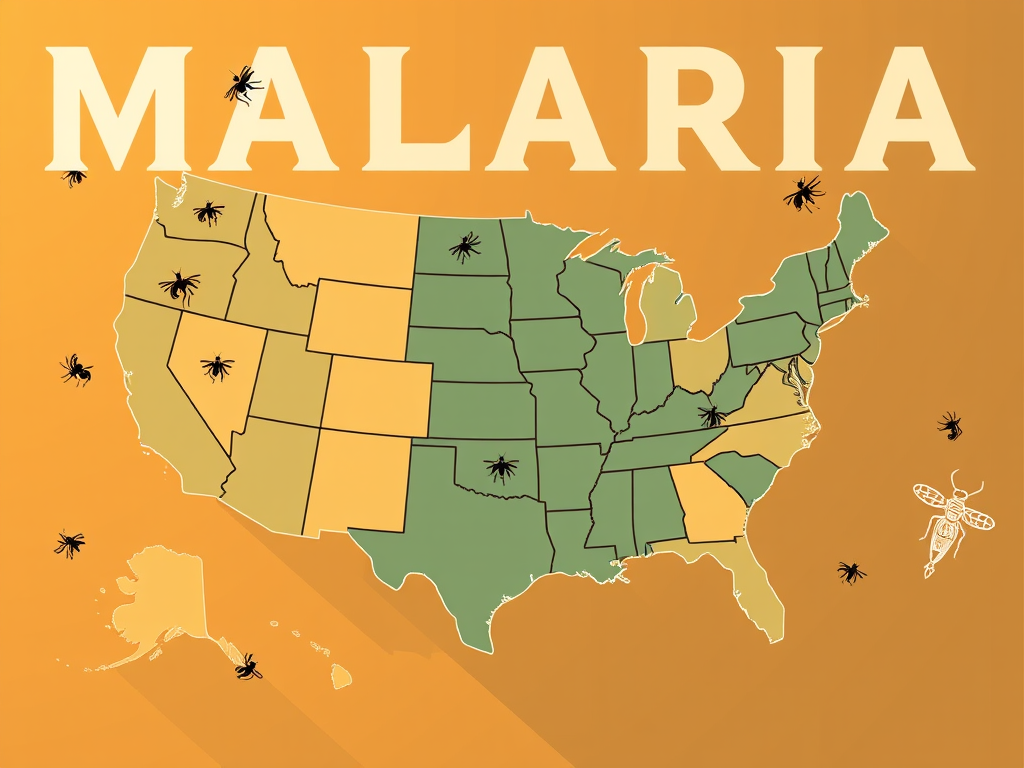
Southwala Shorts
- Let’s rewind to the early 1900s.
- The United States wasn’t always malaria-free.
- In fact, large parts of the southern U.S.
- were full of swamps, stagnant water, and you guessed it mosquitoes on steroids.

Let’s rewind to the early 1900s. The United States wasn’t always malaria-free. In fact, large parts of the southern U.S. were full of swamps, stagnant water, and you guessed it mosquitoes on steroids.
Back then, malaria wasn’t just a “poor country problem.” It was everyone’s nightmare causing fevers, deaths, and mass panic across rural America.
1951: The Year the U.S. Said “Bye Felicia” to Malaria
With public health policies, government funding, and one key player DDT (a pesticide) the U.S. launched a national-level attack on mosquitoes and malaria.
They drained swamps.
Sprayed entire neighborhoods.
Launched health awareness campaigns.
And most importantly: invested in a system that lasted.
By 1951, the CDC officially declared malaria eliminated from the United States.
Not because the mosquitoes disappeared forever.
But because humans finally got smarter with science, systems, and strategy.
So… If the U.S. Did It, Why Can’t We?
Good question.
Malaria still kills over 600,000 people globally every year, mostly in Africa and parts of Asia (including India’s tribal and forest belts).
Here’s the catch:
- We have the tools — rapid diagnostic tests, mosquito nets, new vaccines.
- We have the knowledge — decades of public health experience.
- But we don’t have the willpower (or funding) at a global scale.
Malaria thrives in areas with:
- Poor healthcare infrastructure
- Political instability
- Underfunded public health systems
- Lack of awareness or access to prevention tools
Basically, mosquitoes win where humans are not prioritized.
India’s Fight: Progress, But Not Victory Yet
India has come a long way. The government has distributed millions of mosquito nets and improved access to malaria drugs.
But hotspots still exist:
- Tribal regions (like Odisha, Chhattisgarh, and parts of the Northeast)
- Forest zones where mosquito control is tough
- Urban slums where stagnant water is everywhere
Climate change, urban migration, and patchy surveillance make things worse.
The goal? Malaria-Free India by 2030. But like that gym membership it only works if we actually show up and invest.
Gen Z, This Is Your Climate x Health Era
Malaria isn’t just about insects anymore it’s about:
- Climate change (mosquitoes love warm, wet weather)
- Urbanization (hello, waterlogged cities)
- Inequality (poorer communities suffer more)
So if you care about clean water, equal health access, and climate justice you automatically care about malaria.
It’s not just a “tropical disease.”
It’s a systemic failure we can fix.
What Can Be Done Now? (Yes, We Mean You Too)
- Demand investment in vaccines (like the new R21/Matrix-M by Oxford)
- Support public health infra — not just hospitals, but mosquito control
- Stay informed and share verified info (no, malaria doesn’t spread by touch)
- Call out inequality — because healthcare shouldn’t depend on your pin code
A bunch of scientists with mid century tech, zero AI, and landlines managed to defeat malaria in the U.S.
We’ve got satellites, genomics, AI, and billionaires.
So what’s stopping us?
Not science. Not tech. Just collective focus.
Gen Z can be the generation that ends malaria not just survive it.
FAQs:
1. Wait, the U.S. really had malaria before?
Yup. Malaria was common in parts of the U.S., especially the South, until the mid 20th century. It wasn’t just a “tropical disease” back then. But with proper mosquito control, clean water management, and public health systems, America wiped it out by 1951.
2. If they ended it in 1951, why do other countries still have it in 2025?
Because the U.S. had money, infrastructure, and a strong government-backed public health campaign. Most malaria-hit countries today especially in Africa and South Asia lack resources, trained staff, and consistent policies. Plus, climate change is making it worse.
3. Is there a cure or vaccine for malaria now?
Yes. Malaria can be treated with drugs like artemisinin. And now there are vaccines too like RTS,S (Mosquirix) and R21/Matrix M approved for kids. But global vaccine coverage is still very low due to cost and access issues.
4. Is India doing anything to fight malaria?
Yes. India has reduced malaria cases drastically in the last 15 years. The goal is to make India malaria-free by 2030. But tribal areas, forest zones, and urban slums still face challenges like poor access to healthcare and mosquito breeding grounds.
5. What can regular people (like us) do about malaria?
You don’t need a lab coat. Support awareness campaigns. Donate to health orgs. Vote for leaders who fund public health. And don’t underestimate the power of sharing accurate info online misinformation spreads faster than mosquitoes.
Author


Discover more from Southwala
Subscribe to get the latest posts sent to your email.