Southwala Shorts
- In every Indian election, political analysts talk about caste, religion, region, or youth turnout, yet one silent and decisive force reshapes outcomes across states: women...
- Over the last decade, women have moved from being a secondary demographic to becoming the most influential bloc in Indian democracy.
- They are voting more independently, participating in record numbers, and shaping the political narrative with quiet consistency.
- Behind every victory or unexpected swing lies a pattern of female turnout that few notice but every party fears ignoring.

In every Indian election, political analysts talk about caste, religion, region, or youth turnout, yet one silent and decisive force reshapes outcomes across states: women voters. Over the last decade, women have moved from being a secondary demographic to becoming the most influential bloc in Indian democracy.
They are voting more independently, participating in record numbers, and shaping the political narrative with quiet consistency. Behind every victory or unexpected swing lies a pattern of female turnout that few notice but every party fears ignoring.
The Shift in Voting Power
A decade ago, men outvoted women in almost every state. That gap has now closed. In several states, including Bihar, Odisha, and West Bengal, women’s turnout now exceeds men’s by 3–5 percentage points.
According to Election Commission data, the gender gap in voting has narrowed from 8.4% in 2009 to less than 1% in recent national elections. In rural India, where women were once invisible in political discourse, they are now the decisive majority in booth-level tallies.
This quiet shift has altered the political equation. Women are no longer passive participants; they are independent decision-makers who often vote differently from their male counterparts, even within the same family.
The Rise of the “Welfare Voter”
Unlike traditional male voters who may align along caste, religious, or ideological lines, a growing section of women voters chooses based on tangible welfare benefits.
Schemes that directly affect household economics LPG connections, free rations, healthcare, water supply, or direct cash transfers, heavily influence women’s voting behavior.
Examples:
- In Bihar’s 2020 Assembly elections, Nitish Kumar’s “Jal, Jeevan, Hariyali” and women’s education initiatives helped him retain strong female support despite anti-incumbency.
- In West Bengal, Mamata Banerjee’s Kanyashree and Lakshmir Bhandar schemes created a loyal base of women beneficiaries.
- At the national level, the Ujjwala Yojana and PM Awas Yojana have visibly changed how women perceive central government performance.
Women increasingly vote as beneficiaries, not dependents. This behavioral pattern marks the rise of a new class the welfare voter.
The Economic and Emotional Vote
Women’s votes are shaped not just by benefits, but by how policies affect emotional and daily realities.
- A man may see fuel price hikes as an economic issue.
- A woman running a household sees it as a direct threat to her family’s survival and dignity.
This emotional-intellectual connection makes women’s voting more holistic. They weigh stability, safety, and consistency more than slogans or rhetoric.
Parties that promise immediate emotional security through welfare, healthcare, or safety assurances resonate deeper. This is why consistency of trust matters more to female voters than charisma or ideology.
The Rural Female Wave
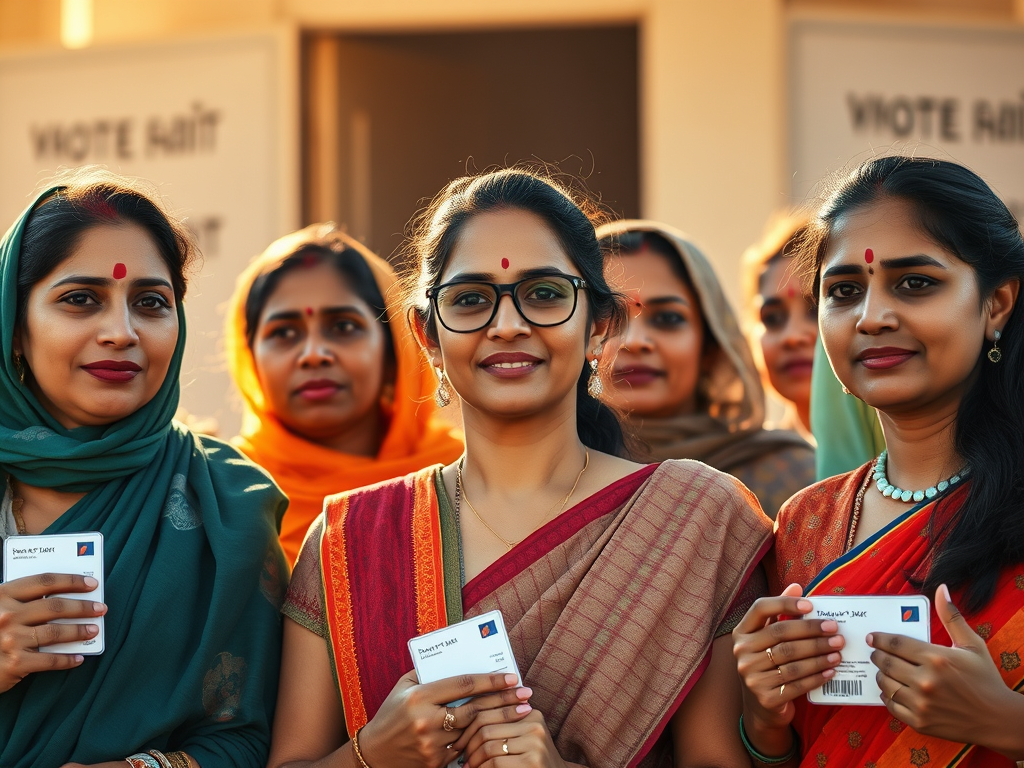
The most striking change is not in cities, but in rural India. Women in villages, often beneficiaries of state and central welfare programs, are exercising unprecedented political agency.
From standing in long queues outside polling booths to leading local self-help groups, rural women are redefining electoral participation. Their choices are often data-driven through lived experience, not political propaganda.
In Uttar Pradesh, for example, women’s turnout surged during the last Assembly elections, with many crediting schemes like Ladli Laxmi and Kanya Sumangala. Analysts found that rural women’s votes tilted the results in over 50 constituencies.
Rural women are emerging as the stabilizers of Indian democracy, consistent, rational, and less volatile than urban male voters.
The Digital Awakening
Mobile internet and social media have given women unprecedented exposure to information. From WhatsApp groups sharing local welfare updates to YouTube influencers discussing safety, women are forming new digital communities of opinion.
These networks bypass traditional political campaigns. A short video on health insurance or scholarships often travels faster and farther than speeches or rallies.
Digital literacy has quietly armed women with awareness they know who delivers, who delays, and who disappears after elections. Political outreach now requires a data-driven understanding of women’s online behavior, not just slogans at rallies.
Why Parties Are Redefining Campaigns Around Women
No party today can afford to overlook women’s influence. Political strategists are now designing gender-centric manifestos, appointing women ambassadors, and creating specialized outreach cells.
From the Congress’s “Ladki Hoon, Lad Sakti Hoon” campaign to the BJP’s targeted schemes like the Sukanya Samriddhi Yojana, women are not seen as one demographic anymore; they are multiple micro-groups based on age, class, and aspiration.
Campaigns are adapting language from patriarchal protectionism (“We will keep you safe”) to empowerment-driven narratives (“You decide your future”).
This subtle but powerful linguistic evolution signals one truth is women are not the supporting cast of Indian elections anymore; they are the protagonists.
The Power of Silence
The most fascinating aspect of this transformation is its quiet nature. Women do not declare their political allegiance as publicly as men. Their choices emerge silently in polling booths, often catching analysts by surprise.
This silent decisiveness is reshaping democracy from within, a collective power that does not shout slogans but shifts mandates.
Their silence is not absence; it is strategy. Women are redefining Indian democracy through quiet, rational participation, making them the country’s most reliable and unpredictable voting bloc at the same time.
Women voters are the new swing factor of Indian politics. They decide not through rhetoric but through realism, not through ideology but through impact. Their participation represents India’s democratic maturity, a move from symbolic inclusion to substantial influence.
As India moves toward its next election cycle, one pattern is certain: any political party that fails to understand the psychology, aspirations, and priorities of women voters will lose the moral and numerical majority of the nation.
In modern India, empowerment doesn’t just mean education or employment; it now means deciding who governs the country.
FAQs
1. How have women changed India’s voting trends?
Women have become independent voters, often choosing differently from male family members, especially in welfare-based elections.
2. How do welfare schemes influence women voters?
Schemes like LPG connections, housing, or direct cash transfers create tangible improvements in women’s lives, leading to higher political loyalty.
3. How does women’s turnout compare with men’s today?
In several states, women’s voter turnout now exceeds men’s, making them the more consistent and decisive group.
4. How do rural women influence state elections?
Rural women, as beneficiaries of welfare programs, often determine results in marginal constituencies through disciplined voting patterns.
5. How does social media empower women voters?
Digital platforms enable women to access information, share experiences, and form opinion networks that shape their political awareness.
Author


Discover more from Southwala
Subscribe to get the latest posts sent to your email.