Southwala Shorts
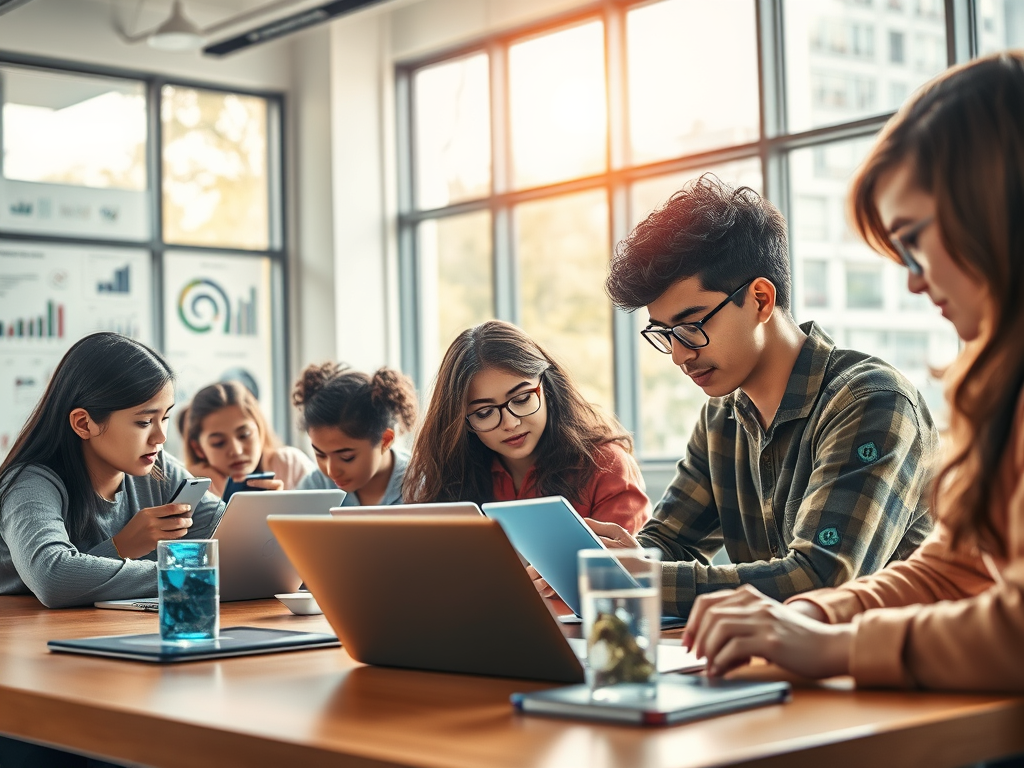
- The classroom no longer ends at the school gate.
- With the Internet, every student today holds the world’s largest library in their pocket.
- Whether it’s through YouTube, Google Scholar, Wikipedia, or AI-powered tools, learners are no longer waiting for information they are investigating it.
- This digital shift has quietly turned students into mini-researchers, reshaping how knowledge is discovered, questioned, and applied.

The classroom no longer ends at the school gate. With the Internet, every student today holds the world’s largest library in their pocket. Whether it’s through YouTube, Google Scholar, Wikipedia, or AI-powered tools, learners are no longer waiting for information they are investigating it. This digital shift has quietly turned students into mini-researchers, reshaping how knowledge is discovered, questioned, and applied.
The Digital Age of Curiosity
Curiosity has always been a part of learning, but the Internet has multiplied it. A student can explore topics far beyond the textbook, from climate change data to satellite imagery, instantly.
The ability to search, compare, and verify information cultivates a research mindset, where learning becomes inquiry-based instead of instruction-based.
This shift has also changed the teacher’s role. Teachers have evolved from being information providers to research guides, helping students learn how to think, not just what to learn.
Access to Infinite Data
Before the Internet, research required physical access to libraries, journals, or institutions. Now, a 12-year-old can access open databases from NASA, WHO, or UNESCO.
Students use real-time data, case studies, and digital archives to build arguments or projects. This easy access to global information breaks the traditional barriers of geography and privilege.
The exposure to diverse perspectives also encourages critical thinking. Students no longer depend on one source but compare multiple voices, developing analytical and questioning skills early in life.
The Rise of Digital Research Tools
AI, machine learning, and search algorithms have simplified the research process.
Students now use:
- Google Scholar for academic papers
- ChatGPT and AI search assistants for summaries and understanding
- Zotero and Mendeley for citation management
- Survey platforms for collecting data
- Visualization tools like Canva and Tableau to present findings
These tools make the research process accessible even to beginners, helping them act like professional researchers while still in school.
Learning by Discovery, Not Memorization
Traditional education often emphasized memorization over understanding. The Internet has flipped this approach.
Students can instantly fact-check claims, look for real-world applications, or even question the validity of their syllabus material. This encourages active learning, where knowledge is not passively received but actively built.
Research-based learning also strengthens memory retention and creativity. When students explore, analyze, and explain in their own way, they learn faster and deeper.
Collaboration Across Borders
Online collaboration platforms like Google Docs, Notion, and research forums have made group work global. Students from different schools or even countries can co-author studies, share notes, and compare cultural insights.
This exposure helps develop global awareness, empathy, and teamwork. It also introduces students to the ethics of collaboration, citation, and information accuracy the cornerstones of true research.
The New Definition of a Researcher
The word “researcher” no longer belongs only to universities or labs. A student today researching a social issue, environmental problem, or AI topic on their phone is engaging in micro-level research.
The Internet has democratized research, giving every learner the tools to observe, ask, and conclude — the same steps followed by professional scientists and analysts.
By transforming ordinary students into curious explorers, the Internet has turned education into an evolving, lifelong process rather than a classroom phase.
Challenges and Responsibilities
While the Internet offers limitless information, it also introduces misinformation. Students often face data overload, fake sources, and biased opinions. This makes digital literacy an essential skill for learning to identify credible sources, cross-verify facts, and avoid plagiarism.
Schools and parents now have the shared responsibility to teach responsible digital behavior. Without guidance, unlimited access can become confusion instead of clarity.
The Internet has made research a habit, not a profession. Every student today, whether consciously or not, conducts research, searching, comparing, evaluating, and forming opinions.
This transformation is redefining education itself. The modern learner is not waiting for answers from textbooks; they are creating them.
In a world powered by information, curiosity is the new intelligence, and access is the new opportunity.
FAQs
Can online tools make research easier for students?
Yes, digital tools help organize, analyze, and visualize information efficiently.
Can the Internet improve critical thinking in students?
Yes, exposure to diverse information helps students question and reason better.
Can students learn research ethics online?
Yes, many educational platforms teach citation, plagiarism awareness, and fact verification.
Can the overuse of the Internet affect research quality?
Yes, excessive dependence without verification can spread misinformation and shallow understanding.
Can online collaboration help students grow as researchers?
Yes, global collaboration builds teamwork, cultural awareness, and real-world communication skills.
Author


Discover more from Southwala
Subscribe to get the latest posts sent to your email.