
Southwala Shorts
- In a surprising twist, Afghanistan’s currency, the Afghani (AFN), is currently stronger than the Indian rupee (INR).
- As of this week, 1 Afghani equals about ₹1.32, raising questions about how a war-torn country with no formal economy and global isolation can outperform...
- But the answer lies not in economic strength.
- It lies in currency control, isolation, and limited trade exposure.

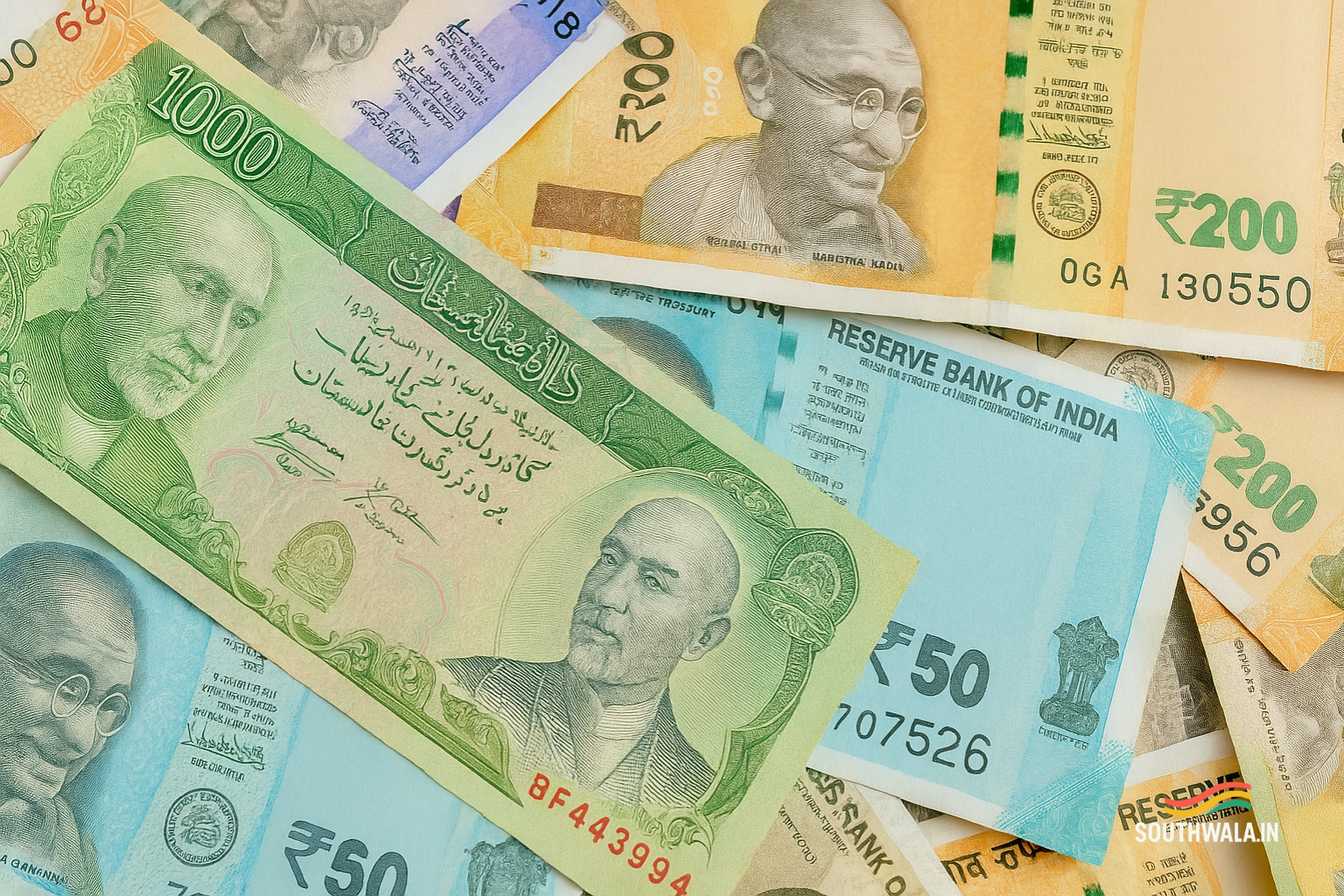
In a surprising twist, Afghanistan’s currency, the Afghani (AFN), is currently stronger than the Indian rupee (INR). As of this week, 1 Afghani equals about ₹1.32, raising questions about how a war-torn country with no formal economy and global isolation can outperform a growing democracy like India in exchange value.
But the answer lies not in economic strength. It lies in currency control, isolation, and limited trade exposure.
How Strict Currency Control Keeps the Afghani Stable
Since the Taliban took power in 2021, Afghanistan’s central authorities have imposed tight restrictions on money movement. The use of foreign currencies such as U.S. dollars and Pakistani rupees is banned in local transactions. Almost all trade and payments within the country are now conducted in Afghani, keeping its circulation strong and demand steady.
By limiting the amount of foreign currency in the market and restricting imports, Afghanistan’s monetary system has effectively insulated itself from global volatility. This has led to a false strength, where the currency looks stable on paper but does not reflect real economic progress.
Afghanistan’s financial isolation has also worked to its advantage in one sense. With minimal imports, sanctions on trade, and very limited interaction with international banks, the Afghani is shielded from market speculation and currency trading pressures.
In contrast, open economies like India experience daily fluctuations driven by oil imports, foreign investment flows, and global inflation trends, all of which put pressure on the rupee’s value.
A Strong Currency But a Weak Economy
Despite its higher value, Afghanistan’s economy remains fragile. The country suffers from high poverty, limited industrial output, and dependence on humanitarian aid. The Afghani’s value, experts note, represents an artificial stability, not economic growth.
While India’s rupee continues to fluctuate in global markets, it still represents a functioning, open economy with active trade, capital flows, and industrial growth, something Afghanistan’s economy lacks.
In essence, Afghanistan’s currency is strong because its economy is closed, not because it is thriving.
Author


Discover more from Southwala
Subscribe to get the latest posts sent to your email.

