
Southwala Shorts
- Starting October 8, India’s Unified Payments Interface (UPI) will allow users to authenticate transactions using facial recognition and fingerprints, eliminating the need for entering a...
- The new feature marks a significant step in India’s journey toward biometric-based digital payments and enhanced user convenience.
- The National Payments Corporation of India (NPCI), which operates UPI, confirmed that this upgrade will integrate with existing Aadhaar-linked biometric systems.
- Users will be able to verify payments through either facial recognition or fingerprint scanning directly from their smartphones or supported biometric devices.

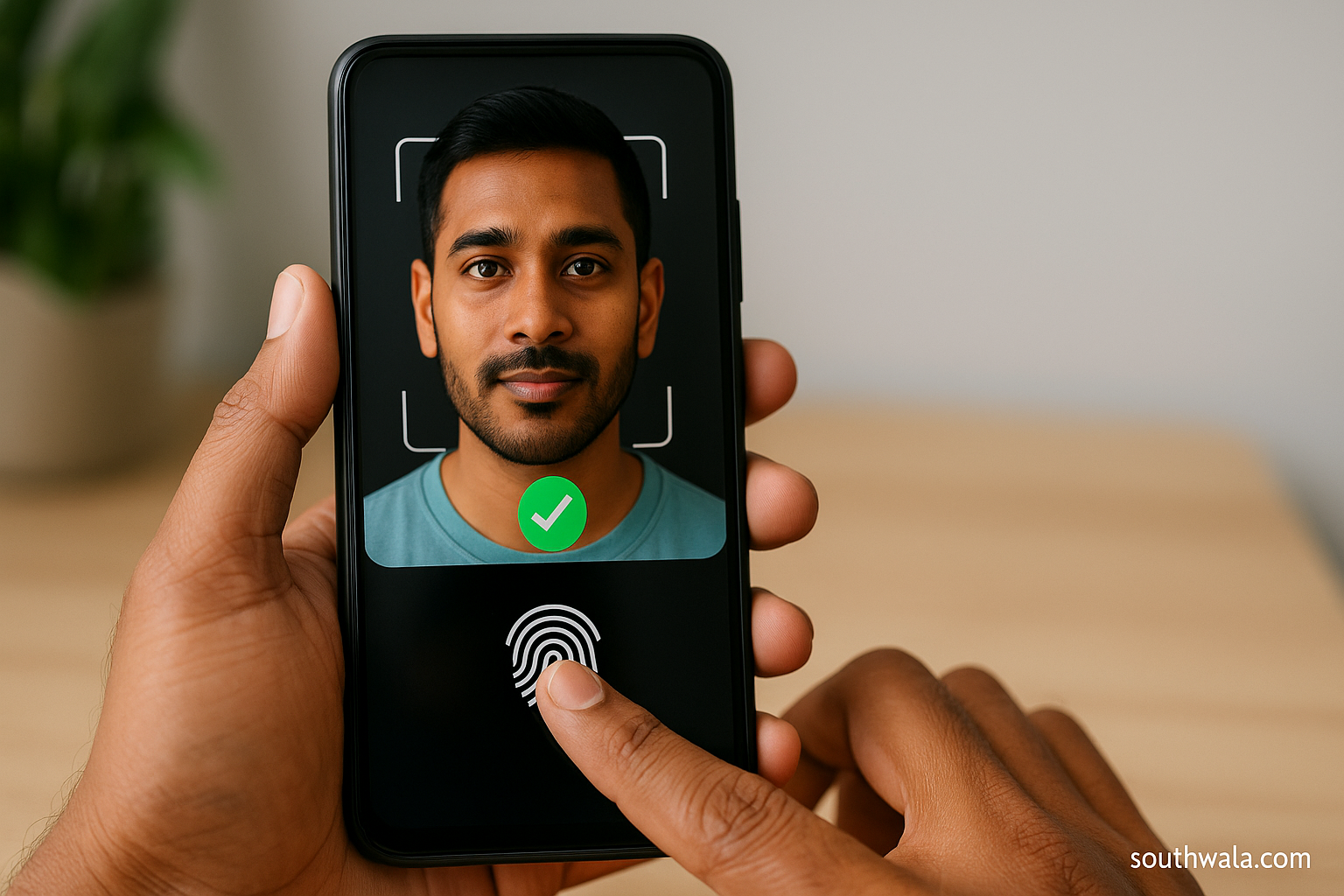
Starting October 8, India’s Unified Payments Interface (UPI) will allow users to authenticate transactions using facial recognition and fingerprints, eliminating the need for entering a PIN. The new feature marks a significant step in India’s journey toward biometric-based digital payments and enhanced user convenience.
How the System Works
The National Payments Corporation of India (NPCI), which operates UPI, confirmed that this upgrade will integrate with existing Aadhaar-linked biometric systems. Users will be able to verify payments through either facial recognition or fingerprint scanning directly from their smartphones or supported biometric devices.
For now, the system will work with select banks and gradually expand to all UPI-enabled platforms. The aim is to make digital payments faster, safer, and accessible even for people with limited literacy or those who find entering PINs difficult.
Security and Data Protection
Officials have emphasized that all biometric data will be verified through secure Aadhaar-based systems, ensuring that no sensitive personal information is stored or shared by UPI apps. The facial and fingerprint verification process will take place in real time and be encrypted end-to-end.
Cybersecurity experts believe that while biometric payments enhance convenience, strong backend encryption and fraud detection will remain critical to prevent misuse. NPCI is also expected to work with banks to strengthen authentication servers before full-scale rollout.
Expanding India’s Digital Economy
UPI has already transformed India’s payment ecosystem, processing billions of transactions monthly. The addition of biometric authentication is expected to further increase adoption among rural and senior citizens, who can now authorize payments without relying on passwords or PINs.
After the rollout, users will have the option to choose between traditional PIN entry or biometric verification for each transaction. Industry analysts say this update reflects India’s growing leadership in digital innovation and financial inclusion.
Author


Discover more from Southwala
Subscribe to get the latest posts sent to your email.

