Southwala Shorts
- A decade ago, a player’s form was judged by gut feeling and recent scores.
- Today, Artificial Intelligence can forecast how a cricketer, footballer, or tennis player might perform even before stepping on the field.
- This isn’t magic, it’s math.
- AI now combines performance data, biomechanics, weather, opponent patterns, and psychological indicators to create something close to sports foresight.

A decade ago, a player’s form was judged by gut feeling and recent scores. Today, Artificial Intelligence can forecast how a cricketer, footballer, or tennis player might perform even before stepping on the field.
This isn’t magic, it’s math. AI now combines performance data, biomechanics, weather, opponent patterns, and psychological indicators to create something close to sports foresight. The same technology that powers stock market predictions or self-driving cars is now shaping match strategies, fantasy leagues, and athlete training.
Sports are no longer just played they’re computed.
1. The Data Behind the Form: The New Digital Scoreboard
AI doesn’t just look at runs, goals, or wickets. It studies the context behind them. Every movement, reaction, and condition matters.
A typical AI-driven performance model pulls data from:
- Match history: Previous games, pitch conditions, opponent style.
- Player biomechanics: Running gait, muscle strain, reaction time, heart rate.
- Weather and surface data: How humidity, grass, or temperature affects performance.
- Mental indicators: Sleep, stress, mood patterns (tracked via wearable devices).
In cricket, for instance, systems like Hawk-Eye and CricViz now process millions of data points to gauge how a player will handle certain bowlers or field setups.
The goal isn’t to replace human judgment; it’s to make it sharper.
2. Machine Learning Models: Turning Patterns into Predictions
AI uses a class of algorithms called Machine Learning (ML) systems that learn from historical data and predict outcomes.
Here’s how it works:
- Training Phase: The model studies thousands of past matches to identify hidden correlations.
- Validation Phase: It tests predictions against real match outcomes.
- Prediction Phase: It begins forecasting for example, a striker’s goal probability or a batter’s expected strike rate.
These models constantly evolve. Each match becomes new training data, refining the next prediction.
Example:
A football analytics company like StatsBomb uses ML to calculate a metric called xG (Expected Goals), a measure of how likely a player is to score based on position, pass type, and defensive pressure.
The machine doesn’t see names; it sees patterns.
3. The Wearable Revolution: Data From the Player’s Body
Modern athletes are walking data centers. Smart sensors embedded in jerseys, shoes, or wristbands collect real-time physiological data heart rate, muscle fatigue, oxygen levels, and even hydration.
That data goes straight into AI systems, which flag anomalies before the athlete even feels them.
- If heart rate recovery slows after training, fatigue prediction rises.
- If running mechanics change, injury risk scores increase.
- If neural activity shows mental fatigue, performance probability drops.
Example:
In tennis, the Catapult GPS tracks acceleration, sprint load, and recovery rates to tailor rest and practice schedules.
In cricket, franchises like the Mumbai Indians and the Royal Challengers Bengaluru use similar data to decide whether a player is match-fit or should be rested.
AI, in essence, has become the coach’s second brain.
4. The Opponent Factor: Predicting the Battle Before It Begins
AI doesn’t just analyze the player it studies the matchup. It simulates scenarios like:
- How Virat Kohli performs against left-arm swing in overcast conditions.
- How Lionel Messi handles double-marking on slow grass.
- How a bowler’s line changes after conceding boundaries.
Through predictive simulation, AI creates thousands of “virtual matches” before the real one begins. Coaches then pick line-ups and tactics based on these projections.
Case Study:
During the 2023 ICC World Cup, analysts used AI-based heat maps to predict strike zones for each batter, leading to smarter field placements and targeted bowling strategies.
In football, Liverpool FC’s data science team uses “positional intelligence AI” to simulate opponent formations letting the team prepare for unseen tactical shifts before the whistle blows.
5. The Human-AI Balance: Mind Over Machine
Even with all its accuracy, AI doesn’t account for emotion. A motivated athlete can outperform every metric. A distracted one can fail despite perfect form scores. This is why top teams treat AI as an assistant, not an authority. It helps coaches manage player load, predict fatigue, or prevent injuries, but final decisions rely on instinct and team chemistry.
AI may predict form, but it cannot measure willpower.
Example:
During the NBA 2022 playoffs, data showed one team’s star player was fatigued and unlikely to perform. He went on to score a record-breaking performance. The system was wrong, the human heart wasn’t.
6. The Fantasy and Fan Impact: AI for Everyone
AI isn’t limited to professionals anymore. Fantasy leagues like Dream11 and MPL already use machine learning for player recommendations.
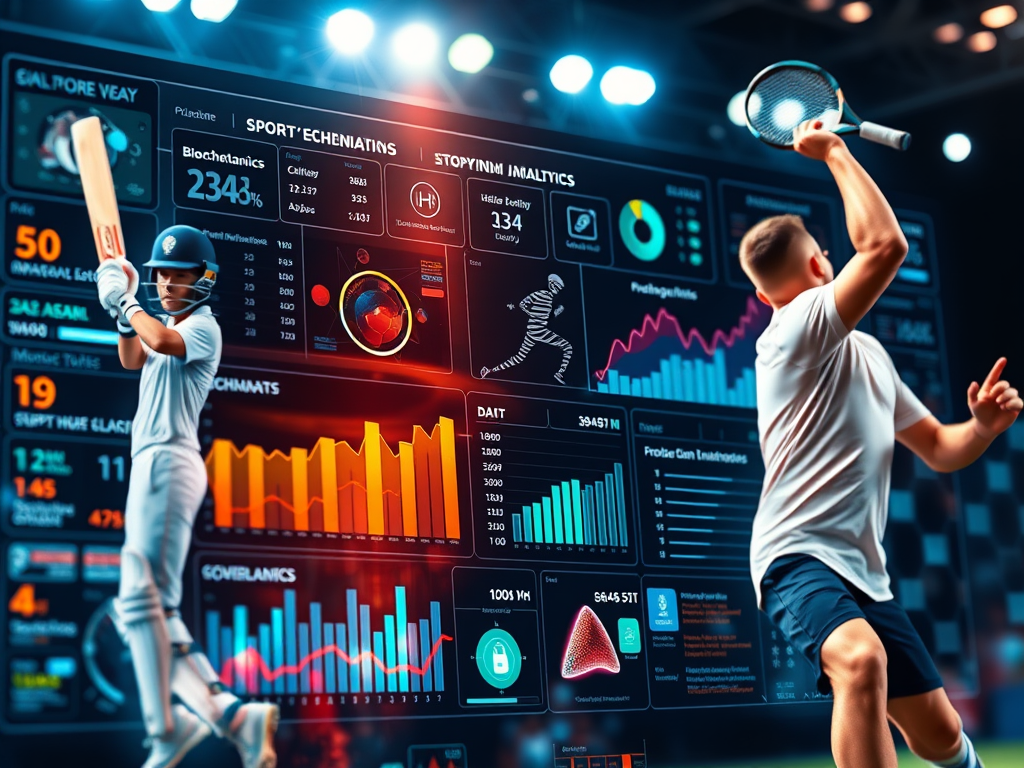
Fans can now view predictive dashboards that rank players based on current form probability.
Even sports broadcasters use AI to generate “momentum predictions” and win probability charts during live matches, keeping viewers hooked with real-time analytics.
The same technology that helps analysts pick squads now helps fans pick fantasy captains.
7. The Future: AI as the Sports Psychologist
AI’s next big frontier is emotional prediction, reading micro-expressions, stress signals, or speech tone to gauge mental readiness. Early experiments show that combining physiological and emotional data boosts prediction accuracy by up to 30%.
In the future, an AI system may tell a coach
“Player X is physically ready but emotionally fragile today.”
Sports won’t just be about skill; they’ll be about data-backed self-awareness.
AI doesn’t exist to tell the future; it exists to prepare for it.
It converts uncertainty into strategy.
From cricket fields in Mumbai to football stadiums in Madrid, algorithms are now part of pre-game rituals. The real competition begins hours before the match in data labs, not dressing rooms.
AI can’t play the game, but it can reveal the hidden patterns that define it.
And in a world where milliseconds decide champions, that’s the edge every player now needs.
FAQs
1. Can AI actually predict a player’s performance before a match?
Yes. AI analyzes historical, physiological, and situational data to estimate how a player is likely to perform in upcoming matches.
2. Do sports teams in India use AI for player prediction?
Yes. IPL teams like the Mumbai Indians, Chennai Super Kings, and RCB actively use AI-based analytics for player fitness and strategy.
3. Can AI prevent sports injuries?
Yes. AI identifies early signs of fatigue or muscle strain through wearable data, helping teams rest players before injuries occur.
4. Does AI make emotional or mental predictions too?
Partially. Early models track patterns in speech, stress, or sleep, but emotional accuracy is still limited compared to physical metrics.
5. Is AI replacing human coaches?
No. AI supports coaches by providing insights and predictions, but human experience, intuition, and leadership remain irreplaceable.
Author


Discover more from Southwala
Subscribe to get the latest posts sent to your email.