Southwala Shorts
- Space missions are entering a new era.
- Astronauts are no longer the only intelligent beings on board.
- Artificial Intelligence (AI) is beginning to take on roles once thought to require human judgment, emotion, and adaptability.
- As AI systems grow smarter and more autonomous, they are evolving from tools to actual crew members, partners in exploration rather than passengers.

Space missions are entering a new era. Astronauts are no longer the only intelligent beings on board. Artificial Intelligence (AI) is beginning to take on roles once thought to require human judgment, emotion, and adaptability. As AI systems grow smarter and more autonomous, they are evolving from tools to actual crew members, partners in exploration rather than passengers.
AI as the New “Crew” in Space
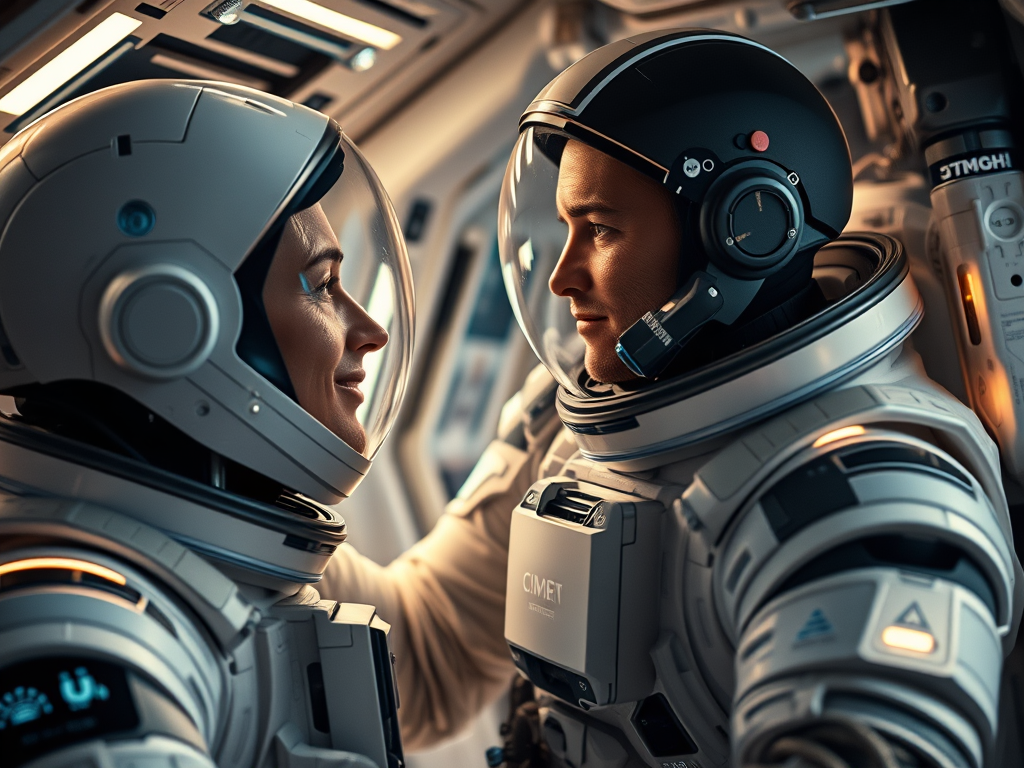
AI is no longer limited to running spacecraft systems or processing data. It is now being trained to interact, decide, and assist like a human teammate. These intelligent systems help with navigation, problem-solving, and even emotional support during long missions.
The European Space Agency’s CIMON (Crew Interactive MObile Companion), for instance, flew aboard the International Space Station (ISS) as a floating assistant. It could talk, recognize faces, respond to voice commands, and help astronauts follow complex procedures.
AI’s role here is not mechanical; it is collaborative, supporting astronauts in a human-like manner.
Decision-Making and Autonomy
Deep-space missions cannot rely on real-time communication with Earth. When a spacecraft travels to Mars or beyond, signal delays can reach 20 minutes or more. In such scenarios, AI becomes the ship’s decision-maker.
AI can:
- Detect system errors faster than humans.
- Manage navigation and course correction automatically.
- Reroute power, oxygen, or heat in emergencies.
- Analyze the health data of astronauts and predict fatigue or illness.
This autonomy ensures missions remain safe even when Earth cannot intervene immediately.
Emotional Intelligence in Space
Isolation, monotony, and distance from Earth can take a toll on astronauts’ mental health. AI systems are now being designed with emotional intelligence, the ability to sense stress or anxiety in voice tone, facial expression, or speech pattern.
CIMON, for example, was trained to respond empathetically and offer reassurance. Future systems will go beyond conversation; they could manage lighting, music, and even daily routines to maintain crew morale.
AI’s Role in Planetary Exploration
AI will play a critical role in planetary missions where human presence is limited or delayed. On Mars or the Moon, AI rovers and robotic units can:
- Build habitats before humans arrive.
- Map terrain and identify resources.
- Carry out maintenance or scientific experiments.
- Work alongside humans in dangerous or radiation-heavy zones.
Essentially, AI becomes an extended hand and brain for astronauts in extreme conditions.
Challenges of Having AI as a Crew Member
Despite its promise, AI in space faces serious challenges:
- Trust and control: Astronauts must trust AI decisions without losing command authority.
- Ethical dilemmas: If AI must choose between crew safety and mission success, whose rules apply?
- System failure risks: Unlike tools, AI can make autonomous decisions; errors could be critical.
- Dependence: Overreliance on AI might reduce human alertness and manual skills.
Balancing machine intelligence and human instinct remains a key task for future space agencies.
The Future: Human-AI Symbiosis in Space
Future missions to Mars or deep space will likely have hybrid crews humans and AI working side by side. Humans bring intuition, empathy, and adaptability. AI adds precision, speed, and resilience. Together, they form the most efficient team imaginable for interplanetary travel.
The day an AI officer sits beside an astronaut in a command module is not far away. It won’t just be following orders; it will be thinking, adapting, and helping humanity go farther than ever before.
AI as a crew member represents a turning point in space exploration. It is the bridge between human courage and machine precision. With each mission, AI is learning not just to compute, but to care, communicate, and cooperate. In the future, humanity’s journey to other worlds may depend as much on artificial minds as on human ones.
FAQs
Can AI act like a real teammate in space?
Yes, advanced systems like CIMON can talk, assist, and even recognize emotional cues.
Can AI make independent decisions during space missions?
Yes, especially when the communication delay with Earth is too long, AI can act autonomously to protect the crew and the mission.
Can AI support astronaut mental health?
Yes, emotionally intelligent AI can detect stress and provide comfort through conversation and environmental adjustments.
Can AI handle emergencies better than humans?
AI can react faster to system faults, reroute resources, and stabilize spacecraft conditions before humans respond.
Can future missions rely completely on AI?
No, human intuition and emotional judgment remain essential. The goal is partnership, not replacement.
Author


Discover more from Southwala
Subscribe to get the latest posts sent to your email.