Southwala Shorts
- In recent weeks, Ramcharitmanas has returned to the spotlight after being recognised by UNESCO under its documentary heritage programme.
- This has triggered a fresh wave of searches around who wrote it, when it was written, in which language, and how it differs from the...
- This article answers all the common questions people are actively searching for, in clear and simple language.
- Ramcharitmanas was written by Goswami Tulsidas, a poet saint of the Bhakti movement.

In recent weeks, Ramcharitmanas has returned to the spotlight after being recognised by UNESCO under its documentary heritage programme. This has triggered a fresh wave of searches around who wrote it, when it was written, in which language, and how it differs from the Ramayana.
This article answers all the common questions people are actively searching for, in clear and simple language.
Who wrote Ramcharitmanas
Ramcharitmanas was written by Goswami Tulsidas, a poet saint of the Bhakti movement.
He is one of the most influential literary and spiritual figures in Indian history. His work shaped how North India understands Lord Rama even today.
When did Tulsidas write Ramcharitmanas
Tulsidas began writing Ramcharitmanas in 1574 CE.
Historical records and internal references suggest that the composition continued for several years and was completed around 1576 to 1577 CE, during the Mughal period.
This places the text firmly in 16th century India.
Where did Tulsidas write Ramcharitmanas
Ramcharitmanas was written in Varanasi, also known as Kashi.
More specifically, it is believed to have been composed near the Assi Ghat area, a centre of spiritual learning and cultural exchange at the time.
Varanasi played a crucial role in spreading the text through recitation, copying, and public singing.
Which language was used to write Ramcharitmanas
Tulsidas wrote Ramcharitmanas in Awadhi, a regional language spoken by common people in North India.
This was a deliberate choice.
At the time, most religious texts were in Sanskrit, which ordinary people could not understand. By choosing Awadhi, Tulsidas made the story of Rama accessible to farmers, women, traders, and villagers.
This decision alone explains the book’s mass influence.
Why was Ramcharitmanas written
The purpose of Ramcharitmanas was not academic translation.
Tulsidas wrote it to:
Bring spiritual ideas to common people
Remove language barriers to devotion
Present Rama as a moral and human ideal
Strengthen bhakti or personal devotion over ritual control
In simple terms, it was written so that spirituality could move from temples into daily life.
What is the message of Ramcharitmanas
The central message of Ramcharitmanas is dharma through devotion and humility.
Key ideas include:
Leadership without ego
Duty over personal desire
Compassion as strength
Power guided by restraint
Faith combined with ethical living
It presents Rama not just as a god, but as an example of how to live responsibly
What is the difference between Ramcharitmanas and Ramayana
This is one of the most searched questions.
Here is the simple difference:
Valmiki’s Ramayana is an ancient Sanskrit epic with a poetic and historical tone.
Ramcharitmanas is a devotional retelling focused on bhakti and moral teaching.
Valmiki emphasises events and characters.
Tulsidas emphasises devotion and values.
Both tell the story of Rama, but with different intent and audience.
Who is the real writer of Ramayana
The original Ramayana was composed by Valmiki.
Tulsidas did not replace Valmiki. He reinterpreted the story for a different audience and time.
What is the first shlok of Ramcharitmanas
Ramcharitmanas begins with an invocation to Shiva and Guru.
The opening verse sets the tone of humility, devotion, and surrender before narration begins.
Unlike Valmiki’s epic opening, Tulsidas starts with bhakti, not chronology.
What are the main characters in Ramcharitmanas
The major characters include:
Lord Rama
Sita
Lakshmana
Hanuman
Bharata
Ravana
Among them, Hanuman receives special emphasis as the ideal devotee.
UNESCO recognition explained simply
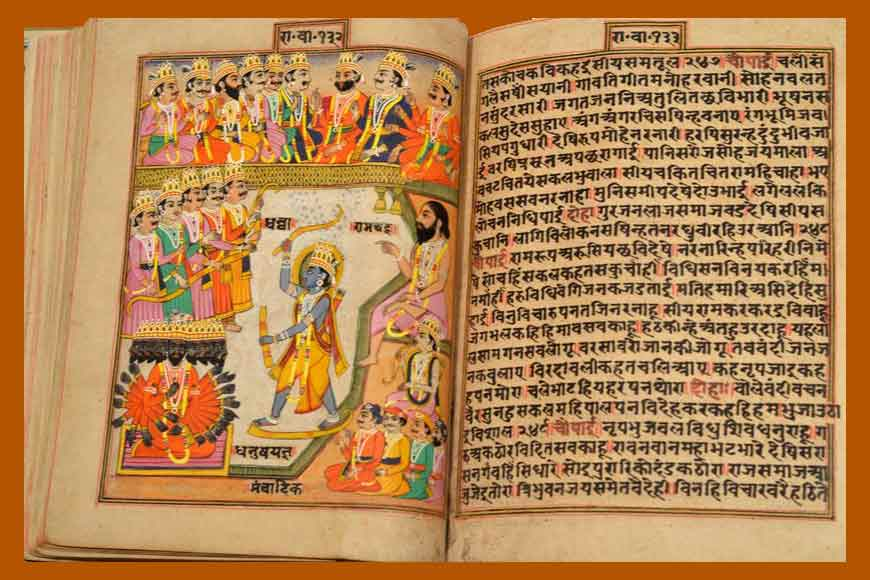
Ramcharitmanas was recently included in the UNESCO Memory of the World Asia Pacific Regional Register.
This does not mean it became a festival or ritual heritage.
It means UNESCO recognised it as documentary heritage, a written work that has shaped culture, ethics, language, and collective memory across generations.
This places Ramcharitmanas alongside globally important manuscripts and literary works.
Why this recognition matters today
Because it confirms one thing.
Ramcharitmanas is not just a religious book.
It is a cultural document that influenced language, theatre, governance thinking, and social values for over 400 years.
Few texts achieve that level of long-term impact.
One clear takeaway
Valmiki gave India the Ramayana. Tulsidas gave the Ramayana to the people.
Authors


Discover more from Southwala
Subscribe to get the latest posts sent to your email.