Southwala Shorts
- Firecrackers have long been a symbol of celebration, power, and joy.
- Across the world, they mark moments of victory, festivals, and transitions.
- In India and other parts of Asia, they became deeply rooted in cultural traditions from driving away evil spirits to expressing collective happiness.
- Over time, however, their role evolved, reflecting changes in technology, society, and environmental awareness.

Firecrackers have long been a symbol of celebration, power, and joy. Across the world, they mark moments of victory, festivals, and transitions. In India and other parts of Asia, they became deeply rooted in cultural traditions from driving away evil spirits to expressing collective happiness. Over time, however, their role evolved, reflecting changes in technology, society, and environmental awareness.
Origins of Firecrackers
The first firecrackers date back to ancient China, nearly 2,000 years ago. Bamboo stems, when thrown into fire, produced loud explosions due to air pockets bursting inside. People believed these sounds frightened away evil spirits and misfortune. This idea of noise as protection became part of early Chinese customs during celebrations like the Lunar New Year.
When gunpowder was discovered in the 9th century, it changed everything. The combination of sulfur, charcoal, and potassium nitrate allowed controlled explosions. Firecrackers became both an art and a science colorful, rhythmic, and loud. The practice spread through trade routes to India, the Middle East, and Europe.
Arrival in India and Cultural Integration
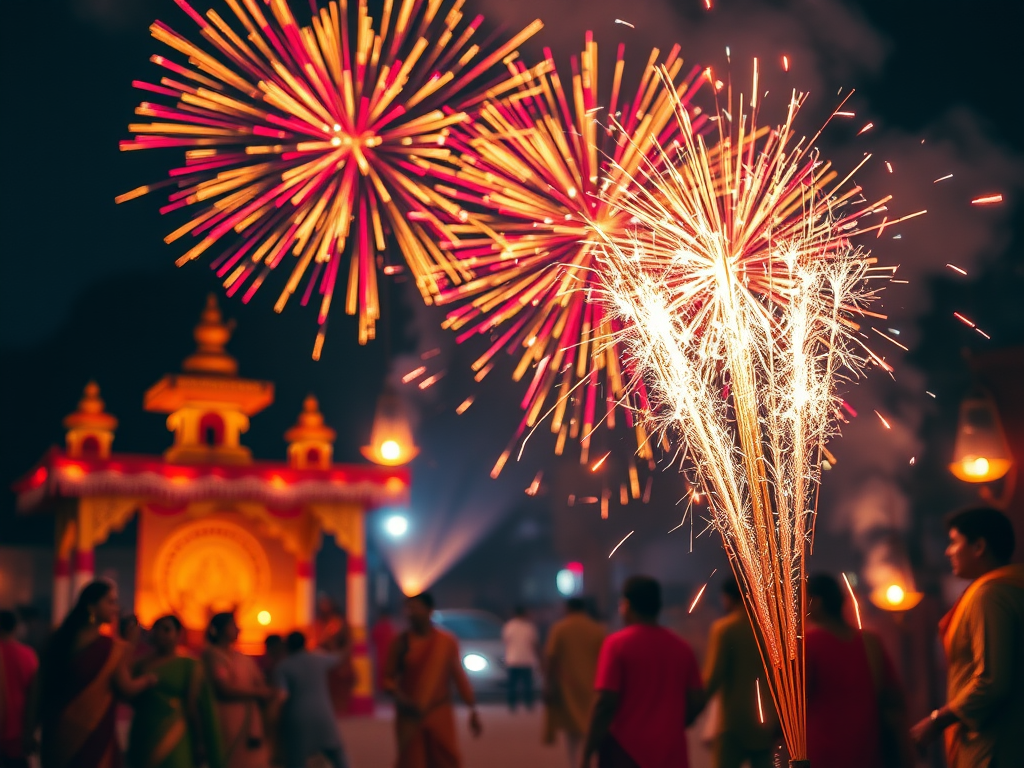
Firecrackers reached India during the medieval period, introduced by traders and later popularized during Mughal rule. Royal courts used fireworks in festivals and processions to symbolize prosperity and divine blessing. Over centuries, firecrackers became tied to religious and community celebrations, particularly Diwali the festival of lights.
In Indian tradition, light symbolizes victory over darkness, and sound amplifies that emotion. The bursting of crackers during Diwali represented the triumph of good over evil, echoing ancient beliefs of warding off negative energy.
Global Spread and Symbolism
Beyond India and China, fireworks found meaning in different cultures:
- In Europe, they became part of royal ceremonies and New Year’s Eve festivities.
- In America, they became a symbol of freedom and celebration during Independence Day.
- In Japan, fireworks evolved into summer festival art known as Hanabi Taikai, focused on beauty rather than noise.
Across continents, firecrackers came to represent energy, joy, and unity. The sound, color, and spark reminded people of shared emotions like happiness, hope, and renewal.
Changing Perception and Modern Concerns
In recent decades, public debate around firecrackers has shifted due to environmental and health issues.
- Air and noise pollution became serious concerns, especially in densely populated cities.
- Rising cases of respiratory illness and stress on animals pushed for stronger regulation.
- Governments introduced “green crackers” designed to reduce emissions and noise levels.
Festivals today are increasingly focusing on lights, community events, and symbolic celebrations rather than loud firework displays.
Firecrackers in the Modern World
Despite restrictions, the emotional and cultural pull of firecrackers remains strong. They continue to mark moments of excitement from weddings and sports victories to national celebrations. Technology has also modernized them: drones, laser shows, and silent fireworks now recreate the spectacle without the pollution.
This evolution shows that traditions can adapt without losing their meaning. The spirit of celebration remains the same only the expression changes with time.
Firecrackers began as a ritual to chase away evil and evolved into a universal symbol of celebration. Their journey from bamboo bursts in ancient China to eco-friendly “green” fireworks in today’s world mirrors human progress itself. The tradition survives not because of noise or light, but because of the shared joy it represents.
FAQs
Can firecrackers harm the environment?
Yes, regular firecrackers release harmful gases and particles that affect air quality.
Can green crackers reduce pollution?
Yes, they emit fewer pollutants and produce less noise compared to traditional ones.
Can animals be affected by firecrackers?
Yes, loud sounds can cause distress and disorientation among pets and street animals.
Can firecrackers be replaced in celebrations?
Yes, light shows, laser displays, and drone fireworks offer eco-friendly alternatives.
Can the tradition of firecrackers continue responsibly?
Yes, by using cleaner technologies and following local regulations, celebrations can remain joyful and safe.
Author


Discover more from Southwala
Subscribe to get the latest posts sent to your email.