Southwala Shorts
- The word “Dharma” is often mistaken for religion, especially in English translations.
- Yet, Dharma carries a meaning far deeper than the boundaries of belief systems or rituals.
- It represents balance, responsibility, harmony, and the moral order that sustains life.
- Dharma is not about belonging to a particular faith.

The word “Dharma” is often mistaken for religion, especially in English translations. Yet, Dharma carries a meaning far deeper than the boundaries of belief systems or rituals. It represents balance, responsibility, harmony, and the moral order that sustains life.
Dharma is not about belonging to a particular faith. It is about being in tune with truth and duty.
The Meaning of Dharma in Context
In ancient Indian thought, Dharma comes from the Sanskrit root “Dhri”, meaning to hold, sustain, or support. It refers to the natural law that holds the universe together, the principle that keeps creation from falling into chaos.
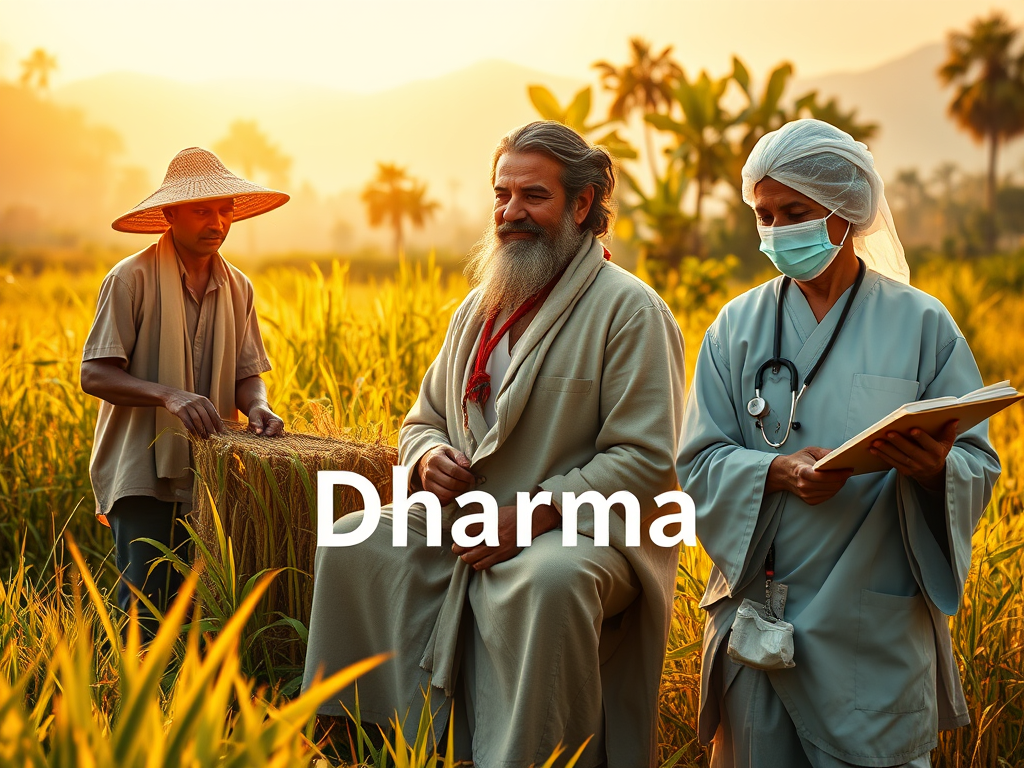
Dharma is not confined to temples or doctrines. It is visible in actions, relationships, and the way one lives daily life. A farmer performing his work honestly, a teacher guiding students with sincerity, or a citizen serving society responsibly, each of these is an expression of Dharma.
Dharma and Religion Are Not the Same
Religion is about worship, rituals, and faith in a specific divine path. Dharma is a code of conduct that applies to every living being, irrespective of belief or background.
- Religion can differ from one culture to another.
- Dharma remains a universal truth, justice, and moral duty that never changes.
For example, compassion, honesty, and respect are not limited to any one religion; they are dharmic values shared by humanity itself.
Dharma as a Personal Compass
Every individual’s Dharma is unique. A parent’s Dharma may lie in nurturing children with care. A doctor’s Dharma lies in healing without discrimination. A leader’s Dharma lies in governing with fairness and integrity.
The Bhagavad Gita describes Dharma as one’s “swadharma”, the rightful duty aligned with one’s nature and role. Following it brings peace; ignoring it creates confusion and inner conflict.
Dharma, therefore, acts as a personal compass guiding choices not by law or fear but by conscience.
Dharma in Society
A society that follows Dharma creates balance. It respects nature, protects the weak, and upholds justice. When Dharma weakens, exploitation and disorder rise. This is why Indian philosophy says, “Dharma rakshati rakshitah”, those who protect Dharma are themselves protected by it.
Dharma forms the foundation of Indian civilization, influencing law, family, governance, and even art. Unlike Western separation of religion and state, Indian tradition built life around Dharma as a moral framework rather than an institution of worship.
The Modern Relevance of Dharma
In today’s fast world filled with greed, competition, and environmental damage, Dharma remains a reminder of balance. It urges humans to live mindfully, respecting life, maintaining honesty in work, and showing kindness in action.
Dharma, in modern terms, means ethical responsibility towards self, society, and nature. It is about living with awareness rather than living by blind belief.
Dharma is not religion. It is the art of right living, a way of being that sustains harmony within and around. While religions may divide people into followers, Dharma unites them through purpose and conduct.
Living by Dharma means living with conscience, balance, and respect for life. It is not about performing rituals; it is about performing duties with integrity.
FAQs
Can Dharma exist without belief in God?
Yes, Dharma is based on values and duty, not necessarily belief in a deity.
Can Dharma change from person to person?
Yes, individual Dharma depends on one’s role, nature, and responsibility in life.
Can Dharma guide moral decisions?
Yes, it acts as an inner guide that helps choose right over wrong.
Can Dharma and religion coexist?
Yes, religion can express Dharma, but Dharma itself is wider than any single faith.
Can following Dharma lead to peace?
Yes, when actions align with truth and fairness, peace naturally follows.
Author


Discover more from Southwala
Subscribe to get the latest posts sent to your email.