Southwala Shorts
- Stains on clothes are one of the most common problems in daily life.
- Whether it is a coffee spill during breakfast, curry dripping while eating, or ink marks from a pen, stains often arrive when we least expect...
- Most people think they need special chemical-based stain removers, but in reality, many powerful stain fighters are sitting right inside your kitchen.
- With the right knowledge, you can treat stains quickly and effectively without spending extra money.

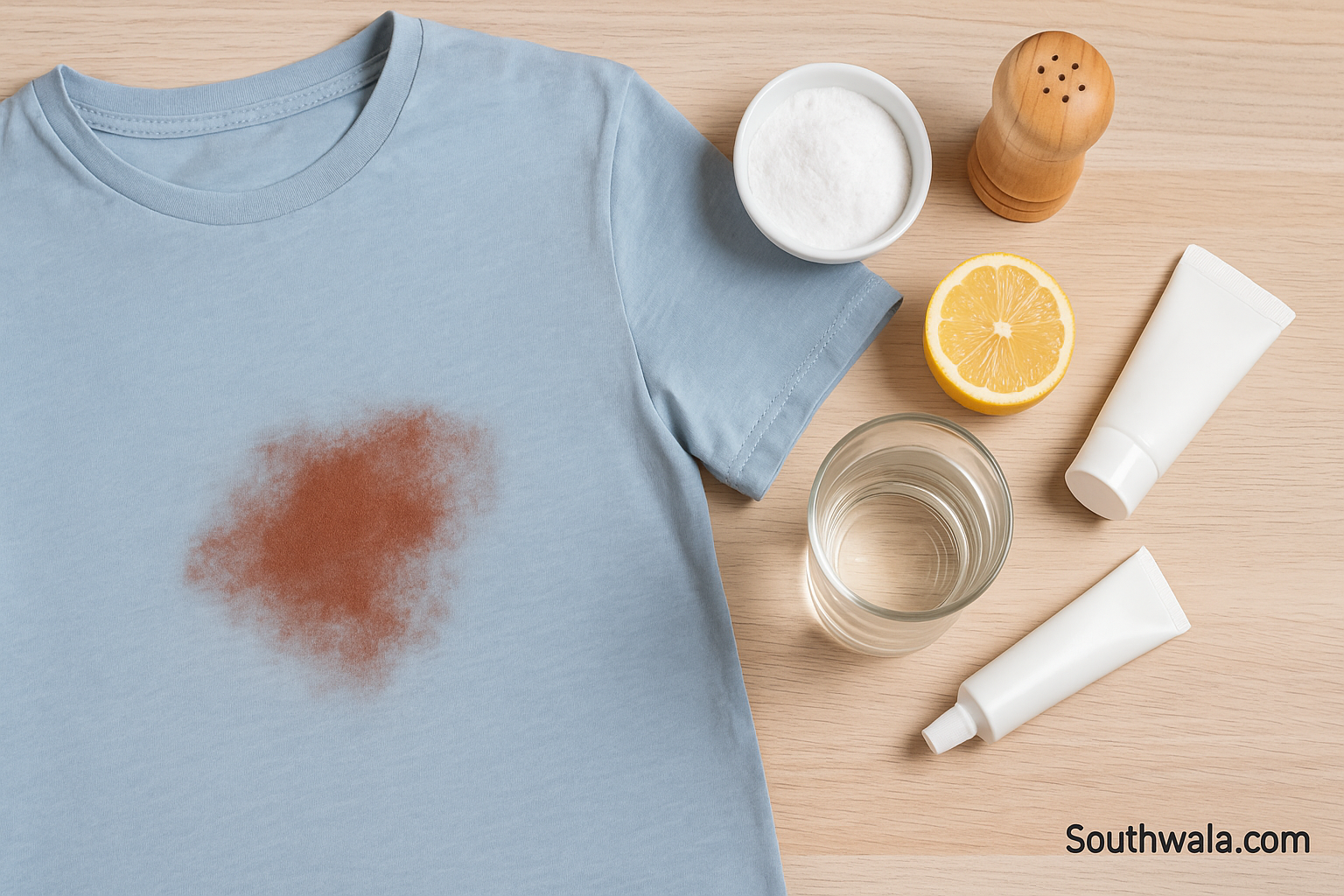
Stains on clothes are one of the most common problems in daily life. Whether it is a coffee spill during breakfast, curry dripping while eating, or ink marks from a pen, stains often arrive when we least expect them. Most people think they need special chemical-based stain removers, but in reality, many powerful stain fighters are sitting right inside your kitchen. With the right knowledge, you can treat stains quickly and effectively without spending extra money.
Kitchen Items Work on Stains
Most stains are caused by oils, pigments, or proteins. Kitchen items like vinegar, lemon, salt, or baking soda are natural cleaners that can break down these particles. They are safe, affordable, and eco-friendly compared to harsh detergents.
Lemon Juice for Fresh Stains
Lemon has natural bleaching power. If you spill tea, curry, or juice on a light-colored cloth, squeeze some fresh lemon juice on the spot and rub gently. Leave it in the sun for a while. The stain lightens because lemon’s acidity breaks the pigment molecules. For example, many Indian households still rely on lemon to clean turmeric stains.
Vinegar for Strong Odor and Sweat Marks
White vinegar is excellent for removing sweat stains and odor from shirts. Mix equal parts of vinegar and water, apply it to the stained area, and leave it for 15 minutes before washing. This works especially well for collars and underarm areas where sweat marks are common.
Baking Soda for Oil and Grease Stains
Cooking oil or butter stains can be tough. Sprinkle baking soda directly on the greasy patch, let it sit for 15 to 20 minutes, and then brush it off. Baking soda absorbs the oil before it sets deep into the fabric. For older stains, make a paste of baking soda and water, apply it, and wash after drying.
Salt for Wine or Blood Stains
Salt works by pulling liquid out of the fabric. If you spill red wine, quickly cover the stain with salt, press lightly, and let it soak. The salt will absorb much of the color. Similarly, for fresh blood stains, cold water and salt scrub can help before the stain becomes permanent.
Milk for Ink Stains
It may sound unusual, but soaking ink-stained fabric in a bowl of milk can reduce the mark. Milk contains proteins that react with ink pigments and loosen them from fibers. Students often use this trick when pens leak on uniforms.
Toothpaste for Makeup Marks
Lipstick and foundation stains on collars can be treated with white toothpaste. Apply a small amount, rub gently, and rinse with cold water. Toothpaste acts like a mild cleaner and works well in emergencies.
Important Tips to Remember
- Always treat stains as quickly as possible before they dry.
- Test the kitchen item on a small hidden part of the cloth to check for fabric reaction.
- Avoid hot water on protein stains like blood or milk, as it can set them deeper.
- Pat the stain instead of rubbing hard, which can damage the fibers.
Your kitchen is like a mini laundry lab. Instead of rushing to the market for expensive removers, try these simple, safe, and effective methods first. With common items like lemon, vinegar, salt, and baking soda, you can handle most stains smartly.
FAQs
1. Can lemon juice damage clothes?
Lemon juice works best on light-colored fabrics. On dark or delicate fabrics, always test first, as it may cause slight fading.
2. What is the quickest way to remove an oil stain?
Sprinkling baking soda immediately is the fastest way, as it absorbs fresh oil before it spreads.
3. How to deal with old stains that are already set?
Make a paste of baking soda and vinegar or soak in vinegar water. Old stains may need repeated treatment.
4. Can toothpaste remove all types of stains?
No, toothpaste works mostly for small stains like lipstick or makeup marks. It is not effective for oil or coffee stains.
5. Is using salt safe for all fabrics?
Salt is safe for cotton and synthetic fabrics. On silk or wool, it should be used carefully and tested first.
Author


Discover more from Southwala
Subscribe to get the latest posts sent to your email.