
Southwala Shorts
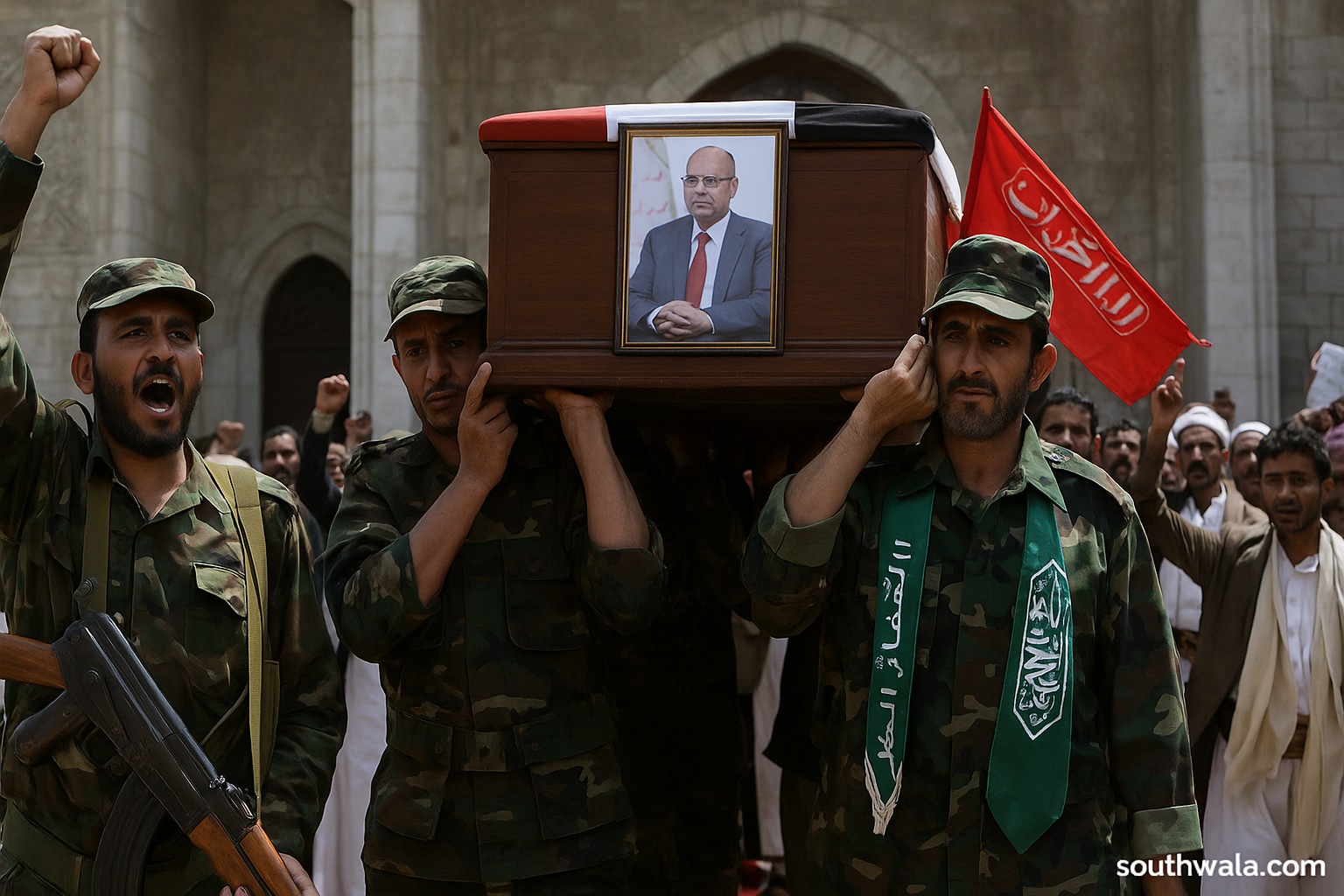
- Hundreds of mourners gathered in Sanaa on Monday to bid farewell to Houthi Prime Minister Ahmed al-Rahawi, who was killed in an Israeli airstrike last...
- The funeral procession, marked by military guards and religious leaders, took place at the Shaab Mosque in the capital.
- The ceremony drew large crowds, highlighting his role as the highest-ranking Houthi official to be killed since the start of Israel’s recent campaign.
- Deputy Prime Minister Muhammad Ahmad Miftah assumed the position of acting prime minister.

Hundreds of mourners gathered in Sanaa on Monday to bid farewell to Houthi Prime Minister Ahmed al-Rahawi, who was killed in an Israeli airstrike last week. The funeral procession, marked by military guards and religious leaders, took place at the Shaab Mosque in the capital. The ceremony drew large crowds, highlighting his role as the highest-ranking Houthi official to be killed since the start of Israel’s recent campaign.
Deputy Prime Minister Muhammad Ahmad Miftah assumed the position of acting prime minister. In his address to supporters, Miftah vowed that the Houthis would continue their fight and promised tighter internal security. The leadership change comes at a sensitive moment, as the group faces both external strikes and mounting internal challenges.
Red Sea Missile Attack
While the nation mourned, the conflict at sea intensified. Houthi forces launched a missile at the Scarlet Ray, a Liberian-flagged oil tanker sailing in the Red Sea. The attack, which the Houthis claimed was directed at a vessel linked to Israel, did not cause major damage. Maritime authorities confirmed that the ship and its crew were safe. The incident adds to a series of attacks that have disrupted one of the world’s busiest shipping lanes.
Pressure on Humanitarian Agencies
The escalation was not limited to military actions. Houthi forces also raided United Nations offices in Sanaa and the port city of Hodeida, detaining staff members and seizing property. Aid organizations condemned the move, calling it a dangerous setback for humanitarian work in a country already suffering from years of conflict and food shortages.
Regional Consequences
The simultaneous loss of senior leadership, heightened maritime confrontations, and confrontations with aid agencies mark a turning point in Yemen’s crisis. Analysts warn that these developments could deepen instability in the Red Sea region, where global trade and humanitarian operations are already under severe strain. For Yemen’s civilians, it adds yet another layer of hardship in a conflict with no immediate end in sight.
Author


Discover more from Southwala
Subscribe to get the latest posts sent to your email.

