
Southwala Shorts
- US President Donald Trump has announced a 100% tariff on pharmaceutical drugs imported into the United States, a move that is expected to impact India’s...
- The decision, revealed during a press briefing, is being described as part of the administration’s broader trade strategy.
- India is one of the largest suppliers of generic drugs to the US market.
- The imposition of a 100% tariff will sharply increase the cost of Indian medicines in the American market, potentially reducing demand.

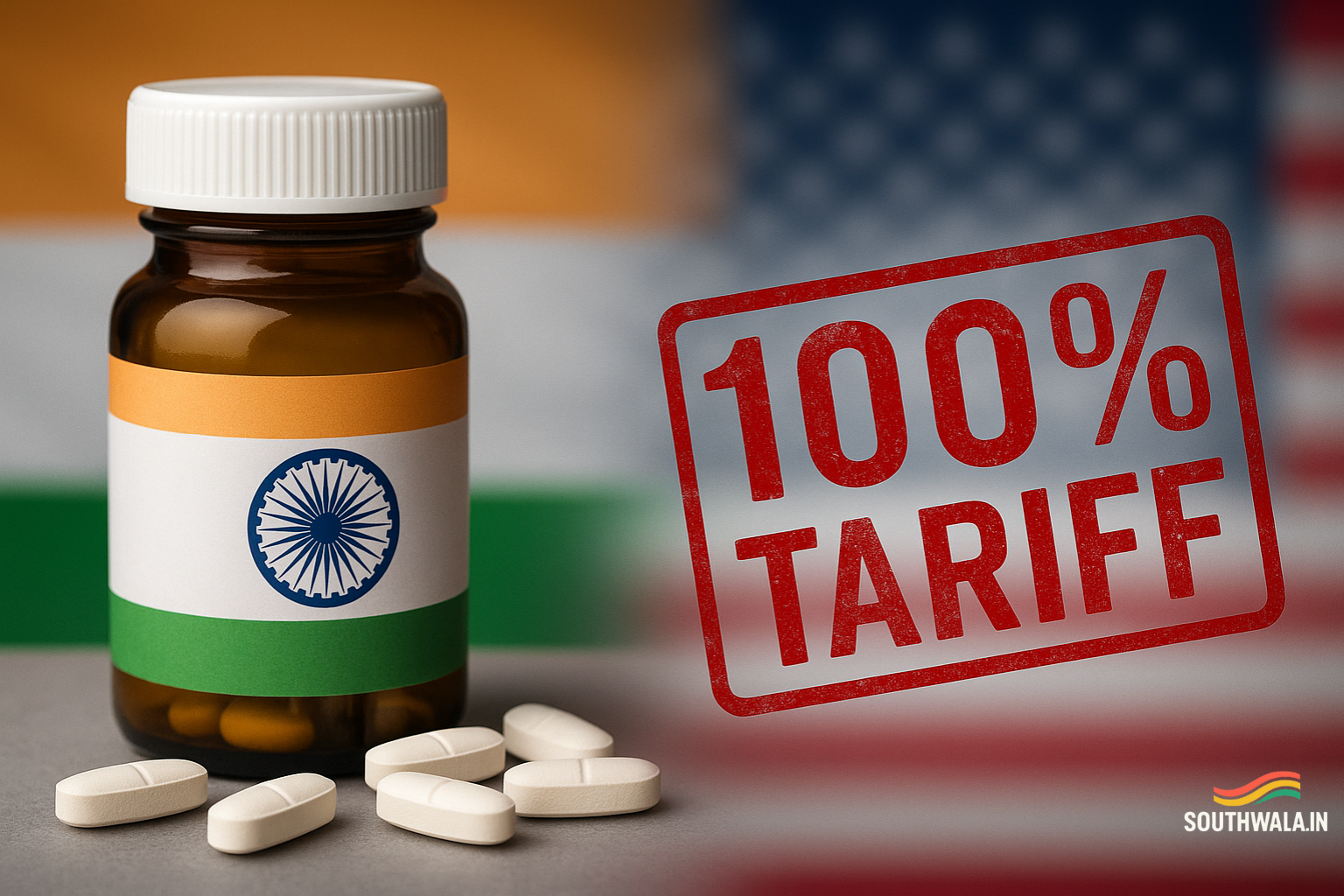
US President Donald Trump has announced a 100% tariff on pharmaceutical drugs imported into the United States, a move that is expected to impact India’s pharmaceutical industry significantly. The decision, revealed during a press briefing, is being described as part of the administration’s broader trade strategy.
India is one of the largest suppliers of generic drugs to the US market. The imposition of a 100% tariff will sharply increase the cost of Indian medicines in the American market, potentially reducing demand. Analysts say this could directly affect India’s export revenues and disrupt supply chains.
While announcing the tariff, President Trump said the decision was aimed at protecting American industries and encouraging domestic drug manufacturing. He emphasized the need for the US to reduce dependency on foreign pharmaceutical products and strengthen its local production base.
Indian pharmaceutical companies are expected to be among the hardest hit, given their large presence in the US market. Several industry experts have raised concerns that the tariff could make affordable generic medicines less accessible to American patients. Companies exporting bulk drugs and formulations may face declining profits and pressure to adjust their strategies.
The move is also likely to draw scrutiny from global trade partners and could spark discussions at the World Trade Organization (WTO). Experts believe that such high tariffs on essential goods may trigger disputes and further strain US trade relations with India.
The pharmaceutical sector in India may need to diversify markets and explore new regions to mitigate the impact. Meanwhile, US consumers may see higher drug prices, adding to concerns about healthcare costs.
The announcement marks one of the most significant policy shifts in US-India trade relations and highlights the growing tension over pharmaceutical exports.
Author


Discover more from Southwala
Subscribe to get the latest posts sent to your email.

