
Southwala Shorts
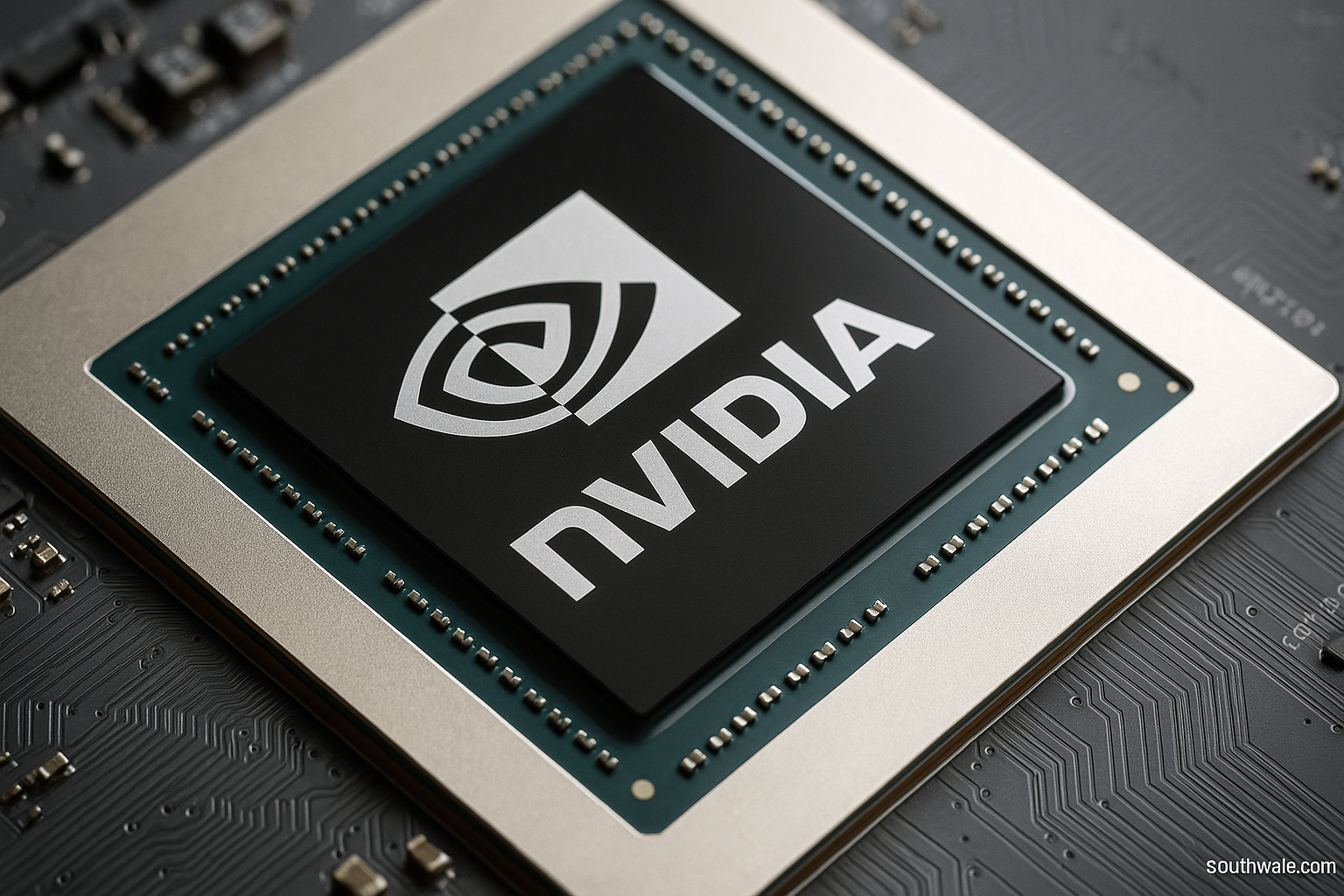
- Nvidia, the world’s leading chipmaker, is reported to be working on a new artificial intelligence (AI) chip called B30A, designed specifically for the Chinese market.
- This development comes at a time when U.S.
- restrictions limit the export of high-end AI chips to China.
- The company is reportedly planning to deliver sample units as early as September, according to press reports.

Nvidia, the world’s leading chipmaker, is reported to be working on a new artificial intelligence (AI) chip called B30A, designed specifically for the Chinese market. This development comes at a time when U.S. restrictions limit the export of high-end AI chips to China. The company is reportedly planning to deliver sample units as early as September, according to press reports.
Based on Blackwell Architecture
The upcoming B30A chip is said to be built on Nvidia’s latest Blackwell architecture, which represents the company’s next generation of powerful processors. This makes it different from the older Hopper architecture chips, which have been the backbone of Nvidia’s AI portfolio so far.
Features of the New Chip
The B30A chip is expected to include:
- High-bandwidth memory, allowing faster data handling for AI workloads.
- NVLink technology, enabling fast data transmission between processors.
- A performance profile that strikes a balance between efficiency and compliance with U.S. export rules.
These features ensure that the chip remains competitive in the growing AI market while also aligning with trade regulations.
Comparison with the H20 Chip
Nvidia previously developed the H20 chip, based on Hopper architecture, as a China-specific alternative after U.S. export restrictions tightened. The B30A appears to be a continuation of that strategy, but with enhanced speed, efficiency, and memory bandwidth under the newer Blackwell system.
Why This Matters for China and Nvidia
China has a rapidly growing demand for AI chips, driven by its tech giants and AI research labs. However, U.S. trade restrictions have limited access to Nvidia’s most advanced chips like the H100. By creating chips like the H20 and now the B30A, Nvidia ensures it can continue to serve the Chinese market without breaking export laws.
At the same time, this move allows Nvidia to protect its revenue streams, given that China has been one of its largest markets for AI chips.
If Nvidia successfully delivers B30A samples by September, it could open doors for large-scale adoption in China’s AI industry before the end of 2025. Analysts believe this is part of Nvidia’s broader strategy to navigate geopolitical hurdles while maintaining its dominance in the global AI chip market.
Author


Discover more from Southwala
Subscribe to get the latest posts sent to your email.

