
Southwala Shorts
- More than 300 South Korean workers have been deported following a massive US Immigration and Customs Enforcement (ICE) raid at a Hyundai-LG battery plant construction...
- The week-long operation has been described by South Korean media as the largest immigration action of its kind involving Korean nationals in the United States.
- The raid targeted workers who entered the United States on B1 business visas or through the visa waiver program.
- US law does not allow such permits to be used for full employment, but Korean companies have often relied on these categories because H-1B work...

More than 300 South Korean workers have been deported following a massive US Immigration and Customs Enforcement (ICE) raid at a Hyundai-LG battery plant construction site in Georgia. The week-long operation has been described by South Korean media as the largest immigration action of its kind involving Korean nationals in the United States.
The raid targeted workers who entered the United States on B1 business visas or through the visa waiver program. US law does not allow such permits to be used for full employment, but Korean companies have often relied on these categories because H-1B work visas are limited and slow to obtain. Unlike some US trade partners, South Korea does not benefit from a dedicated visa quota system, leaving businesses struggling to meet labor demands for major projects.
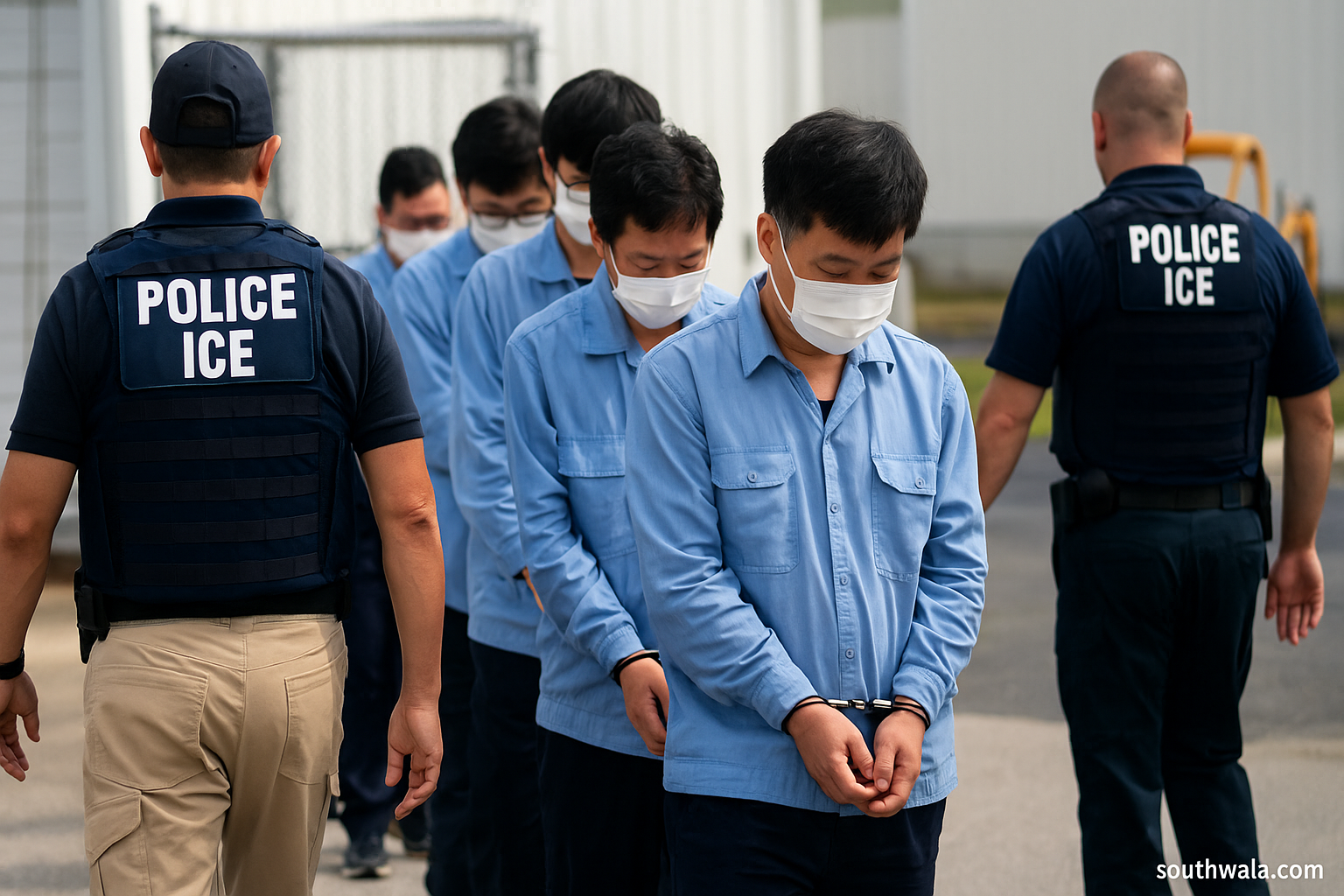
Images and footage released by ICE showing workers led away in chains sparked anger in South Korea, with local media criticizing the treatment as inhumane. Political leaders and industry representatives expressed concern that the raid could damage relations between the two allies and slow down progress on high-value investments.
South Korean President Lee Jae Myung issued a strong statement to Washington, warning that Korean companies may reconsider or hesitate on future US investments if visa issues remain unresolved. “The US doesn’t have such personnel, and they won’t give visas for our workers to stay and work,” Lee said, pointing to risks facing the $4.3 billion Hyundai-LG project and similar ventures.
The incident highlights ongoing strains in labor mobility between the US and South Korea, even as both nations deepen economic and security cooperation. With billions of dollars at stake in joint industrial projects, the outcome of future negotiations on work visas and labor rules could play a critical role in shaping investment decisions.
Author


Discover more from Southwala
Subscribe to get the latest posts sent to your email.

