
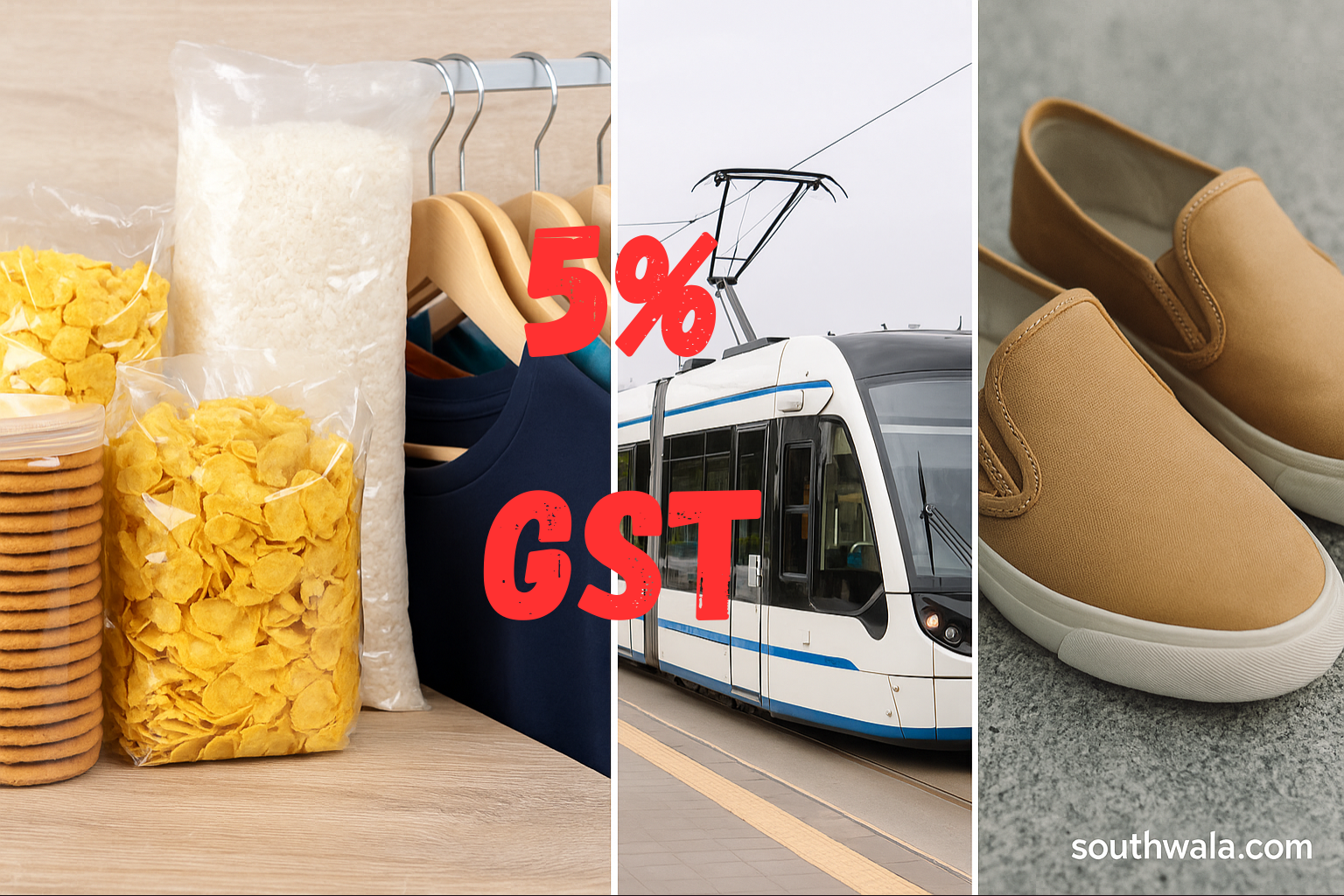
Southwala Shorts
- While GST 2.0 has simplified tax rates, one key slab that remains crucial is the 5% category.
- This is where most daily use and affordable goods fall, products that are neither essentials like milk and medicines (now tax-free) nor high-end luxury items...
- The government’s decision to keep this slab for affordable goods ensures that the cost of living for ordinary families remains stable.
- The biggest relief comes in the grocery basket.

While GST 2.0 has simplified tax rates, one key slab that remains crucial is the 5% category. This is where most daily use and affordable goods fall, products that are neither essentials like milk and medicines (now tax-free) nor high-end luxury items taxed at 40%.
The government’s decision to keep this slab for affordable goods ensures that the cost of living for ordinary families remains stable.
Before and After: Daily Use Goods Under GST 2.0
| Product | Before GST 2.0 | After GST 2.0 | Impact |
|---|---|---|---|
| Packaged Food (biscuits, cereals) | 12% | 5% | Lower grocery bills |
| Basic Clothing (under ₹1000) | 5% | 5% (unchanged) | Neutral |
| Footwear (under ₹500) | 5% | 5% (unchanged) | Neutral |
| Public Transport (metro, buses) | 5% | 5% | Affordable mobility |
What Changed for Families
The biggest relief comes in the grocery basket. Packaged foods like biscuits, cereals, and ready-to-eat products have dropped from 12% to 5%. This directly cuts household grocery bills, especially in urban families where packaged foods are regular purchases.
Basic clothing and footwear remain at 5%, which means the affordability of everyday apparel is preserved. For middle and lower-income families, this stability is important in school uniforms or daily footwear costs.
Public transport services such as metro rides and bus fares also stay at 5%. This ensures that mobility remains affordable for workers, students, and daily commuters.
Why the 5% Slab Matters
The 5% slab is where daily life meets tax policy. By keeping it low, the government ensures:
- Grocery bills are lighter.
- Affordable clothing and footwear remain within reach.
- Public transport continues to support affordable mobility.
For an average urban family, the cut on packaged foods alone can save ₹150–₹200 every month, adding up to over ₹2,000 a year, a small but meaningful relief.
Author


Discover more from Southwala
Subscribe to get the latest posts sent to your email.

