
Southwala Shorts
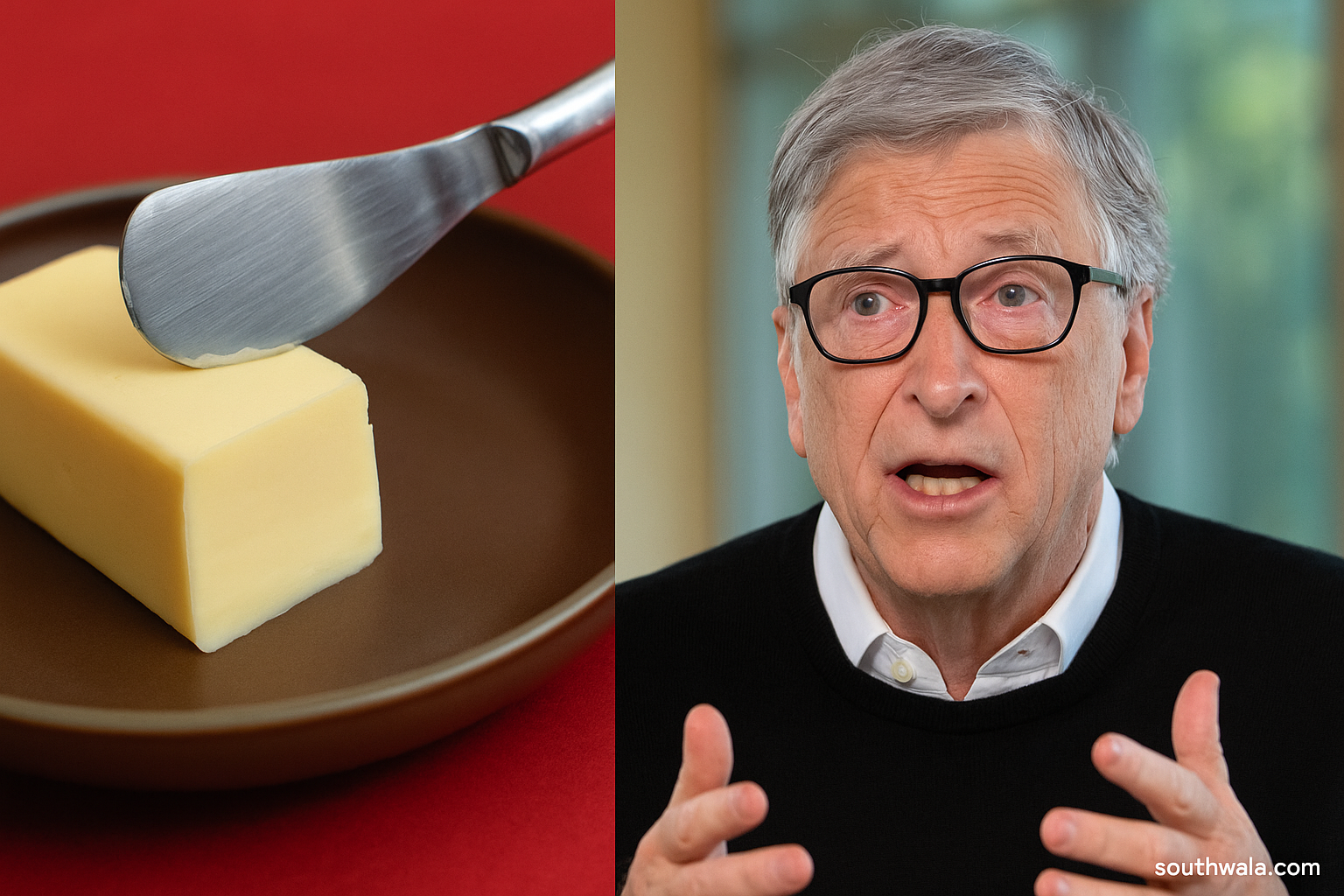
- Bill Gates has announced that a lab-made butter, created without the need for farmland or livestock, is expected to reach global markets by 2027.
- The product is designed to replicate the look, taste, and texture of traditional butter while being produced in a laboratory setting.
- The butter is made from fats generated using carbon dioxide and hydrogen, without relying on dairy or plants.
- Scientists behind the innovation claim that the process could significantly reduce the environmental impact of traditional butter production, which is associated with high land use,...

Bill Gates has announced that a lab-made butter, created without the need for farmland or livestock, is expected to reach global markets by 2027. The product is designed to replicate the look, taste, and texture of traditional butter while being produced in a laboratory setting.
How It Works
The butter is made from fats generated using carbon dioxide and hydrogen, without relying on dairy or plants. Scientists behind the innovation claim that the process could significantly reduce the environmental impact of traditional butter production, which is associated with high land use, water consumption, and greenhouse gas emissions from livestock.
Gates has argued that lab-made butter could help address climate challenges by cutting down the carbon footprint of food production. Traditional dairy farming is responsible for a significant portion of methane emissions, and replacing it with lab-based alternatives could lower pressure on the planet’s resources.
While the technology has drawn interest, it has also sparked debate. Some experts and commentators argue that such innovations could shift control of the food supply toward large corporations and away from traditional agriculture. Farmers and agricultural advocates worry that reliance on lab-based foods may undermine rural economies and reduce the demand for farmland-based production.
The move fits into a larger trend of lab-grown and alternative foods entering mainstream markets. From plant-based meats to lab-cultured dairy proteins, companies are racing to provide sustainable alternatives to traditional agriculture. Gates, who has invested heavily in climate-related ventures, views the butter project as part of this broader effort.
As 2027 approaches, the product will undergo regulatory reviews, consumer testing, and scaling challenges before hitting supermarket shelves. Whether it becomes a widely accepted replacement for dairy butter or remains a niche product will depend on public response, pricing, and trust in lab-grown food.
Author


Discover more from Southwala
Subscribe to get the latest posts sent to your email.

