Southwala Shorts
- Across the world, women are far more likely than men to develop autoimmune disorders.
- Conditions such as lupus, rheumatoid arthritis, multiple sclerosis, thyroid disorders, and Sjögren’s syndrome overwhelmingly affect women.
- According to medical studies, around 80 percent of all autoimmune cases occur in women.
- This difference is not accidental.

Across the world, women are far more likely than men to develop autoimmune disorders. Conditions such as lupus, rheumatoid arthritis, multiple sclerosis, thyroid disorders, and Sjögren’s syndrome overwhelmingly affect women. According to medical studies, around 80 percent of all autoimmune cases occur in women. This difference is not accidental. It is the result of a complex mix of biology, hormones, genetics, and immune system behavior. Understanding this imbalance can help in better diagnosis, prevention, and treatment.
Understanding Autoimmune Disorders
An autoimmune disorder occurs when the body’s immune system, which is supposed to protect against infections, mistakenly attacks its own tissues. Instead of recognizing the body as “self,” it starts identifying normal cells as foreign invaders. This causes chronic inflammation, pain, and tissue damage. The exact triggers are not always clear, but factors like genetics, environment, stress, and infections play a key role.
In simple terms, the immune system goes from being a protector to an attacker. In most cases, the overactive immune response is stronger in women, which makes them more vulnerable to these conditions.
The Role of Hormones
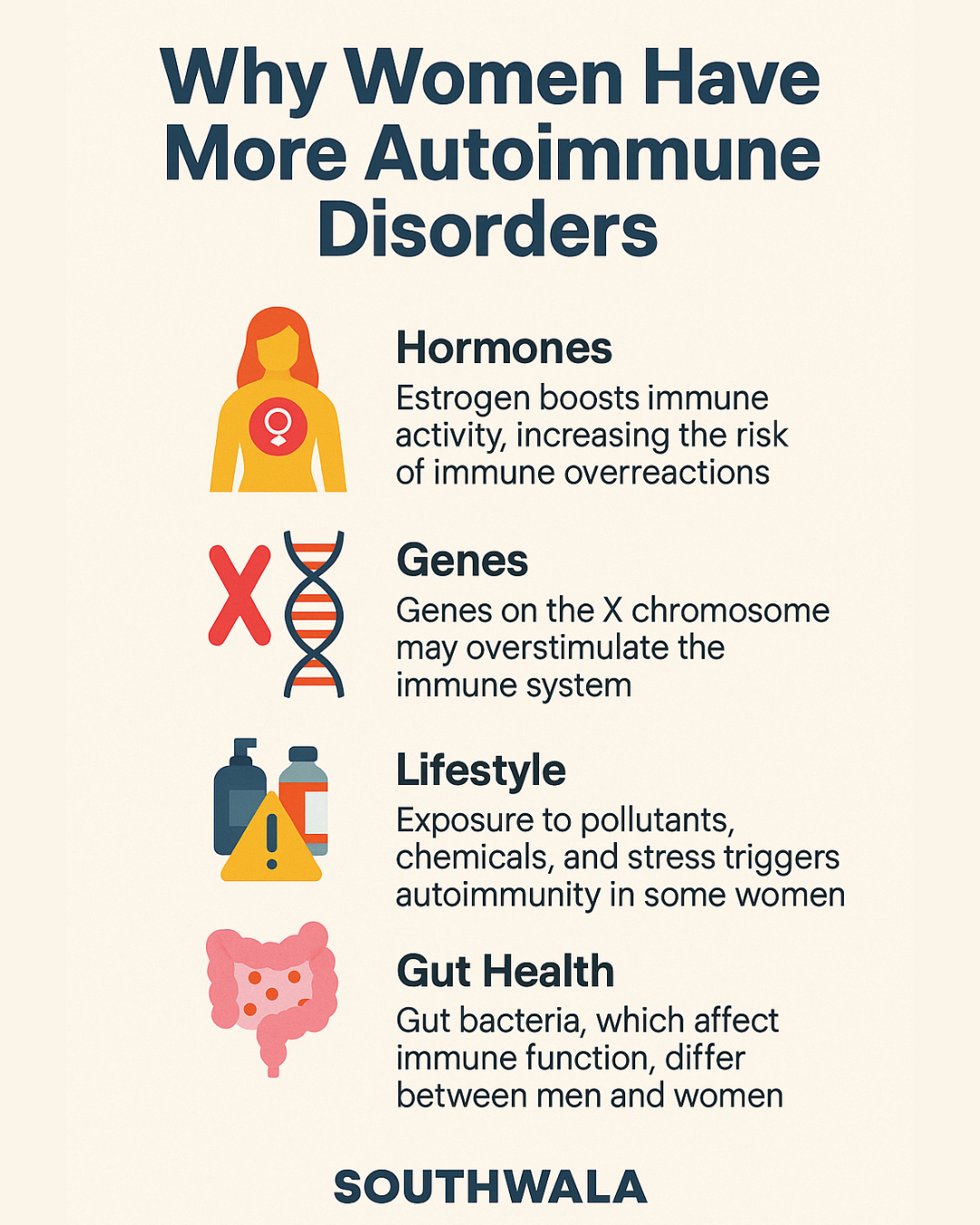
Hormones are one of the most studied reasons for the gender difference in autoimmune diseases. Estrogen, the primary female hormone, enhances the immune response. This helps women fight infections better than men but also makes their immune systems more reactive. Testosterone, the main male hormone, suppresses immune activity to some extent.
During puberty, pregnancy, and menopause, women go through large hormonal shifts. These fluctuations can trigger or worsen autoimmune conditions. For example, diseases like lupus and rheumatoid arthritis often appear or intensify during the reproductive years, when estrogen levels are high.
Pregnancy also brings immune changes because the body must tolerate the presence of a genetically different fetus. Some autoimmune diseases improve during pregnancy but return aggressively afterward, when the immune system resets.
The Genetic Advantage and Disadvantage
Genes play an important part in immunity. Women have two X chromosomes, while men have one X and one Y chromosome. The X chromosome carries many immune-related genes. Having two X chromosomes gives women a stronger immune system, but also increases the risk of immune malfunction.
In some autoimmune disorders, the problem arises because genes on one X chromosome escape inactivation. Normally, one X chromosome in women is turned off in every cell to balance gene expression. But if parts of it remain active, they can overstimulate immune function, leading to higher disease risk.
Certain genes, like Toll-like receptor 7 (TLR7), which help detect viruses, are more active in women. This overactivity can cause the immune system to mistake healthy cells for pathogens.
Environmental and Lifestyle Factors
Exposure to viruses, bacteria, chemicals, and pollutants can all influence autoimmune reactions. Women tend to have more contact with cleaning products, cosmetics, and hormonal medications that may trigger immune responses. Stress also plays a critical role, as it releases cortisol and other stress hormones that disrupt immune balance.
Additionally, women are often diagnosed later or misdiagnosed because their symptoms are dismissed or linked to hormonal causes. This delay can worsen autoimmune conditions and increase the overall impact on health and quality of life.
The Microbiome Connection
Recent research points to the gut microbiome as another contributor. The bacteria in the gut influence immune health and inflammation. Diet, stress, and hormone levels affect this microbial balance. Studies have shown that men and women have different gut bacteria compositions, possibly due to hormonal influence. This difference could explain why autoimmune diseases manifest more frequently or severely in women.
While the biological and hormonal explanations are clear, medical research is still uncovering how to use this knowledge to design better treatments. Precision medicine treatments customized to genetic and hormonal profiles may help women manage autoimmune conditions more effectively. Early testing, lifestyle interventions, and hormonal monitoring could prevent flare-ups or disease onset. The goal is not only to treat but also to predict and prevent.
Understanding why women face higher autoimmune risks helps dismantle stereotypes that dismiss female pain or fatigue as emotional. It redirects focus toward the biological truth that women’s immune systems, while strong, are also more complex and reactive.
FAQs
1. Why do autoimmune diseases affect more women globally
Because women’s immune systems are more active due to hormonal and genetic factors, which makes them better at fighting infections but more prone to immune overreaction.
2. Why does estrogen increase autoimmune vulnerability
Estrogen boosts immune responses to infections but can overstimulate defense cells, leading them to mistakenly attack healthy tissues.
3. Why do pregnancy and menopause impact autoimmune symptoms
Both cause major hormonal shifts that change how the immune system behaves, either calming it temporarily or triggering flare-ups after hormone levels drop.
4. Why are genetics linked to higher autoimmune risk in women
The X chromosome carries key immune genes. Since women have two X chromosomes, they can have double exposure to immune activation genes, increasing risk.
5. Why is it important to study women separately in autoimmune research
Most past studies were male-dominated, leading to misdiagnosis and poor treatment outcomes for women. Focusing on female biology can improve understanding and therapies.
Author


Discover more from Southwala
Subscribe to get the latest posts sent to your email.