
Southwala Shorts
- The Gaza-Israel war has pushed global oil markets into a state of caution.
- While Gaza itself is not an oil producer, the conflict sits in the wider Middle East, a region responsible for over 30% of the world’s...
- Any unrest raises concerns about supply routes and investor confidence.
- Since the escalation, crude oil benchmarks have seen price increases of 2–4%, reflecting fears of disruption in nearby countries and trade corridors.

The Gaza-Israel war has pushed global oil markets into a state of caution. While Gaza itself is not an oil producer, the conflict sits in the wider Middle East, a region responsible for over 30% of the world’s crude exports. Any unrest raises concerns about supply routes and investor confidence.
Since the escalation, crude oil benchmarks have seen price increases of 2–4%, reflecting fears of disruption in nearby countries and trade corridors. Rising energy costs put pressure on import-heavy nations such as India, while also adding to inflation concerns in Europe and the United States.
In the United States, the conflict has become a key talking point in the run-up to elections. The government’s military and financial support for Israel has drawn both support and criticism, dividing opinion among voters. For European countries, the war adds to ongoing debates about foreign policy independence and reliance on US leadership.
In the Middle East, governments face pressure from their citizens to respond strongly to developments in Gaza. This has political consequences across the region, from Egypt and Jordan to the Gulf states.
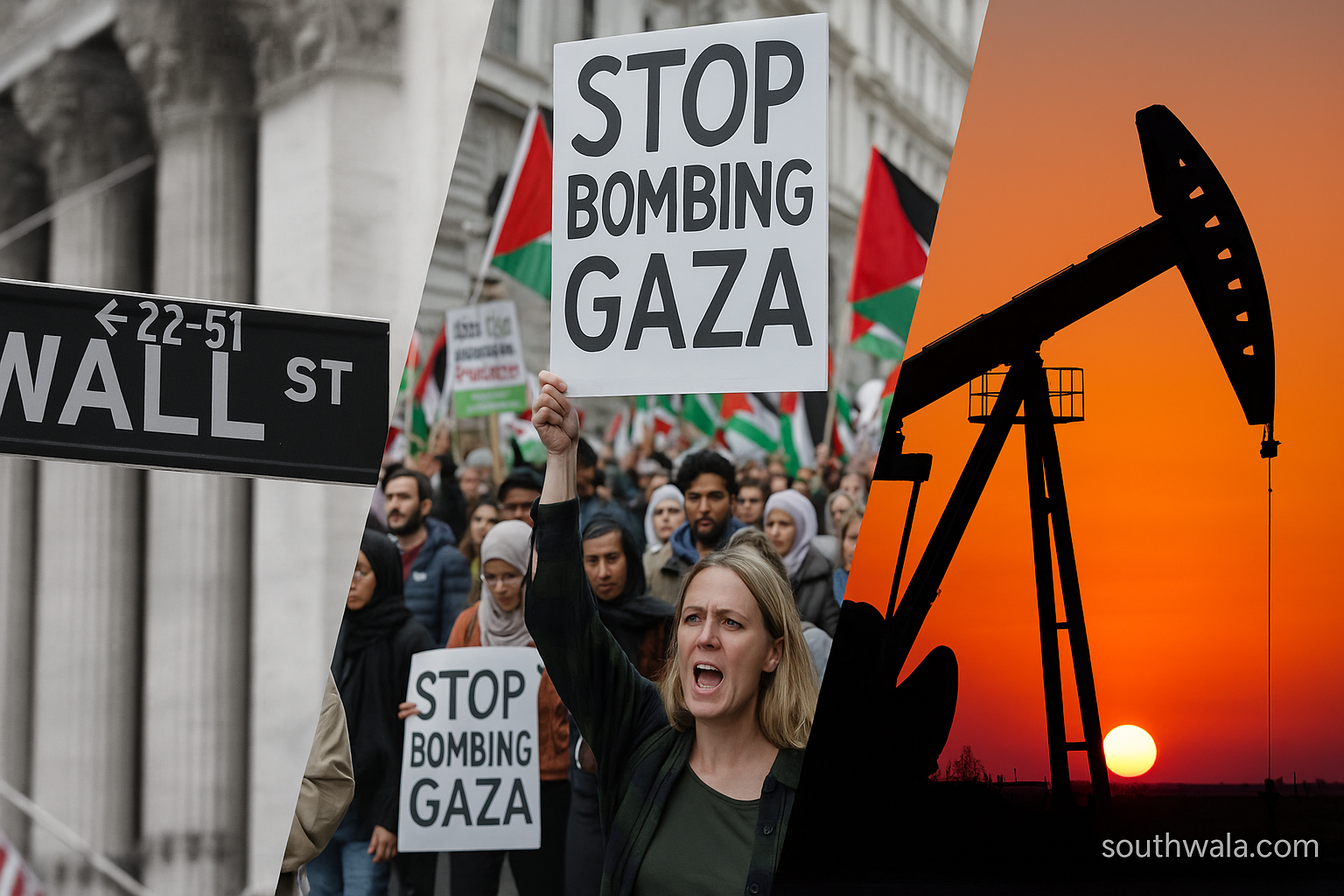
Politics and markets, the war has sparked widespread protests. Large demonstrations have taken place in major cities across Europe, North America, and the Middle East. Protesters demand ceasefires, condemn civilian casualties, and call for stronger humanitarian efforts.
These protests highlight how the conflict is no longer a distant regional issue but one that mobilizes people globally. Universities, trade unions, and civil society groups have also taken visible positions, further amplifying the debate.
The Gaza–Israel war may be geographically limited, but its effects extend far beyond the region. Oil markets react to instability, political leaders shape campaigns around it, and citizens worldwide take to the streets. The conflict demonstrates how events in one corner of the world can shape economies, elections, and public opinion far beyond its borders.
Author


Discover more from Southwala
Subscribe to get the latest posts sent to your email.

