Southwala Shorts
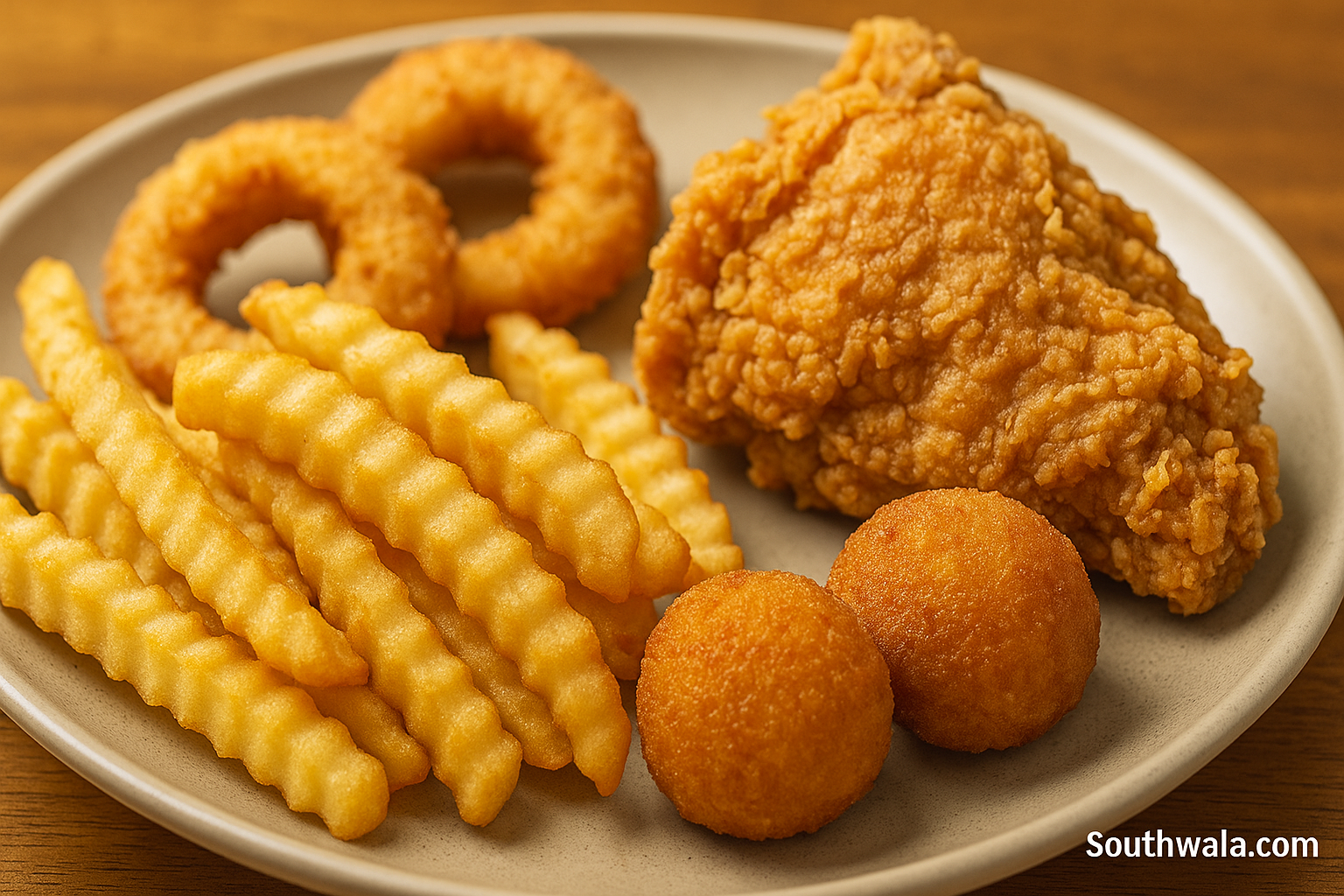
- Fried food is loved everywhere, from crispy samosas on the street to golden French fries at fast food outlets.
- Almost everyone knows eating too much of it is bad for health, yet it remains one of the most irresistible choices.
- The reason is not only taste but also psychology, biology, and even culture.
- Fried foods are crunchy on the outside and soft inside.

Fried food is loved everywhere, from crispy samosas on the street to golden French fries at fast food outlets. Almost everyone knows eating too much of it is bad for health, yet it remains one of the most irresistible choices. The reason is not only taste but also psychology, biology, and even culture.
Power of Taste and Texture
Fried foods are crunchy on the outside and soft inside. This perfect mix of textures excites our taste buds. For example, a crispy pakora with soft potato inside or a fried chicken with a crunchy layer makes the brain release dopamine, the “feel good” chemical. That is why fried food feels rewarding immediately after eating.
Oil and Fat
Oil carries flavors better than water. When food is fried, spices and seasonings get absorbed into the fat, making the taste richer. This is why fries taste better than plain boiled potatoes. Our brain is designed to crave fat because it is an energy rich food source, so even if we know it is harmful in excess, the craving continues.
Emotional Comfort and Habit
Many people eat fried food as a comfort food. A plate of hot pakoras during rains or fried chicken after a stressful day becomes linked to emotions. Slowly, this turns into a habit. Just the smell of fried food can trigger memories, pushing people to eat even if they are not hungry.
Science of Addiction
Research shows that high fat and high salt foods activate the same pleasure centers in the brain as addictive substances. Eating fried snacks repeatedly creates a cycle. You eat, feel good for a while, then crave more. That is why it is so hard to say no to another plate of fries or bhajiyas.
Social and Cultural Influence
Fried food is deeply linked with social gatherings. Festivals, street food culture, fast food restaurants, and even family traditions involve fried food. Refusing it sometimes feels like breaking the moment. For example, in India, samosas are offered to guests, while in the West, fries are part of every fast food meal. This cultural bond makes fried food harder to avoid.
Illusion of Once in a While
Most people justify fried food by saying they eat it only occasionally. But occasions add up. Weekend parties, rainy evenings, weddings, or festivals can make “once in a while” turn into frequent consumption without realizing it.
FAQs
1. Why do fried foods feel tastier than healthy options?
Because frying enhances flavor, adds crunch, and triggers dopamine release in the brain, which makes the food feel more rewarding.
2. Can eating fried food really be addictive?
Yes. Fried food high in fat and salt stimulates brain pathways similar to addictive substances, creating cravings.
3. Are all fried foods equally harmful?
Deep-fried items with refined oils are the most harmful. Shallow frying with healthier oils like olive or mustard oil is slightly better, but frequent consumption is still risky.
4. Why do we crave fried food when stressed?
Stress increases cortisol levels, which push the brain to seek comfort foods. Fried food gives instant satisfaction, making it a common stress snack.
5. How can we reduce fried food cravings?
Switching to air frying, baking, or roasting can satisfy the crunch without too much oil. Drinking water or chewing gum during cravings also helps break the cycle.
Author


Discover more from Southwala
Subscribe to get the latest posts sent to your email.