Southwala Shorts
- Electric cars may dominate headlines, but the real shift in mobility is happening quietly on two wheels.
- Electric scooters are changing the daily rhythm of cities like Bengaluru, Pune, and Delhi faster than any luxury EV could.
- They’re not just affordable machines; they’re symbols of practical innovation built for Indian realities like traffic, cost, and distance.
- Where electric cars aim for comfort and prestige, e-scooters are redefining convenience and sustainability at the street level.

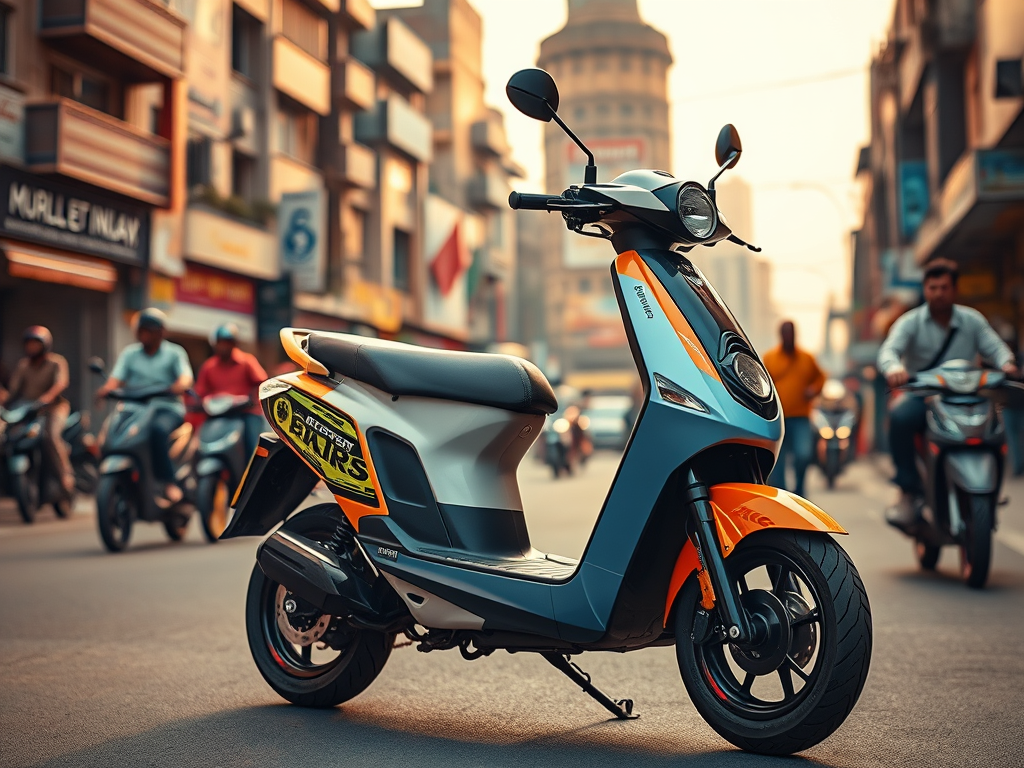
Electric cars may dominate headlines, but the real shift in mobility is happening quietly on two wheels. Electric scooters are changing the daily rhythm of cities like Bengaluru, Pune, and Delhi faster than any luxury EV could. They’re not just affordable machines; they’re symbols of practical innovation built for Indian realities like traffic, cost, and distance.
Where electric cars aim for comfort and prestige, e-scooters are redefining convenience and sustainability at the street level. The real revolution isn’t in parking lots, it’s on the roads where millions ride to earn, deliver, and survive.
1. Affordability: The True Driver of Mass Adoption
An electric scooter today costs between ₹1 lakh and ₹1.4 lakh on-road, while an electric car starts above ₹10 lakh. But that’s not the real comparison.
- Charging cost: Around ₹15–20 for 100 km on an e-scooter, compared to ₹120–150 for a petrol scooter.
- Maintenance: No oil change, no clutch repair, and fewer moving parts.
- Government support: FAME II subsidies and state-level incentives (like in Delhi, Maharashtra, and Tamil Nadu) have cut ownership costs by 15–20%.
In simpler terms, for the price of maintaining one electric car, a middle-class family could run three electric scooters for a year.
Case Study:
In Delhi, Ola Electric and Ather Energy reported that the average commuter saves nearly ₹2,500 per month by switching from petrol to electric. Over five years, that’s ₹1.5 lakh in savings, almost the cost of a new scooter.
2. Space and Speed: Solving India’s Real Urban Problem
India’s cities are not built for cars. They’re built for chaos narrow lanes, unpredictable traffic, and scarce parking. Here, electric scooters thrive.
- A scooter takes one-third the space of a car.
- The average daily commute in Indian cities is under 25 km, perfect for e-scooters 100–150 km range.
- Lightweight design and fast torque make them ideal for stop-and-go traffic.
Cities like Bengaluru and Pune are already seeing a 45% rise in e-scooter registrations compared to last year, while electric car sales are growing more slowly due to infrastructure gaps.
Example:
In Bengaluru, two-wheelers make up 72% of total registered vehicles, yet occupy just 25% of parking space. No wonder e-scooters fit the logic of Indian mobility better than EV cars.
3. Charging Infrastructure: Smaller Battery, Bigger Reach
Electric scooters don’t rely heavily on public charging stations. Most users charge them at home overnight, using regular power sockets. That simplicity is what gives them the edge.
- Charging a scooter takes about 3–5 hours, using just 2 units of electricity.
- Many brands now offer portable batteries that riders can remove and charge indoors like a laptop.
- Swapping models (like Gogoro and Bounce Infinity) are building ecosystems where riders exchange depleted batteries in minutes.
This “distributed charging” model is far more realistic for India’s power grid than large EV fast chargers that require heavy infrastructure.
Fact:
As of 2025, India has around 35,000 public EV chargers, but over 80% of e-scooter users charge at home, a sign of independence, not limitation.
4. Climate and Energy Impact: The Low-Carbon Advantage
Electric scooters are small machines with big environmental results. Every 100 km ridden on an e-scooter instead of a petrol one cuts 1.5 kg of CO₂ emissions. Multiply that by millions of daily rides, and you get a quiet yet powerful climate intervention.
India imports nearly 85% of its oil, much of which is consumed by two-wheelers. Shifting just half of them to electric could save billions in fuel import costs and cut urban air pollution significantly.
Example:
A study by CEEW (Council on Energy, Environment and Water) found that if 30% of India’s two-wheelers went electric by 2030, the country could reduce CO₂ emissions by 150 million tonnes annually. This is not just green mobility it’s economic resilience.
5. Employment and Gig Economy: The Unsung Impact
The rise of delivery, ride-hailing, and logistics apps has turned two-wheelers into income tools. Electric scooters make that work cheaper and more sustainable.
- Delivery partners save around ₹3-4 per km, improving daily earnings.
- Several companies like Zomato, Swiggy, and BigBasket are shifting fleets to electric vehicles under green mandates.
- Local startups such as Yulu and Zypp Electric rent out e-scooters on subscription models, creating micro-jobs in charging, maintenance, and logistics.
The economic chain around e-scooters, from manufacturing to servicing, is becoming a massive employment engine, especially for Tier-2 and Tier-3 India.
6. Local Innovation: Made for Indian Roads, Not Imported Ideas
Unlike electric cars, which often depend on imported technology, most Indian e-scooter makers are homegrown innovators.
Brands like Ather, Ola, TVS, Hero Electric, and Bajaj Chetak design scooters for Indian road conditions, battery temperatures, and user needs.
- Ather 450X uses a smart dashboard with real-time diagnostics.
- Ola S1 Pro has built-in navigation and music.
- TVS iQube integrates with mobile apps for route tracking and analytics.
This local-first design approach ensures that e-scooters don’t just electrify transportation they evolve it.
7. The Social Angle: Access and Equality on Two Wheels
For many Indians, mobility isn’t a luxury it’s survival.
Electric scooters make daily commuting accessible to students, delivery workers, women professionals, and small business owners who cannot afford cars or fuel hikes.
Even in rural areas, e-scooters are slowly enabling small businesses and connectivity from vegetable vendors to teachers commuting to distant schools.
It’s not just clean transport; it’s social inclusion through mobility.
8. The Real Future: Scooters Before Sedans
Electric cars will continue to grow, but their impact will stay limited to higher-income segments for now.
Electric scooters, on the other hand, are rewriting India’s transport story from the ground up, one ride at a time.
By 2030, experts predict that 65-70% of India’s two-wheeler sales will be electric. That’s not just a trend it’s a transformation.
The real game-changer isn’t the one with four wheels and luxury interiors. It’s the humble, efficient, data-driven scooter zipping past traffic leading India’s electric revolution.
FAQs
1. Is an electric scooter reliable for daily long-distance travel?
Yes. Modern e-scooters can cover 100–150 km on a single charge, enough for most city commutes.
2. Can an electric scooter handle Indian road and weather conditions?
Yes. Models from Ather, Ola, and TVS are built for uneven roads, monsoon conditions, and heat resilience.
3. Does charging a scooter at home increase the electricity bill too much?
No. It adds roughly ₹150–₹200 a month for regular city usage still cheaper than one petrol refill.
4. Can electric scooters carry passengers or heavy loads safely?
Yes. Most modern models are designed for two riders and can handle 150–170 kg easily.
5. Is maintenance easy for electric scooters?
Yes. Since they have fewer moving parts and no oil engine, maintenance costs drop by nearly 70% compared to petrol scooters.
Author


Discover more from Southwala
Subscribe to get the latest posts sent to your email.