Southwala Shorts
- AI tools have quickly become a part of student life.
- From solving math problems to explaining science concepts, these tools provide fast answers.
- While this makes learning easier, too much dependence can lead to serious gaps in knowledge.
- When students only copy what AI shows, they may remember the solution but not understand the process.

AI tools have quickly become a part of student life. From solving math problems to explaining science concepts, these tools provide fast answers. While this makes learning easier, too much dependence can lead to serious gaps in knowledge.
The Risk of Shallow Understanding
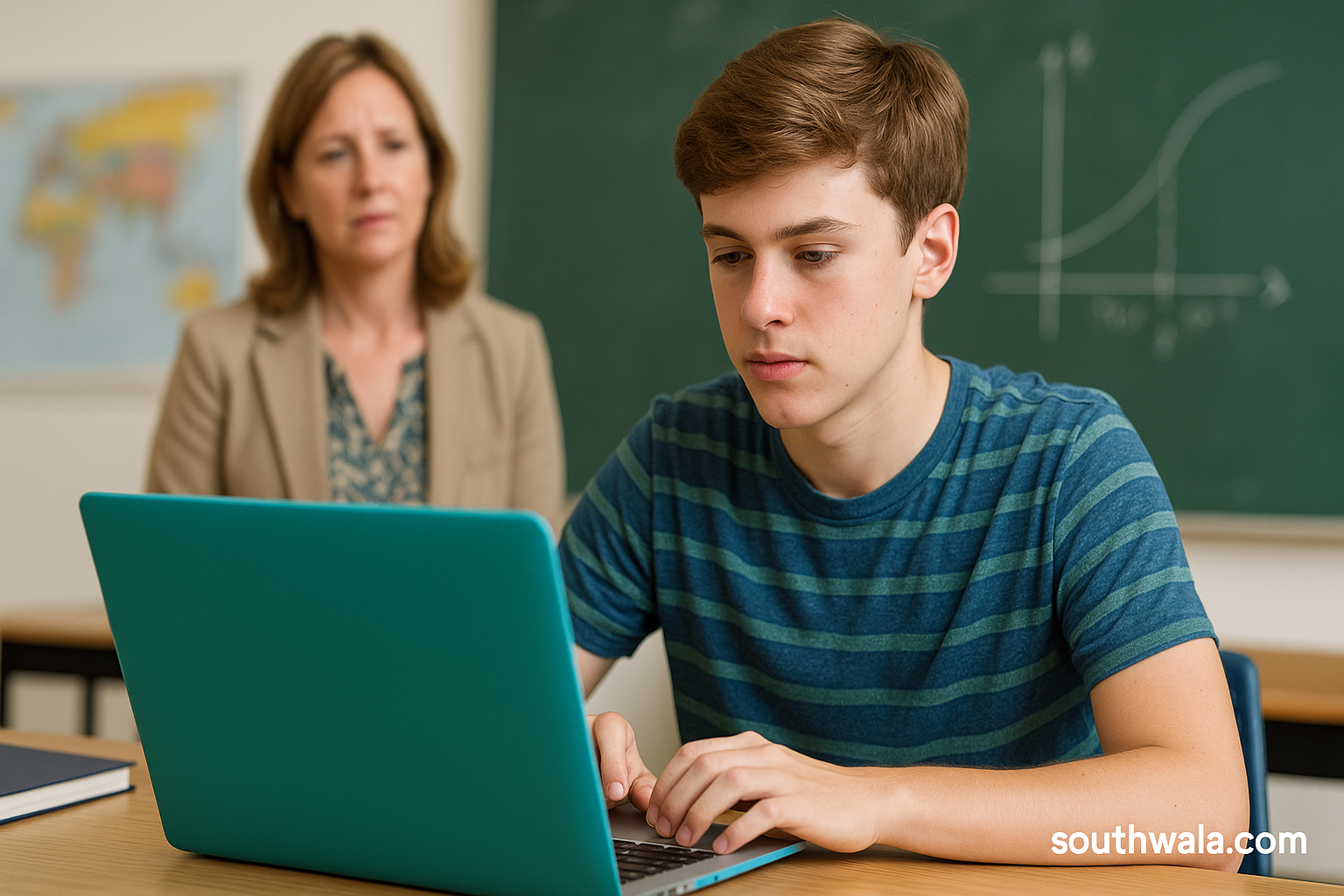
When students only copy what AI shows, they may remember the solution but not understand the process. Without practice, the mind becomes passive. This affects problem solving skills and reduces the ability to explain ideas in exams or real life.
Weakening of Critical Thinking
Education is not just about getting the right answer. It is also about questioning, comparing, and analyzing. If students always accept AI responses without checking, they lose the habit of thinking deeply. This can make them less confident when they face unexpected challenges.
Loss of Creativity and Original Ideas
AI tools learn from data that already exists. If students depend only on them, their answers may sound correct but lack originality. True creativity comes when learners mix knowledge with imagination. Overuse of AI can reduce this spark.
Impact on Exams and Careers
In classrooms and exams, students are expected to explain topics in their own words. Heavy reliance on AI may result in poor writing skills, weak memory, and lack of confidence. In careers, employers prefer people who can think independently and bring new ideas. AI can support work but cannot replace human judgment.
Emotional and Social Effects
Another hidden issue is reduced social interaction. If students always ask AI instead of discussing with teachers and peers, they miss the chance to develop communication skills. Group studies and debates help in building confidence, something AI cannot provide.
A Balanced Approach
AI is not the enemy. It can be a powerful assistant when used wisely. The key is balance. Students should use AI to check doubts or get practice, but also focus on self study, class participation, and solving problems on their own. Parents and teachers can guide them in this balance.
Healthy Practices for Students
- Use AI for revision, not as the only teacher
- Write answers in your own words after learning from AI
- Discuss topics with friends or teachers to build clarity
- Practice without AI before exams
- Use AI as a helper, not a replacement
FAQs
1. Can students learn faster with AI?
Yes, but if they skip understanding the basics, the knowledge does not stay long.
2. Is it wrong to use AI for homework?
Not wrong, but relying only on AI reduces practice and originality.
3. How does AI affect creativity?
It gives ready answers, which may reduce imagination if used without personal effort.
4. Will jobs in the future accept only AI based skills?
No, companies want people who combine knowledge with critical thinking.
5. What is the best way to use AI in studies?
Treat AI as a guide, then practice and explain topics without it.
Author


Discover more from Southwala
Subscribe to get the latest posts sent to your email.