Southwala Shorts
- Highlights• Why this day is more than a festival• What happened on the battlefield that changed spiritual history• How the Gita became India’s guidebook for...
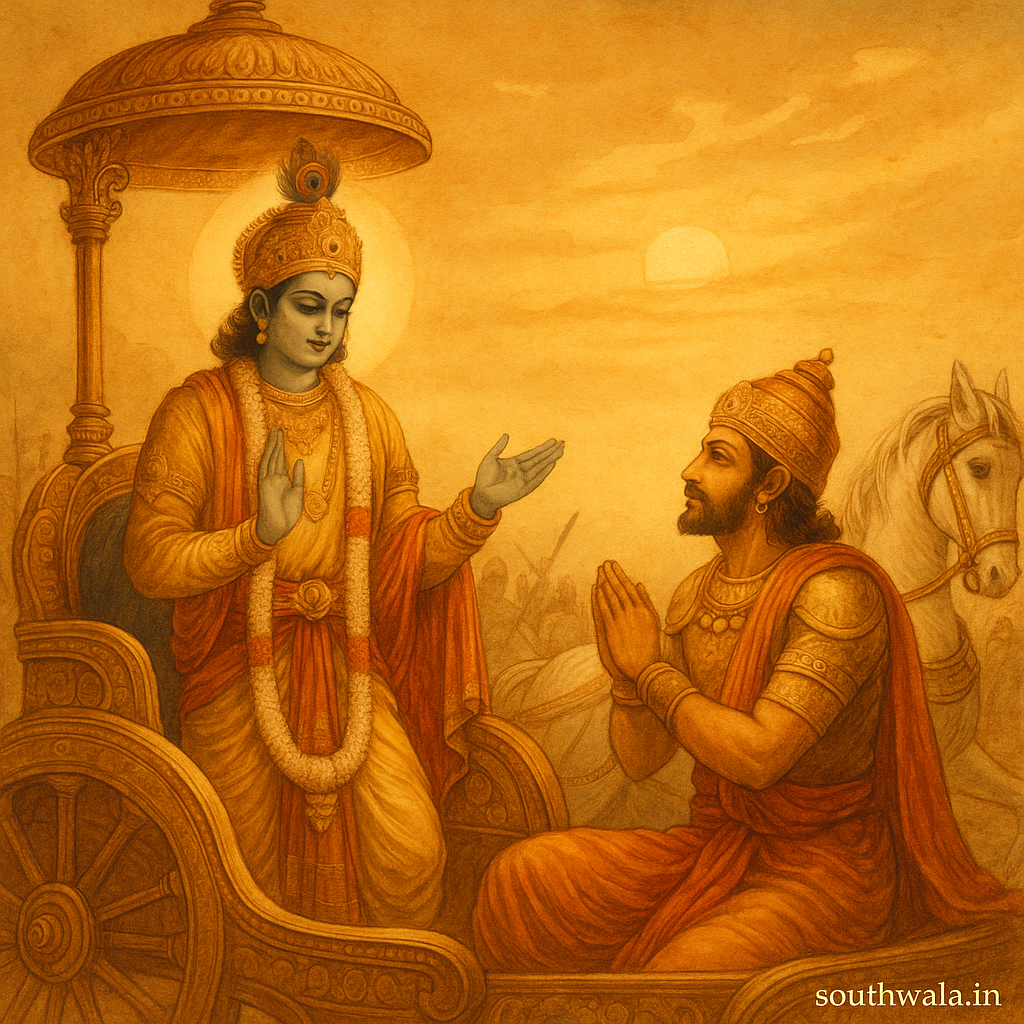
- Gita Jayanti is the remembrance of the morning when Krishna revealed the Bhagavad Gita to Arjuna in the middle of the Kurukshetra battlefield.
- In the chaos of war, when a warrior broke down, dropped his bow and said he could not go on.
- Every human has lived that moment in some form.

Highlights
• Why this day is more than a festival
• What happened on the battlefield that changed spiritual history
• How the Gita became India’s guidebook for confusion, fear and purpose
• A simple spiritual roadmap for today’s reader
Gita Jayanti is the remembrance of the morning when Krishna revealed the Bhagavad Gita to Arjuna in the middle of the Kurukshetra battlefield. Not in a temple. Not during a ritual. In the chaos of war, when a warrior broke down, dropped his bow and said he could not go on. Every human has lived that moment in some form. That is why the day is spiritual, not ceremonial.
What Gita Jayanti actually marks
On Margashirsha Shukla Ekadashi, thousands of years ago, the Gita was spoken. It was not delivered like a lecture. It was a heart to heart conversation. Arjuna was overwhelmed by moral confusion. Krishna did not give sermons. He gave clarity. He showed the highest form of compassion: truth that steadies a shaking mind.
Why we celebrate this day
One. It is the birthday of wisdom. The world has scriptures, but the Gita is a dialogue where the Divine responds to human fear without judgement.
Two. It is the day duty and dharma were explained without complexity. Krishna showed that spirituality is not escape but responsible action with a steady mind.
Three. It is a reminder that even the greatest warriors collapse. Arjuna was not weak. He was human. And Krishna’s message is that God does not arrive only when we pray. God arrives when we break.
The spiritual meaning for a modern reader
Gita Jayanti invites people to return to the basics. Who am I. What is my role. What is my duty. What is temporary. What is eternal. The Gita answers these not with fear but with clarity. It teaches that the soul is timeless and the body temporary, so fear of loss should not drive life.
The deeper message
Krishna asks Arjuna to rise again. Not because victory is guaranteed, but because action done with sincerity becomes worship. The battlefield is symbolic. Everyone’s life becomes Kurukshetra at some point. Everyone faces attachments, pressure, heartbreak and moral dilemmas. Gita Jayanti is the day we remember that guidance exists.
How India observes it
Temples chant all 18 chapters. Kurukshetra hosts grand recitations. Families read selected verses. Many people fast or meditate. Spiritual seekers take this day as a commitment to live with intention rather than impulse.
FAQs
- Why is the Gita considered divine
Because Krishna speaks as the charioteer yet reveals the voice of the Supreme Consciousness. - Did Arjuna ask real human questions
Yes. He questioned violence, duty, grief, morality and the meaning of life. - Is chanting necessary
Chanting is optional. Understanding is essential. - Is the Gita only for elders
No. Krishna’s teachings are universal and many schools teach simplified versions. - Does Gita Jayanti require rituals
Rituals are optional. Reflection is the core.
Author


Discover more from Southwala
Subscribe to get the latest posts sent to your email.